Earlier this year, at a Medical school in North India I spoke to staff and students about the stigma and ignorance around Mental Health. At the end of the lecture one of the senior faculty members asked me a question, “Is it helpful for people with a mental illness to be a part of a religious community?”
‘Yes’, I said. ‘Most certainly. Just like it is helpful for someone with Diabetes to be part of a religious community. It might also be a good idea for them to see a doctor.’
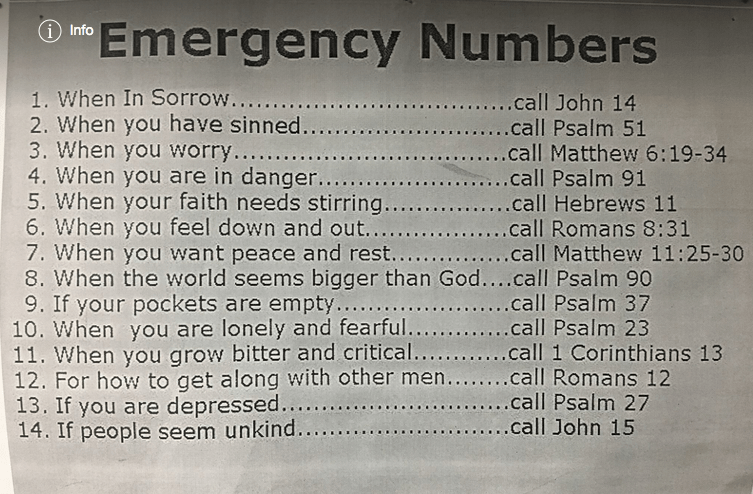
Earlier that day Si and I had taken a walk around the hospital and found this list of ‘Emergency Numbers’ prominently displayed on a notice board in the medical library for medical students, nursing students, dentists and doctors.
Need I say any more?
PS: It is important for every student in every educational organisation to have ready access to reliable and knowledgeable resources if they feel the need to discuss their thoughts and feelings or are concerned about a friend.
It was a clean, warm and open space with well-designed floral furniture in pastel blues and greens. It had plenty of natural light and pots of healthy looking plants thoughtfully dotted around the floor. The artwork on the walls was selected by someone who knew their stuff. It would be hard to guess that this was the entrance to the New Hampshire Hospital. which provides acute inpatient psychiatric services for all age groups.
As I was guided through the
facility, I was enamoured by a lush beautiful big greenhouse, two well-stocked libraries,
a massive gym for staff and patients, 3 cafés, an outdoor patio and play area
for kids, a vegetable patch, a healthy colourful aquarium on wheels, loads of Halloween
decorations all around, an art workshop and cooking class in progress,
television screens, a chapel, a small shop, a pool table, a ping-pong table, lots
of board games and cheerful group therapy, treatment and visitor’s rooms.
Each kid had a room to
himself or herself with nice bed-linen of their choice. 2 adults often shared a
room. The age groups were appropriately separated. The youngest patient there was
6 years old and the oldest a septuagenarian. The nurse’s station was not a
demarcated area. It was part of the ward layout. Social workers, occupational
therapists, doctors and nurses didn’t wear any uniforms. They were dressed in
everyday clothes. Everyone spoke softly and the atmosphere was relaxed and
caring.
The most impressive part of the service was the presence of an Aftercare Liaison officer. It is well known that patients are at the highest risk within 30 days of discharge from inpatient services or Emergency department. (Ref: Luxton, June and Comtois 2013) They concluded that repeated follow-up contacts appear to reduce suicidal behaviour.
Aside from following up on these patients, the Aftercare Liaison Officer has the following roles before the patient is discharged:
Speaks, listens and connects to each child and adolescent patient. Educates them and their support system about warning signs of suicide, triggers, risk factors, protective factors and restriction of means of self-injury.
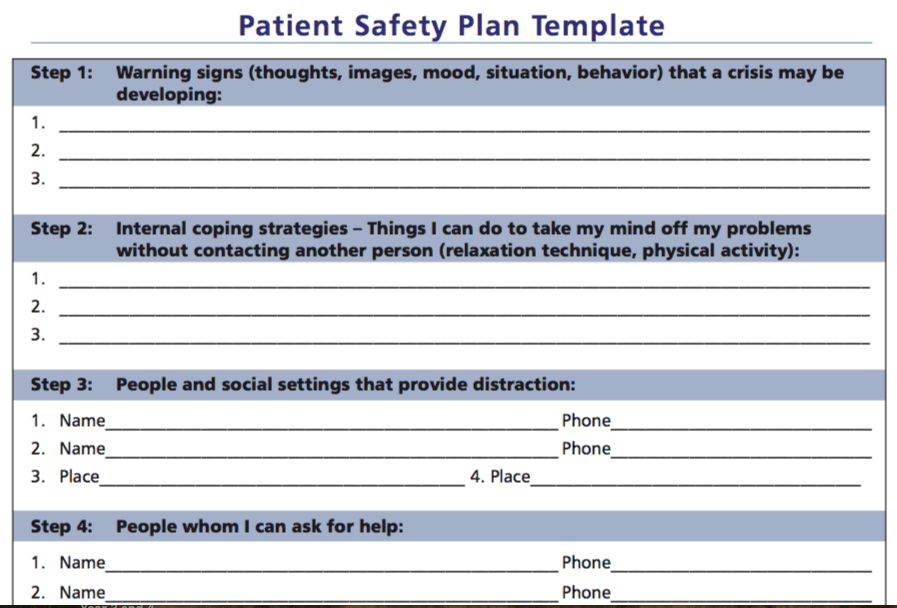
Draws up a detailed Safety Plan with them and their carers.
Helps them identify sources of social support (trusted adults) and develop personal resources through open conversations.
Interface with other professional agencies (eg. for DBT) and community services that will help dilute their identity as a person diagnosed with a Mental Illness. For example, they match their interests to activities such as therapeutic horsemanship, a running group or a Mountain Teen Project.
Engage their parents, families and friends and anyone they would like to involve.
Use technology if possible – MY3App.
I don’t think we have this service in the UK. I know we don’t.
The one thing that is most important to me and worth living for is … to continually express my love for Saagar and help other parents do the same for their kids.
Croydon, Berlin, Lebanon, Antrim and Troy, all within a few miles of each other. Yes. This is the New Hampshire (NH) part of New England. But the capital city of NH is not New London. It is Concord.
1.35 million inhabitants of NH live in 9,300 square miles.
9 million inhabitants of
London live in 600 square miles.
It’s a different world. Time and space assume a different dimension here. They are both expansive. I have a sense of abundance and connection.
I have met nothing but
kindness since I’ve been here. On the very first day, I was offered two lifts,
one from Manchester airport (yes, they have a Manchester too) to Concord and
then from my AirBnB house to the grocery shop and back. I have no car as I can’t
trust myself to drive on the right (wrong) side of the road. I can literally
hear the wires clanging and short-circuiting in my head as I watch the cars
move on the roads.
Apples, maple syrup, random
conversations with the locals on the street, excellent assistance in shops, witty
Halloween decorations and the fall colours. Within the last week, a festival of
colours has unravelled in all their glory. I don’t think any camera can do full
justice to the drama of Orange, Yellow, Red, Terracotta and Green.
I have really noticed the small things. I spent yesterday morning cutting out small squares of felt in preparation for a community meeting at a small village school where they have recently lost a student to suicide. These pieces are for everyone who attends. They serve as tiny ‘blankies’, something for people to hold on to and fiddle with, to help them cope with the difficult conversations taking place in the room. I would have never thought of that.
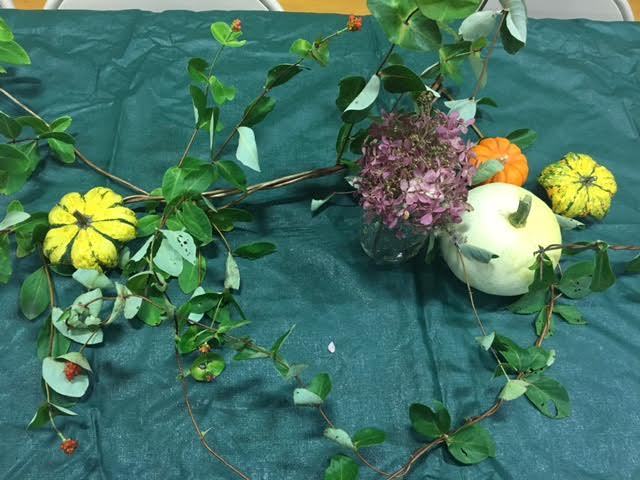
When we got there, each table was decorated with twines, hydrangeas, little pumpkins and squashes to make the atmosphere a little bit festive. Warm and welcoming. Not too sad and drab. These little things made such a huge difference for everyone present.
On World Mental Health Day and every other day, let’s remember the little things. They are the big things.
3/10/2019. 6 am: I am excited. At the airport, waiting to board my flight to Washington Dulles. Change to another flight to Manchester and then a taxi ride to Concord, New Hampshire. This is the first leg of my travels as a Churchill Fellow. I have checked in and am having a cup of tea. I have just come across this post from a young woman on Facebook:
“According to my local crisis team, I was ‘too articulate’ to be feeling
suicidal.
As a writer, and someone who works in languages, I am a naturally very
articulate person. Because I could speak so clearly about my thoughts and
feelings, I was discharged from the crisis team as I didn’t fit the bill of
someone suicidal, or indeed, of being mentally unwell enough to need their
support despite evidence to the contrary.
The Papyrus text line allowed me to articulate how I felt (you don’t have any choice really when you’re using the text service, you have to ‘say’ it how it is!!), and that was delved into so much deeper with thoughtful questions, suggestions and recommendations that allowed me to get through a real low point and see that there was hope. At no stage did they reply with ‘sorry, you’re too articulate to be feeling the way you claim’.
Non-judgemental, kind, compassionate, a REAL life saver, especially in the
current climate of NHS mental health cuts.”
Judgement. The ultimate wall. Even a positive judgement can be harmful. A missed opportunity. A lost life. Who fills the gaping holes created by ‘unfit for purpose’ services, NHS cuts and ignored carers?
Charities. Families. Friends.
The needs of young people are different. They need an active, positive and creative interaction to make sense of how they feel. They need to be heard and understood. They need to know in their hearts that they are deeply loved and cared for just the way they are. They need to know that things get better. Educating families is crucial.
4/10/2019
Today’s gem: Mayo Clinic video for parents. All parents of adolescents should
see this.
Somewhere in the middle of last year, a friend, Angela Samata ( of ‘Life after Suicide’ fame) recommended I look up Winston Churchill Memorial Trust. I did. They had a catchy strap line – “Travel to learn – return to inspire”. I checked out their application form. Form-filling is a formidable process but this one wasn’t too bad. I touched base with a couple of people from Australia and the USA who had stayed in my memory from various conferences. I asked them if they would have me visit their organisations, observe their work with the aim of learning and exchanging ideas. They were happy. I filled out the form. Got shortlisted and invited for an interview.
While preparing for the interview I knew I’d be asked to say something about Churchill. I researched and found some relevant facts. He’d coined the term ‘black dog’ to describe depression. That was clever. Also, he had something in common with me. He had survived the loss of a child.
This February I was awarded a traveling Fellowship by WCMT to go to USA and Australia for 3 weeks each to bring back ideas on preventing suicides and supporting families looking after someone with a mental illness. Ideas we can implement in our communities. It was an honour but also quite daunting. I have never done anything like this before. But here I am with 10 days to go, before I leave for the first leg of my travels to Concord in New Hampshire which is home to National Alliance on Mental Illness, NAMI. I have put my name down for their community walk on Sunday, the 6th of October aimed at stamping out stigma. I reckon that’s the best way to get to know people and get involved. Also, autumn in New Hampshire is meant to be spectacular. Deb and Elaine from NAMI have been very welcoming and I feel their warmth in their e-mails.
Yes. I am excited. With minor trepidation in my heart. And Saagar. Away from home, from Milkshake and Si for 27 days. Haven’t done that in a very long time. But it’s time and I am ready.
[PS: We’ve reached 82% of our fund-raising goal. I am deeply touched by the generosity of all the 151 backers and am grateful to everyone’s positive vibes. Thank you! To find the campaign link, search ‘1000 days’ and ‘indiegogo’]





 kidsaregifts