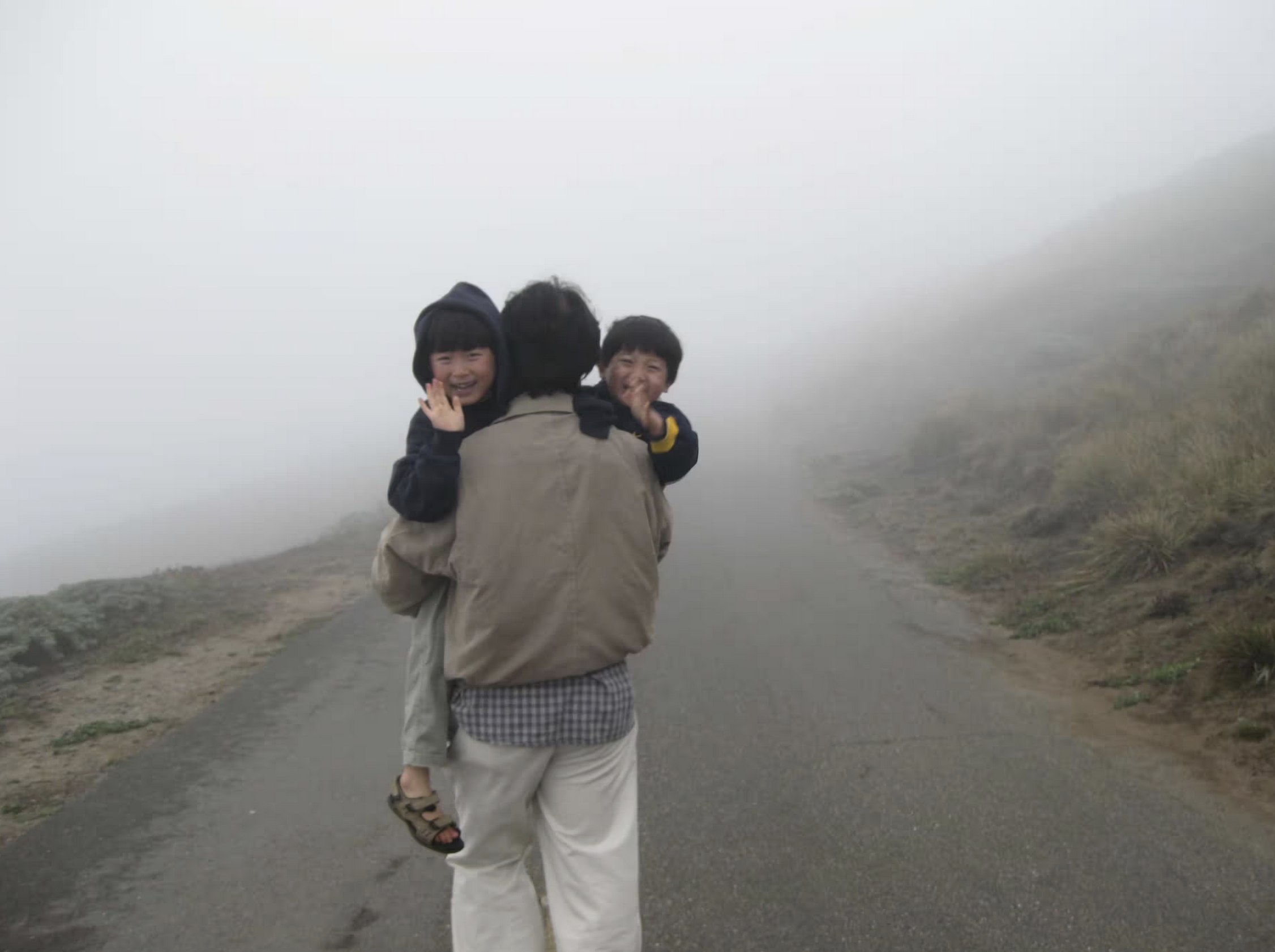
Vincent and James.

2017 – 16. Male. RIP.

2024 – 19. Male. RIP.

Brothers. Second generation Chinese immigrants in USA. Their mother, a writer who lost both of them to suicide.

Where Reasons End (2019) by Yiyun Li, after Vincent’s death.

I read this book when it was first published. An imagined conversation between her and her older son, Vincent who lived ‘feelingly’. Sixteen chapters, one for each year of his life. It has a witty and mischievous tone. Nicholai, a name he gave himself, chides his mother’s new embrace of cliches and adjectives. “If you’re protesting by becoming a bad writer, I would say it’s highly unnecessary,” he says. (“Dying is highly unnecessary too,” she shoots back.)

Things In Nature Merely Grow – Pulitzer Prize Finalist 2025, by Yiyun Li, a memoir. She wrote it within two months of her younger son, James’ death. I feel deeply for her and with her but I am not sure I want to read that book right now. A few lines from it sing true:

“I am in an abyss. If an abyss is where I shall be for the rest of my life, the abyss is my habitat.”

“My children were not my burden. My sadness is not my burden.”

“I am very realistic in that I would always acknowledge that I am limited as their mother. I was limited, and I am still limited as a mother, so I can only do my best.”

When people hold an expectation that her grief must have an end date, she retorts, “How lonely the dead would feel, if the living were to stand up from death’s shadow, clap their hands, dust their pants, and say to themselves and to the world, I am done with my grieving; from this point on its life as usual, business as usual.”

“This is a very sad fact of our lives, they took their own lives knowing we would accept and respect their decision.”

Could I accept and respect Saagar’s decision one hundred percent? I believe it was not his decision. It was his utter helplessness and desperation in the face of his illness, his unsuitable antidepressants, lack of medical care, his isolation, his inability to recommence his education, our inability to talk about it and so much more. He was driven to it. It was not by choice. Anyone who knew him, knows that. I do understand though.

I understand, my darling.

References:

https://www.theguardian.com/books/2019/feb/05/where-reasons-end-yiyun-li-review#

https://www.theguardian.com/books/2025/may/17/author-yiyun-li-on-the-suicide-of-both-her-sons

A phone call.

Last week we got a call to assess a patient for a possible transfer to ITU. Our team of three anaesthetists went along with all our kit and PPE. From a distance, he didn’t look too unwell. And he looked young. I hoped he wouldn’t need too much intervention. We donned out protective equipment and looking like aliens, entered his cubicle. I checked his name and date of birth. He was born in the same year as Saagar. After making a quick assessment, we decided that his breathing needed support. We spoke to him about getting him off to sleep so that we could place a tube in his wind-pipe and assist his breathing. We explained to him that we would transfer him to ITU for further care.

By this stage he was shaking, his eyes swollen with fear. He asked to make a call to his mum. We stood back while he called her. He held the phone to his left ear while oxygen hissed through his face mask. We waited, watching his face slowly relax, his fear melting into tears that dripped down his cheeks. After what seemed like a long time, he said bye to her, told her he loved her, composed himself and said he was ready to go to sleep.

It was like watching the dance of life and death. Love and separation. Help and helplessness. I was grateful and pleased that this mum and this son could connect at this crucial time.

Saagar didn’t have this luxury. He didn’t get to call his mother. No words of comfort fell into his ears. No tears of relief spilt from his eyes. Nobody offered him their understanding. I felt sorry for his mother too. She didn’t have a chance to say good-bye, to tell him that she loved him, that she would pray for him and that she wished him the very best.

When there is political will, governments can bring countries to a shrieking halt, the world can come to a stand-still.

When it is a physical illness, millions of pounds can be spent in seconds. New hospitals can be erected within weeks. Multiple trainings can be put in place for the front-line staff. Awareness campaigns are everywhere. What to do, what not to do, repeated endlessly. Retired doctors can be redeployed. National economies can be allowed to crash. Everything else can be put on hold.

When it is a mental illness, there isn’t enough money. There isn’t enough time. Not enough people. Very little expertise. No effective awareness-raising campaigns. No appropriate spaces. Not enough beds. Not enough research. The bottom-line is that there just isn’t enough respect for the fact that people with mental angst suffer the same, if not worse than those with physical ailments. That on many occasions they too, die alone.

 Its about Respect and Political Will.