India – talking Mental Health.

Asian countries account for more than 60% of world suicides.

According to the WHO, in the year 2016, suicide was the most common cause of death in the 15-39 age bracket in India, the highest in the South-East Asian region. India’s own official statistics, which map the number and causes of suicides in the country, have not been made public for the last three years, hindering suicide prevention strategies and efforts to implement the WHO’s recommendations in this regard.

In 2014, the WHO released a report with a series of recommendations for successful suicide prevention. It proposed a public health model for suicide prevention, consisting of four steps:

  • Surveillance
  • Identification of risks and protective factors
  • Development & evaluation of interventions
  • Implementation

India has not progressed beyond the first step. Lack of political will, social stigma and inadequate mental health awareness in the general and medical communities contribute to the continuous rise in the death rate of young people by suicide in India.

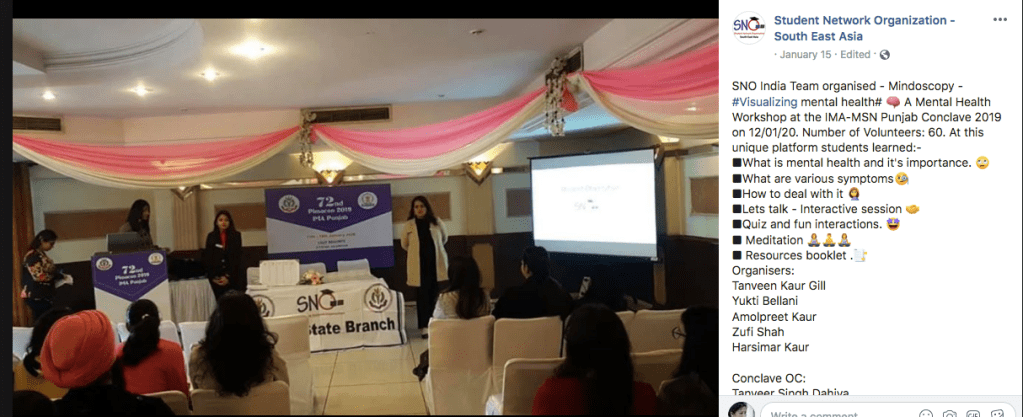
A Junior Doctors World Congress was held at my alma mater, Christian Medical College Ludhiana in April 2019. Si and I ran a Mental Health Workshop that was attended by 75 medical students from India and the wider South and South East Asia region. 

Motivated by this event, some students have established community mental health support networks and mentorship programmes at their respective institutions.  I am impressed with their passion to make a difference.

Here is an example:
Early March I was back in Delhi and was honoured to be invited by Shruti Verma Singh, the founder of a Youtube channel, Zen-Brain.com. She is determined to increase the emotional awareness in India and does it gently, through a series of interviews. We met one afternoon to talk about Saagar. I hope her work will help wake up the government, break social stigma and drive understanding and compassion.
Nowhere to go.

On the 9th of March, I reached Melbourne for the second leg of the Churchill Fellowship. I had been looking forward to it for ages and just couldn’t wait to get started. I had the taken the whole month off. Despite the long journey I didn’t feel any fatigue. My AirBnB was homely and comfortable. After a good night’s sleep, I was ready for work.

The Beyond Blue Office was easy to find. After a brief introduction to the team, we all went out to get coffee together. I was already one of them and the coffee was great. The following days flew past with meetings, interviews, presentations and briefings. A trip to Headspace. Despite some background murmurings of a virus, I was having the best time, learning and exchanging thoughts and ideas. Then Australia closed its borders. Meetings and conferences started getting cancelled.

On the 16th, I took a return flight to London.  My trip shrank from 3 weeks down to one. I had to miss Sydney altogether. Now, I am back here with a blank diary for 2 weeks and I am loving it. I have volunteered myself to work and I am on standby.

I can now research and look up things I’ve been meaning to for a long time. I can clear out one cupboard every day and get rid of stuff I don’t need or use or get joy from. Unclutter and create space in my house and my head. I can go to bed without setting an alarm. That pile of unread books that’s been sitting atop my table, feeling ignored and giving me dirty looks, can now be tackled.

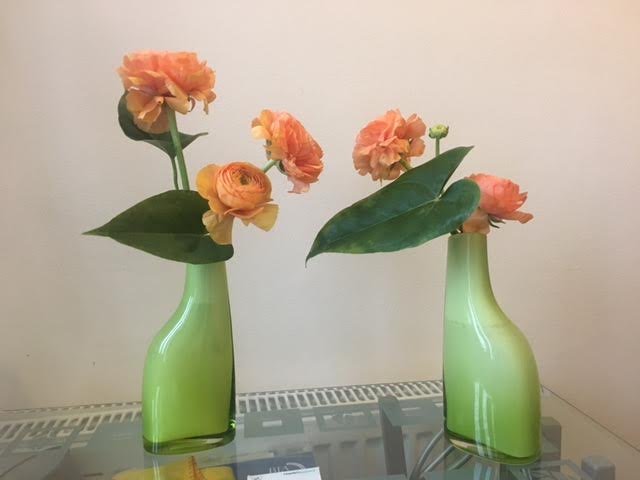
Part of me is rushing in to fill the time with a list of a hundred things to do but I am consciously slowing down. Having an easy routine. Fitting in things I love doing, like arranging flowers. Making time for friends. Cooking. Walking. Not getting hooked to the media but keeping an eye. Writing hand-written letters to loved ones. Sitting still. Enjoying our home. Truly appreciating the weirdness of our cat, Milkshake. Cherishing having breakfast, lunch and dinner with Si as he works from home.

Simplify. Make easy. Make plain.

The Way Back – supporting attempt survivors – an idea worth adopting.

Who knows?

12 days ago I left my home and husband with a strange sense of ‘last-ness’. Si and I are familiar with that uncomfortable feeling.  We know that the whole world can change in one second. 12 days is a long time.

Melbourne, Australia, was my final destination when I left home to complete my Churchill fellowship. On the way, I broke my journey for a week in India. I find it impossible to fly over India to go to other places without stopping. There, I watched in horror how much India’s centre has moved to the right. It has gone so far that the words ‘liberal’ and ‘secular’ are now bad words. My closest friend there is a Muslim gentleman whom I have known for the last 23 years and have never thought of him as a Muslim. But now I fear for his safety. I fear for the safety of all my family as I know that when there is fire, some are damaged by flames but many more by smoke.

So, here I am, in Melboune, at a house, rented through AirBnB and so much has happened in these 12 days. I have never understood the need for 24-hour News Channels as they endlessly repeat themselves, induce panic and heighten pre-existing anxieties. Many people are petrified. They are understandably worried about themselves and their loved ones. The restrictions being imposed are causing more isolation and angst. Italian prison scenario is a very sad example.

This is a good time to observe the effect news has on you, pay attention to your feelings and take a break when you need to, from the constant ranting of various media. I am doing that. I am keeping myself informed, connected and calm. I am not willing to allow the situation to affect my mind too much. I am taking all the precautions as advised and that is the best I can do. WHO sensibly says let’s look after our bodies and minds.

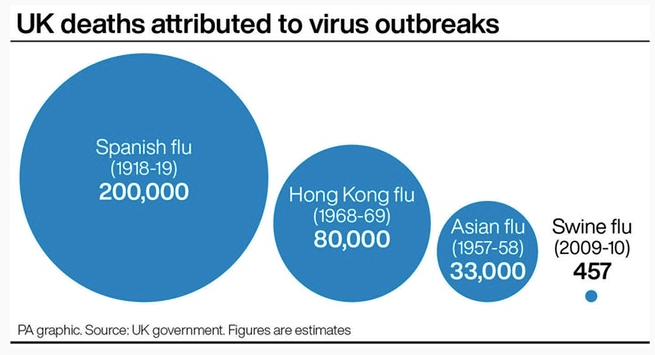
I suspect that death rates from this virus are being hugely exaggerated. They are based on projections from those who have been tested, but many people, all over the world have had a cold or flu over Jan and Feb and have not been tested. So, where does the truth lie?

No one knows. That is the answer. No one knows.

Patients first.

Credit: Mario Sanchez Nevado (www.aegis-strife.net)

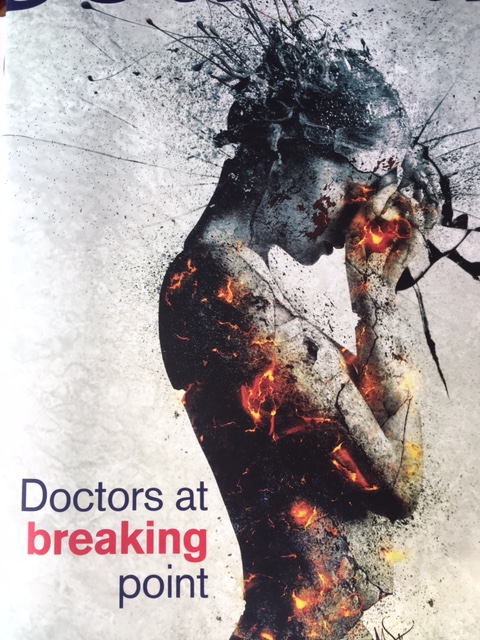
When I speak with gatherings of doctors, I often start with asking them to shout out whether they think the statements below are True or False. What do you think?

  • Sick doctors know when they are sick.
  • Doctors are good at asking for help and following advice.
  • Doctors take good care of themselves.
  • Doctors have strong support networks.
  • Doctors are kind to each other.   

Irrespective of which country I am in, without fail the auditoria flood up with a big resounding ‘FALSE’ for each of the above, accompanied with some sniggering. Isn’t it shocking? One would expect that people who work in ‘healthcare’ would know a thing or two about their own health as individuals and as a community.

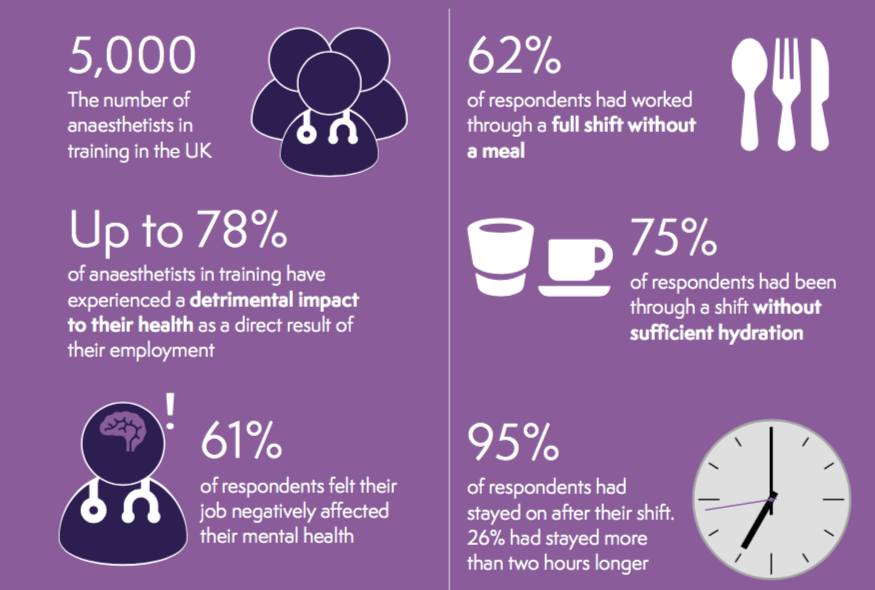
These are the highlights of a survey conducted by the Royal College of Anaesthetists in 2016-17:

The NHS Sickness statistics consistently show that NHS hospital doctors have the lowest rate of sick leave as compared to any other staff group.  Here is a list of personality traits of doctors (a broad generalization, of course) that might explain this:

  • Perfectionism (I must do this right!)
  • Narcissism (I am good at what I do.)
  • Compulsiveness (I can’t give up till I finish.)
  • Denigration of vulnerabilities (If I need help, I am weak.)
  • Martyrdom (I care for my patients more than myself. Their needs come before mine.)

The very traits that make us good doctors are the ones that may not be very good for us. But our seniors have not been aware of this and hence they have not been able to help us understand ourselves. This tradition has been going on for generations of doctors. There is a nobility associated with such self-sacrifice, which we all have bought into. The fact is that if your own cup is empty, you cannot serve others well.

Things add up – a dysfunctional department, work pressures, lack of support outside work, ill-health, emotional burden of the job, a traumatic adverse incident, lack of sleep, fatigue, a complaint made against you, poor diet and no time to exercise or pursue hobbies, impaired judgement of one’s own symptoms, fear of letting others down, difficulty in admitting that they have a problem.

Burnout among medics is not unusual. It looks much like depression and sometimes ends in devastating tragedies. But help is available. Sadly, unlike other illnesses, for mental health issues, the onus of getting help lies with the sufferer. It takes courage to acknowledge one needs help and seek it out in good time. It might be the best thing a doctor can do for themselves and their patients.

Sources of support:

  1. https://www.bma.org.uk/advice/work-life-support/your-wellbeing/sources-of-support
  2. Doctors in Distress, a charity set up by Amandip Sidhu in memory of his brother Dr Jagdip Sidhu who was an eminent cardiologist and tragically died by suicide on 27th November 2018.

Men and boys

International Men’s Day is designed to help more people consider what action we can all take to “Make A Difference” and “give men and boys better life chances” by addressing issues such as high suicide rates, sexual abuse and health.

I had no idea when this day was until yesterday morning, when I received 4 photographs from Aidan who lives in Malasia. He is one of Saagar’s close friends and he shared a house with him at Durham. His comment read “Delivering a Mental Health talk to Schlumberger in conjunction with International Men’s day.’

Invaluable, undying friendships.

Here’s another set of friends. Rene’s friends, who are racing across the Atlantic later this month in his memory – Race for Rene. They are raising a huge amount of awareness and funds for 2 charities: PAPYRUS and Child Bereavement UK. They say, “We lost Rene to mental health in 2017. We don’t want anyone else to have to feel what that’s like.” That is a vision worth having.

Here’s a conversation with James, one of Rene’s friends: https://www.youtube.com/watch?time_continue=4&v=Aerqfealiwk&feature=emb_title

Good luck to the crew. Here’s to all the men and boys we love:

Thanks for this Mary.