What’s in it for me?

When we moved from the frantic chaos of London to the quiet serenity of Sakleshpura, we didn’t have much to do. We didn’t speak the local language, had no local friends or family and no real work. I offered to start volunteering as a Spoken English teacher at two local primary schools for an hour per week each. They didn’t ask me for a DBS certificate or for any evidence of appropriate qualifications. Not sure I am qualified, but I was sure we would have fun.

Within a few weeks of starting, my students would smile and wave at me if they spotted me in the market. Some of the older ones would offer to carry my bags. Kushil is seven. His uncle told me that he shampooed his head twice on the morning of the class as he knew I would kiss him on the head. He is one of 5 students at one of the tiny schools in a tiny local village.

I bought hairclips for the girls from ‘Accessorize’. Kavya wore them on the very next occasion she knew she’d see me.

Tanushree lives near one of my new-found friend’s houses. She stood by the roadside when she saw my car coming. I stopped the car and lowered the window. “Miss, books.” She said. I sent her a few age-appropriate story books by Indian authors to read, strictly on returnable basis.

Praapti presented me with a lovely little handmade Diwali card which I did not expect. Such joy! She also enclosed two pens in the envelope – one with dots and the other with bunnies, one writes in blue and the other in black.

After the class we walked to our farm nearby and played with cows and dogs, ate laddoos and fed peanuts to the birds.

Some of the locals cannot fathom why I teach the kids for free. What’s in it for me?

(Resource: Health benefits of volunteering: https://www.mayoclinichealthsystem.org/hometown-health/speaking-of-health/3-health-benefits-of-volunteering)

Half-saree ceremony

We’re back home, in Sakleshpur, and finally, after more than six months of monsoon, the rain seems to have stopped for now. After making us wait for ages, the sun is finally smiling in all its brilliance. The monsoon arrived one month earlier than expected and stayed a month longer. Many coffee beans were knocked off their branches by sharp rain drops. Moisture laden air meant that fungus started infesting the plants. Months of sogginess in the soil made the roots of the pepper rot. The local farmers were seriously worried, and the return of the sun has brought them and us huge relief.

One of my students reached puberty this month. How do I know? Because her family hosted a celebration, the Half-Saree Ceremony to mark the occasion. The name comes from the brightly coloured silk dress that is worn by the young girl at the centre of it all. A long skirt with a matching blouse and an unstitched piece of silk draped elegantly around her. She wears beautiful jewellery, adorns her hair with flowers and sits on a throne like a precocious princess. The maroon lipstick looks terribly out of place on her cherubic face.

In South India this ceremony symbolizes the communal acceptance of a girl’s transformation into a young woman. It is sacred and hence accompanied by elaborate rituals and fragrant prayers using sandalwood, roses, jasmine and a hundred other things. It is an occasion to formally introduce the young lady to her extended family and community, as well as to reinforce her traditional roles. Generations up and down gather, fostering a sense of identity and belonging, celebrating both, her individual milestone and the timeless traditions that define her heritage. 

I wonder what it’s like for her to have the entire village know this very personal thing about her. Maybe it’s so normal here that there’s nothing strange about it. A healthy normalisation of a potential taboo. I wonder if this is a hidden invitation for marriage proposals not so far in the future. I wonder if she feels the pressure of expectations of her family and community change overnight. I wonder how she sees herself now. She is only 12.

The day is the day.

(Credit:: Saagar Naresh. Age 12. Art Homework.)

It’s an ordinary day that starts as the sun peeps from somewhere behind the horizon and ends as it vanishes somewhere behind another at different times for different people on the globe scattered all over these continents everywhere. It is not a singular day as it claims to be.

It’s not my enemy and yet it circles around each year as a reminder of what happened as if I need reminding. It’s not my enemy even though it feels like one. It’s just another day, innocent and ignorant, asking me to sit down. Have another cup of tea.

It was nameless and inconspicuous until it arrived hiding a deep darkness within its light wearing the face of a sacred place and a robe of expansion and growth and holding a promise of transformation before I knew what that meant, unlocking the path to an invisible destination.

This endless path covered in thorns and nettles with no alternative or detour must be trodden with bare feet. It is essential they bleed.

To my desperate open eyes the destination remains invisible. When I let them close I glean a faint ray of hope.

Comings and goings.

As usual, I sit here at my table by the window of my study, admiring the autumnal trees standing in the park across the road, looking for inspiration to write. They have been my encouraging companions for years. The difference is that today might be the last time I write sitting here.

Early autumn has cycled back again. The fullness of the moon has synchronized with the one eleven years ago. The comings and goings of the seasons, of the world carry on as usual. Moving away from this home to live elsewhere was unthinkable at one time. But now, the heart has settled. It knows things it did not before. It carries a treasure of love and memories. Saagar lives in this heart now. He cannot be left behind. He is with me everywhere.

This, our home is ‘under offer’ now. A young couple wants to buy it for the same reasons we did twenty years ago. A quiet street. A diverse neighborhood. A garden. Parks and good schools nearby. Last few days of packing up have been intense. Things that have surfaced from deep recesses – a handheld Nintendo Gameboy carefully wrapped in its purple case, a proper Canon camera, one black sock with TUESDAY on it in yellow bunched together with another with SATURDAY printed on it in green.

I know not to trust my memory. It often fails me. It misremembers things, puts them in the wrong order. Omits some entirely. It plays tricks, causes confusion. Forgets what I want to hold on to and remembers what I’d rather forget. Luckily, the job of the heart does not include remembering but feeling – how it feels to sit here looking out the window and then at a blank page, to fold a much-loved photo in silk and cover it in more soft clothing, to look at an empty room and see it filled with light, to know it’s okay. I can trust this thing in the center of my chest. It’s all okay.

Othering our Ownkind.

“More than two thousand people read my post and saw my video today “ Yuval said.

‘They will see it and be moved by it. What then? What will they do?’ asked Basel.

That is the big question. What can we do? What will we do? Two young journalists from either camp came together to document the encroachment and destruction of a village called Masafer Yatta on the West Bank. They raise this question loud and clear for each of us. What can I do? The injustice of all this pushing and kicking, hurting and forcing fills me to the brim with a sense of sadness and powerlessness. My arms and legs go limp. So, thus far I’ve been running away from it. I must be a coward. What can I do? So many influential and powerful people have been quiet, watching the numbers and images get worse every day for decades.

Today, I watched No Other Land on the big screen. Live footage shot on a mobile phone over 4 years, 2019 to 2023. Running away is not possible anymore.

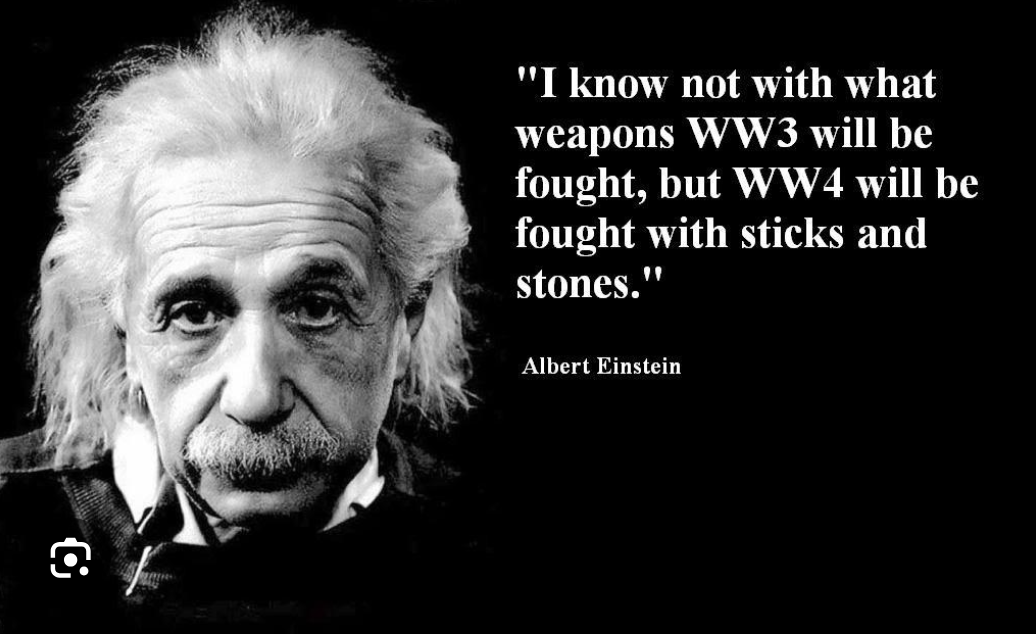
Harun’s mother prayed for his death. This young man was shot by a soldier while he was trying to stop his home from being demolished by the army. The bullet left him paralysed from his neck down. He was nursed in a cave as they had no house. No facilities. No transport. No freedoms. Everything around them was being bull-dozed – chicken coups, elementary schools, homes and villages. No one knew what new destruction each new day would bring. Toddlers were learning to speak, and older kids were trying to play and go to school in the middle of this madness. The respectable Mr Tony Blair graced the village with his pointless guest appearance for seven minutes.

Our world is bipolar, selectively blind. It’s okay for the politics of some nations to be tied to a faith but not for others, it’s okay for some nations to dishonour every treaty that they ever signed but not for others, it’s okay to condemn the exact same atrocities when committed by one nation and not another, it’s okay for third parties to fund and support the killing of women and children in plain sight. This is our world.

We humans have the arrogance to believe we are the smartest of all species, yet dogs don’t kill other dogs in millions every year. No other species has constructed the level of othering that humans have. We can’t see what we are doing to ourselves. We can’t see that there is no other. It’s only us in different garbs. Those of us who can see, must see. Those who can write, must write. Those who can sing, must sing. Let not our dark side win.

Arrogance, blindness and cowardice – a recipe for self-extinction.

By Abdul Raheem (https://www.instagram.com/mud._.lotus)