Changing the Conversation.

First versus second.

Medical versus human.

Symptoms versus experiences.

Problem-based versus Trauma-informed.

Here is an example of language, describing the same thing in two different ways.

First:

“I was 15 when I started to suffer with mental illness. I went to see a psychiatrist who told me that I had something called Schizophrenia. For a couple of years my symptoms got really bad and people were afraid I was going to hurt myself so I was hospitalised. They stabilised me on meds and shock treatments and sent me home. For a long time, I didn’t get sick again.

Later, as an adult, I started to get symptomatic again. I got pretty psychotic and once again got put in hospital. They told me there that I was really sick and should go on disability. For a long time, I was pretty sick but then started to be able to manage my symptoms.”

Second:

“I was 15 when I started feeling different than others and really alone. For a couple of years after that, I would do things in pretty extreme ways. They made sense to me based on what I was thinking and feeling but I guess it was scary for others who didn’t really understand what I was thinking and feeling. I got put in a hospital. There I really lost hope and beliefs about being a ‘regular’ person. They put me on a lot of medication that made me sleepy all the time. After I left, I threw out all the meds and put my intensity into music.

Years later, coming out of a difficult marriage I started to have similar kinds of experiences as the ones I had as a kid. I had really strong feelings and felt pretty separate from others. I got put back in the hospital again. I was told I had a major mental illness and that I should go on disability. Though I did that for a while, I realised that I was just going along with their beliefs rather than looking at how I’d come to think in certain ways. Little by little, I figured out what to do with my intensity and I’ve been really growing ever since.”

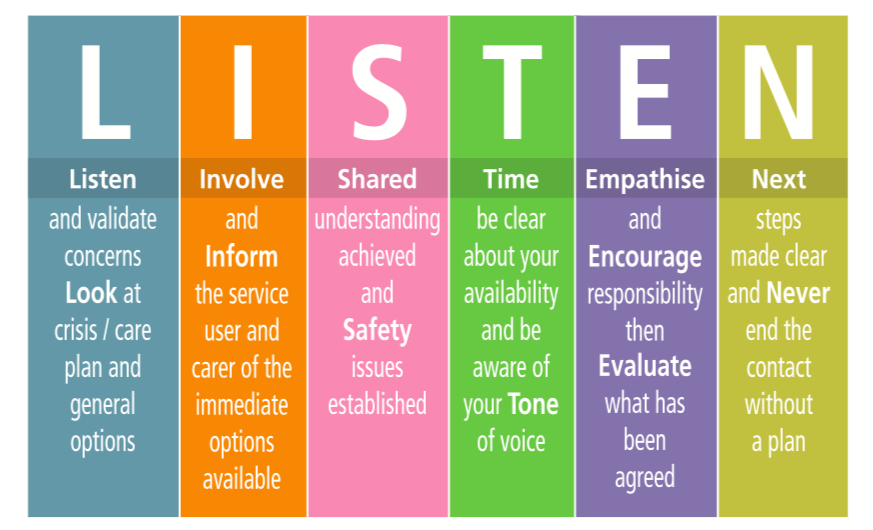
Each one of us is simply at a different place in our growth and development. Using language that is personal and descriptive of our experiences enables shared understanding. It forces us to think of ourselves and others more broadly as human beings, free of labels and assumptions.
Reference:

Intentional Peer Support: https://www.intentionalpeersupport.org/?v=79cba1185463
Not before 12th April

Building up to today, hope of movement. Till this morning, half-fearing the radio might say – it’s been cancelled. After nearly 13 months of this regulation and that and then the other, bungled numbers coming from unreliable sources, u-turns based on dodgy science, I am not sure what is to be believed.

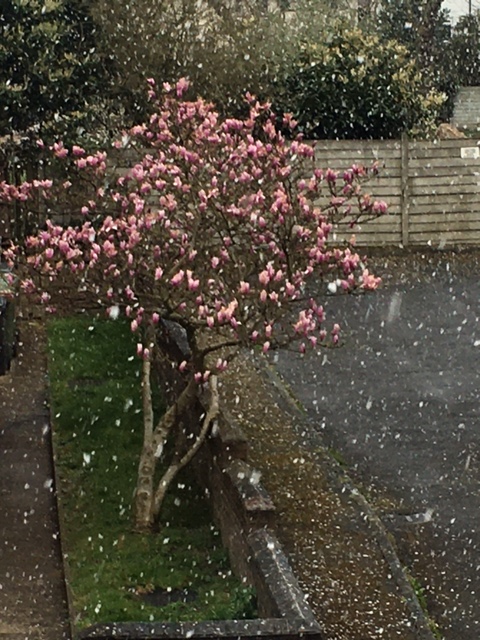
This morning I opened my eyes to snow descending like down-feathers, dancing and swirling outside my window. Wow! There is hope. A clean, fresh start.

As an anaesthetist, over the last few months I’ve been speaking with patients, re-assessing their fitness for the operations that they were supposed to have March 2020 onwards, which have not happened yet but will hopefully happen soon. Several of them have had to live with painful knees and hips and other uncomfortable conditions for at least a whole extra year, unable to move around and exercise. Many of my patient’s health has deteriorated over the last year. They have gained substantial weight, some are drinking much more than before. A few have decided not to have their operations as they are worried about visiting the hospital, leave alone be admitted, for fear of getting the virus.  

A few got Covid and have recovered fully while a small proportion have lingering issues. Others have discovered new health conditions like heart disease, diabetes and asthma. Some elderly patients have developed new ‘minor’ issues after having the vaccine, like loss of balance, making independent living impossible. So many have lost confidence.

The incessant repetition of “you may be next to die a terrible death alone soon” on TV and radio has filled the psyche of the populace with terror. The thorn of fear has made a home in so many chests. It’s easy to put it there but difficult to pull it out. How insiduously our greetings have changed from ‘Have fun!’ to ‘Stay safe’.

Monday, a good place to start afresh. May we find the courage to recover, open and experience life in all its fullness in the coming weeks and months.

“Avoiding danger is no safer in the long run than outright exposure. The fearful are caught as often as the bold.” -Helen Keller

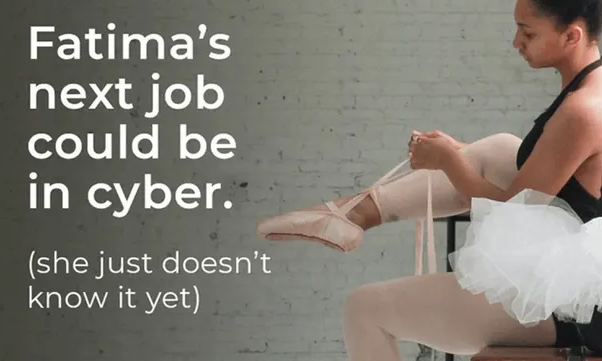
We don’t know it yet.

(A government advertisement which has now been removed)

“We’d better finish in time today. I have tickets for Nitin Sawhney at the Southbank Centre this evening. Would be nice to grab a bite beforehand. Isn’t it Sod’s law that when you have plans, something is bound to crop up and stop you getting there?”

Once upon a time, we made plans. We co-ordinated and arranged a time and place to meet with friends. After work, we visited places, had conversations, chilled out at book shops browsing through poetry and fiction, we waved frantically as we spotted each other in crowds, across a sea of heads. We buzzed in the excitement of the bar and lounge in theatres before the show began. We pre-booked drinks for the interval. We patiently queued outside toilets. We unexpectedly ran into people we knew but didn’t expect to see. We leant into the ushers with our tickets, showing them the number and taking directions to our seats. We squeezed past people apologising as our handbags and knees gently bumped against each other. We quietly admired a dress or a pair of earrings here and the unmissable drama of a sparkling peacock-blue eye-shadow at the base of long brushy eye-lashes there. We hushed as the lights went down. We waited for the curtains to rise. We lost ourselves in the surreal sets, the crazy costumes, the transformative talent, the perfect precision, the heights of the high notes, the tangential takes. The sheer magic of it.

We came back, changed. Enriched. Enthralled. Expanded. Elevated.

That was a long time ago. They say ballet dancers are being encouraged to re-train in cyber-security, singers are venturing into soft furnishings and sound technicians now have the lucrative opportunity to be delivery drivers. Their jobs evaporated.

The pandemic and the response to it are killing people. What else is being killed? Can it be measured? How much of it is revivable? When?

Poverty and the Mind

Vikram Patel is a psychiatrist and a Professor of Global Health who works tirelessly to improve the mental health of people living in low and middle income countries like India and Ethiopia.

His recent research has found that all countries are ‘developing’ countries when you look at the low proportion of the health-budget they spend on mental health. Some wealthy countries may have better systems of care for maternal and child health but overall, mental health remains universally, at the end of the queue.

At present, COVID has overtaken all other agendas. However, now more than ever before, there is a recognition of the two-way relationship between poverty and mental ill-health. This may be a historic opportunity to get this right.

The relationship between poverty and mental ill-health is a complex one. How can we distinguish a normal response to poverty from a disease process? Poverty can increase the risk of poor mental health via multiple pathways, for example, poor physical health, high levels of noise pollution, violent neighbourhoods, insecurity and humiliation.

Can an increase in income improve mental health? Yes. It can but it needs to be sustained.

The fact that having a mental illness may induce poverty is less well recognised. It may affect one’s education and hence, employment opportunities. In low and medium income countries, health care is paid for by people. Due to the length of time it takes to find an effective treatment, much effort and money is wasted in doctor-shopping. Depression is inequitably distributed in society but not recognised as such because wealthy individuals also get it. We accept that long term expensive therapies cannot be delivered to the poor, so what’s the point in studying them?

After nearly a year of job-losses, the number of people below the bread-line all over the world will increase by tens of millions. In India alone, the gains made in economic growth over the last decade are predicted to be wiped out this year. The historically disadvantaged will fare worse, suffer more.

We can expect a surge in mental health problems like we did after the 2008 global financial crisis, mainly led by suicide and drug misuse. Sir Angus S Deaton, a Nobel prize winning economist wrote extensively about these deaths of despair. Economists and global health experts warn that this one will possibly be far worse.

In India, while the state is spending all its energies on the pandemic, livelihood-based organisations are finding very poor mental health in their members. Taking a broad, multidisciplinary approach to depression and anxiety rather than viewing it through the lens of a medical specialty is the need of the hour. Policies all over the world need to de-medicalise the emphasis on specialists and empower front-line providers and communities to enable them to foresee, identify and address this problem.

The bi-directional relationship between mental health and finances means that appropriate mental health interventions can improve finances. Can we persuade policy-makers world-wide to listen to global health experts and economists, look at this fast-approaching  avalanche and steer policies to protect those who are being and will be hit by it?

Talk: Poverty and Depression (https://voxdev.org/topic/health-education/poverty-and-depression-how-improving-mental-health-can-help-economic-wellbeing) – this talk was available till last night but has since disappeared.

Research Papers:

  1. Angus Deaton on the Financial crisis and the well-being of Americans (June 2011):

https://www.nber.org/papers/w17128

2. Vikram Patel on Causal evidence and mechanisms of Poverty, Depression and Anxiety (May 2020):

https://www.nber.org/papers/w27157

Catriarchy

His dad was Russian royalty. Since the age of six weeks he could tell the difference between gourmet and ordinary meals, silk and cotton stoles, real and fake woolen throws, synthetic and down duvets, the warmth emanating from humans and radiators. He could tell if he had the full attention of his staff or not. He still can. He knows how to get them to do what he wants without saying a word, be it opening the door for him or being stroked at the back of his neck.

For entertainment, for a short while the laser pen was fun but very soon he let us, his staff, know it was cheap and silly. He wants action, involving blood and gore. He’s out hunting, bringing home trophies of half-dead mice, baby sparrows and often a big gash somewhere on his body.

He knows he’s good-looking. His James Bond swagger gets exaggerated when he knows he’s being watched. He sits like a statue when he’s being talked about but his upright ears change direction like a satellite dish. If he’s in the mood he humours our affections but prefers that we stick with our duties.

I do believe that he needs to check his cat-privilege. For centuries, cats have pretended to be domesticated while all the time exploiting humans. It’s about time we, as humans did something about it. I am in the process of designing an ‘unconscious bais’ training for him while at the same time preparing myself to be royally ignored. He has a clear preference for male company. It has been communicated to me in no uncertain terms that I am ‘extra’.

Named and reared by one of the finest specimens of the human species, he is a Maharaja of the Kingdom of Two. We celebrate his majesty, Mr Milkshake, paws, claws, whiskers and all. And his surrogate mum, Saagar today and every day.

Happy Christmas. xxx

“What?”
Summer 2013