Everything living on Earth is food for the Moon.

So much of everyday life, including the innumerable religious festivals in India are dominated and determined by the lunar calendar. While the gross impact of the moon on water, especially the tidal waves is well known, the more subtle effects on humans and plants, less so. Biodynamic methods of farming acknowledge the cycles of the moon as fundamental to a good harvest as they incorporate cosmic energy to minimise disease and aid growth.  

At a recent Biodynamic meeting, I was fascinated to see a Planting Calendar based on the 6 cycles of the moon. I thought there was only one – Full to New and back.

Every 27.3 days, the Moon and Saturn are on opposite sides of the Earth. This is a great time for planting as their forces synergise to produce strong plants of high quality. Organic wine growers have been using this technique for a long time.

Like inhalation and exhalation, the Moon ascends and descends. The ascending phase is great for harvesting as the natural flow of energy is upward and the descending phase is a good time for transplanting saplings as the downward energy helps them take root.

Apogee is when the Moon is furthest from the Earth, a great time to sow potatoes. Perigee is the point in the orbit of the moon when it is nearest to the Earth. This means there is more moisture in the soil, making the plants more prone to fungus and insect attacks.

Nodes occur when the Sun-Earth-Moon are in line. It happens twice every month. It’s a bad time for any horticultural activity as the Sun’s beneficial influence is negated on these days.

As the Moon passes through various Zodiac constellations, it exerts different influences on different types of plants. At this point, my cognitive abilities were saturated, and I had to leave the rest for later.

I shall have mercy on you and stop here.

Splendiferousness from last night. I am sure Saagar would say something like,”Big-ass Moon. Innit?”

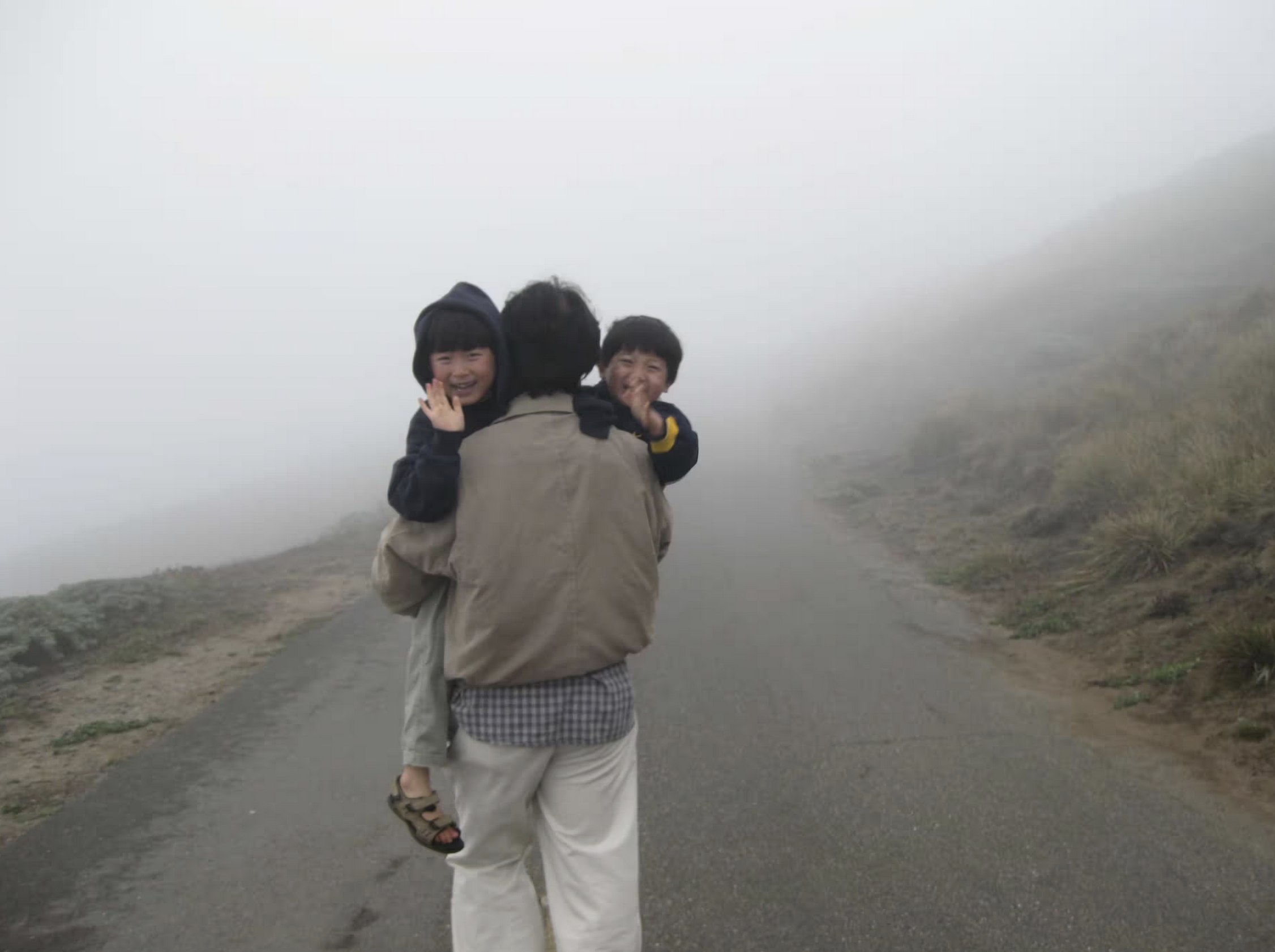
Dad, boys and crow.

Once upon a time there were two boys who purposefully misremembered things about their father. It made them feel better if they ever forgot things about their mother.

There were a lot of equations and transactions in their small family. One boy dreamed he had murdered his mother. He checked it wasn’t true, then a put a valuable silver serving spoon that his father had inherited in the bin. It was missed. He felt better.

One boy lost the treasured lunchbox note from his mother saying ‘good luck’. He cried alone in his room, then threw a toy car at his father’s framed Coltrane poster. It smashed. He felt better. The father dutifully swept up all the glass and understood.

There were a lot of punishments and anticipations in their small family.

Eight years ago it was hard work and I could remember it only vaguely.

I read it for the second time this morning. It felt brand new, easy, fun and hearbreaking. Part memoir, part sound-poem. A bit more than 100 pages long. No more than 18 thousand words. The ‘missing’ in the life of a young family after the mother dies suddenly is palpable. In the background rings the sound of a crow flapping its wings. One big black feather has dropped on the ground. It lies near my right foot.  

PS: Losing a parent or a close relative or friend at a young age puts the young at a high risk of suicide.

It is February.

In January, fourteen blog-posts rolled on to the page, inspired, with sparkling newness, a fresh resolve. Then twenty days sneaked past, and nothing appeared. Wonder why? What is it we can trust?

The body?

One of the most fragile things around, it aches and creaks, often deceiving itself with imagined abilities and fantastical visions. It morphs every day in its special small way, without a clue what happens next. Can we depend on its trustworthiness?

The mind?

It doubts to the point of debilitation, endlessly compares un-comparables, guards its ideas like a dog, but softens and changes its opinions when presented another point of view. Every now and then it simply loses itself, out of the blue. What can we do?

The Universe?

Sounds great. But what does that relationship look like? Seems rather theoretical.

So, what is constant? What can we trust?

The thing that is not a thing and yet, can be called everything. The thing that is nowhere but can be thought of as everywhere. The thing that appears as me but is in fact invisible. The thing that is localised in each of us but is colourless, featureless, unbound. The thing that is beyond stillness and movement, beyond light and dark.

Awareness. The one that knows. Not as a person but as an intelligence. A presence. An eternity in this moment. Here. That always was, is, and always will be. That can be trusted, not to get things done, but to know. Know every experience of being in this body, having this mind, perceiving the world through these eyes. This is how it is.  That knowing. Beyond sounds and beyond silence.

Who’s the boss?

Did you know there’s an organisation that brings science and spirituality together? Its mission is to create a kinder, heart-centered world where we care for one another and live harmoniously. It’s called the HeartMath Institute and offers many free resources.

They have found that the heart is not just a mechanical pump. It contains thousands of nerve cells. That is probably the reason our memories and trauma are stored in various parts of our body, mainly the brain and heart.

We were taught in school that the brain is a master-organ but it’s the heart that tells it what to do. The intelligence of creativity, innovation and intuition resides in the cells of the heart. Brain neurons are the antennae that follow the heart’s desires. For example, I want to speak and understand Spanish says the heart. The brain follows.

We humans have a stunning ability to self-regulate. Our biology is engineered as a soft technology. Our fundamental physiology is made up of ion-potentials across membranes. We’re the only form of life that can harmonise its two major neural organs through Heart-Brain Coherence. We can alter the chemistry in our bodies. Once this coherence occurs, we can heal and be healthy. The immune system is strengthened, longevity enzymes rise and stress is reduced at a molecular level. Three minutes of this shift can produce beneficial effects for 6 hours.

3 steps:

  1. Shift in focus – into the heart
  2. Shift in breath – slow it so the exhalation is longer than the inhalation
  3. Shift in feeling – a positive feeling – initiate Gratitude on demand.

We are powerful self-regulators. It is a God-like ability that we have, to heal ourselves. We’re conditioned to feel helpless and think we need external help. Sometimes we do need interventions, but we can honour the gift of this body to heal ourselves.