Day 762

Bone doctors can sometimes forget  there is a heart and a mind attached to the bone being fixed. Orthopaedic surgeons are the butt of many jokes for some unknown reason. They think it is because everyone is envious of the vast amounts of money they make and of course, they would like to think that.

What do you call two orthopaedic surgeons looking at a chest X-ray?
A double blind study.

What’s the difference between a carpenter and an orthopaedic surgeon?
A carpenter knows more than one antibiotic.

How do you hide a 20 pound note from an orthopaedic surgeon?
Put it in a textbook.

They are not what they are made out to be. Mostly. 😉

I am lucky to work with some funny, gentle and bright orthopods. One of them has changed from a purely professional colleague to a friend through the last 2 years. Yesterday, I shared with him my frustration over any meaningful improvement in the awareness of mental health issues within the medical community and beyond. I feel as if nothing has changed and no lessons have been learnt from Saagar’s death. Many others like him continue to suffer in silence. I feel that I go on banging my head against the walls completely in vain.

He wrote back:
“Saagar, has somehow had a profound effect on me, even though I never met him.

I have a young woman whose humerus I plated last week, and in clinic yesterday I could see her whole life starting to come unravelled: can’t exercise yet, not at work, not concentrating. All the things she used to give her self-worth are not available. Not despair, but the beginnings. So we talked about the dangers, and she agreed to see our psychologist.

You and Saagar have made that change in me, so keep doing what you do: it works.”

Day 761

One wrong after another – worked in an unfamiliar environment with people I did not know all day – despite best efforts missed the much awaited appointment with my therapist due to late finish at work – we decided to miss King Lear at the Old Vic as we felt knackered – ran into two of Saagar’s school friends just outside the railway station on the way home – surprisingly, remembered their names despite them looking somewhat different from 6 years ago. One of them took my number and said he wanted to visit. We agreed to meet up for coffee next Tuesday. We didn’t talk about him but we gave each other big Saagar hugs.

Tears came rolling down as I walked away in the cold darkness with my arms crossed. I sobbed all the way home, the return walk that Saagar never made. Everything came back – the school, the friends, the life, the food, the laughter, the evenings, the books, the TV, the music… everything. The gaping hole got bigger and darker, swallowing me up.

Got a message from a friend asking me how I was. The story poured out of me like molten lava. I suppose if you ask someone ‘How are you?’, you’ve got to be willing to listen to the answer.


Day 760

cover-jpg-rendition-460-707

4500 men end their  lives every year in the UK, 3 times more than women. Many times more self harm and attempt suicide. The highest suicide rate in 2014 was for men aged 45-49.

‘Building Modern Men’ is a series of articles published by Huffington post to mark the International Men’s Day (19th Nov). It covers a wide range of topics from male role models to inability to swim. (http://projects.huffingtonpost.co.uk/building-modern-men/) A Masculinity Audit carried out by Huff Post and CALM,looking into the causes of male suicide  found that :

  • Four out of ten males feel they lack the qualities and abilities that partners look for in a man

  • 61% of all respondents agree that men are stereotyped in the media

  • Four in ten male respondents strongly agreed that ‘women have unrealistic expectations of men’

(Ref: http://www.huffingtonpost.co.uk/entry/mens-mental-health-building-modern-men_uk_58206805e4b0c2e24ab022fb?utm_hp_ref=uk)

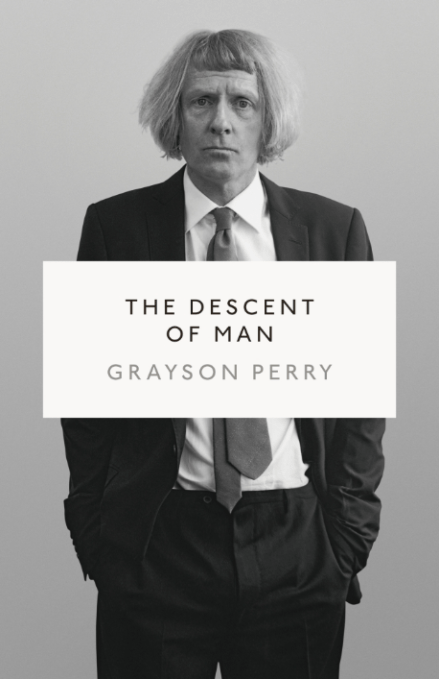
‘For many, masculinity is a fatal burden’ says Grayson Perry on why old-school masculinity is man’s greatest enemy. The 56 years old transvestite artist has always seen masculinity as a choice. He has questioned his gender identity since the age of 12. He believes that his transvestism permits him a greater distance and sharper insight into the layers of manhood that he talks about in his new book ‘The Descent of Man’.
He believes that the traditional approach of ‘stiff upper lip’ is completely out dated. It renders men emotionally illiterate and unable to form healthy relationships. It leaves them very fragile yet unwilling to express their vulnerability, a lethal combination when it comes to mental health. The inflexibility of traditional masculinity doesn’t fit in the present times of change and diversity. That masculinity comes from an age of heavy industry and farming and it doesn’t work anymore.

‘We need to think of masculinity like a piece of equipment. Some men, like soldiers, need to use it all the time, others might need it at the weekend and others not at all.’

Day 759

“My daughter, Frances, developed severe clinical depression when she was in her second year at university, aged 20. She started to self harm, cutting her arms and 3 months later attempted to take her own life by taking an overdose of paracetamol. She was taken to the general hospital in Derby and was released to us 3 days later with no follow up treatment of any kind. The depression continued and we were constantly terrified that she would attempt to take her own life again. She moved backwards and forwards between Derby and home for several months, still clearly very unwell, and was eventually admitted to a psychiatric ward in Addenbrookes hospital in Cambridge (fortunately now closed down) where she only stayed 5 days as she was badly bullied by a psychiatric nurse and forbidden to access either food or drink unless she went to the dining area, which her catatonic depression and severe distress prevented her from doing.

After leaving the hospital, she was offered no further treatment and was not even assigned a CPN. We continued struggling for 3 more years, desperately trying to get the appropriate help for my daughter to survive and cope with the debilitating depression. In 2006 Frances became very severely depressed again and came home after splitting up with her boyfriend, leaving her extremely fragile and deeply depressed. My husband checked the memory on our computer and found out that Frances was actively researching suicide sites. I called our G.P practice and begged for an appointment for her with our G.P, who had been very understanding when we were able to access her. I had complained numerous times that it was often impossible to get an appointment with our G.P as one of the women on reception always insisted that Frances should see whoever was available and she repeatedly refused to give her access to our G.P. On that fateful day, 6 June, 2007, access was once again denied and Frances was given an appointment with another doctor. I went with Frances, as she was catatonic at this stage, and begged the G.P to refer her to hospital. I stressed, repeatedly, that Frances had already made a serious attempt to take her own life and was currently researching suicide sites on our computer. Despite my entreaties, the G.P insisted that Frances should have a prescription for a halved dose of anti depressant, prior to changing it to another one, and sent her away with a leaflet on counselling. Only 5 days later on 12 June 2007, Frances attempted to hang herself. She survived after 6 months in hospital and was left with a severe brain injury, unable to do anything for herself and requiring 24/7 care at a huge cost to Social Care and the NHS.

Frances lived a life with very little quality for a further 9 years and died this year of breast cancer.

I have actively campaigned for many years to improve mental health provision, especially for young people, who are most at risk. I have helped Papyrus and the Samaritans with media work and research and also campaigned for Headway. Over the past 9 years, I have listened to countless parents telling me their story and I have learned that my daughters experience with a G.P, just before attempting or completing suicide is sadly very common. All doctors, and particularly G.P’s, should have a mandatory day’s training on suicide awareness. The training for doctors is long and rigorous, but currently has nothing with regard to suicide prevention. As G.Ps are the gatekeepers of the nation’s health, and are usually the first point of health care access, it is particularly essential that this training becomes mandatory.”

Just one days training in suicide awareness for all doctors could potentially save thousands of lives every year. Teachers, too, would benefit from this training and young people in secondary schools should be taught about mental health, how to protect themselves and to feel able to confide in a trusted adult if they self harm and or have suicidal thoughts. As a teacher, myself, I am well aware of the considerable emphasis on physical health, taught as part of the PSHE curriculum, at primary and secondary schools, but there is nothing in the current national curriculum regarding safe- guarding mental health and so the stigma still remains. Many young men, in particular, suffer from severe and devastating depression, yet tell no-one except,their G.P that they have thoughts of self-harm and suicide. Their parents and families often say that they had no idea that their son or daughter was suicidal until it was too late.” – RW

Another lone voice in the dark joining up. Watch out for the big clang. It’s coming. It’s long overdue. We will be heard. I promise you Saagar. Things will have to change.

 

Day 758

Prison statistics reported in June this year by the Howard league for Penal reform suggest the following:

  • 30% rise in ‘self inflicted’ deaths.
  • A dramatic increase in the number of women who took their own lives – 11 compared with only one during the preceding year.
  • The quarter between April and June 2016 recorded the highest figures for self-harm (9505, of which 665 led to attendances at hospital), 6086 assaults, including 1,540 assaults on staff.
  • Number of prisons awarded the worst possible rating has doubled in the last year.
  • Number of murders in prison over the last 2 years is more than the previous 8 years put together.
  • Budget cuts meant that prison officer numbers fell from 24,000 in 2010 to just over 14,000 by 2014

‘Prisons are not only becoming more dangerous, they are becoming more dangerous more quickly.’ Could it be because mental health issues continue to dominate the police custody world as officers strive to make detention a better and kinder experience for individuals suffering from a crisis. Without proper support from and liason with Mental health services, these individuals land up on the streets or in deeper trouble.

Statements of difficult predicaments from National Custody Seminar, September 2016 :

“You can be dealing with a detainee who is ready for release, and they say to the custody sergeant ‘as soon as I walk out of here, I’m going to jump under a train’ or hang themselves, or create some horrible outcome.”

“The custody officer is then of course faced with a very difficult problem to solve. If they are telling you and you’ve got no reason to disbelieve that they may kill themselves or self-harm, what do you do? Do you let them go? How long do you follow them for?”

“Some officers have tried to detain people for their own good because they can’t rely on the Mental Health Act. Common sense tells you it’s the right thing to do, but the law says you are breaking it. I think that’s a loophole that needs to be sorted out and addressed.”

The deteriorating statistics could surely be a reflection of 2 key services starved of resources trying to look after vulnerable people – Mental Health and Police services.

Sources:

http://howardleague.org/news/prisons-are-becoming-more-dangerous-more-quickly/

https://www.theguardian.com/society/2016/apr/12/ministers-prison-reform-overcrowded-understaffed-invest

http://polfed.org/newsroom/3683.aspx