
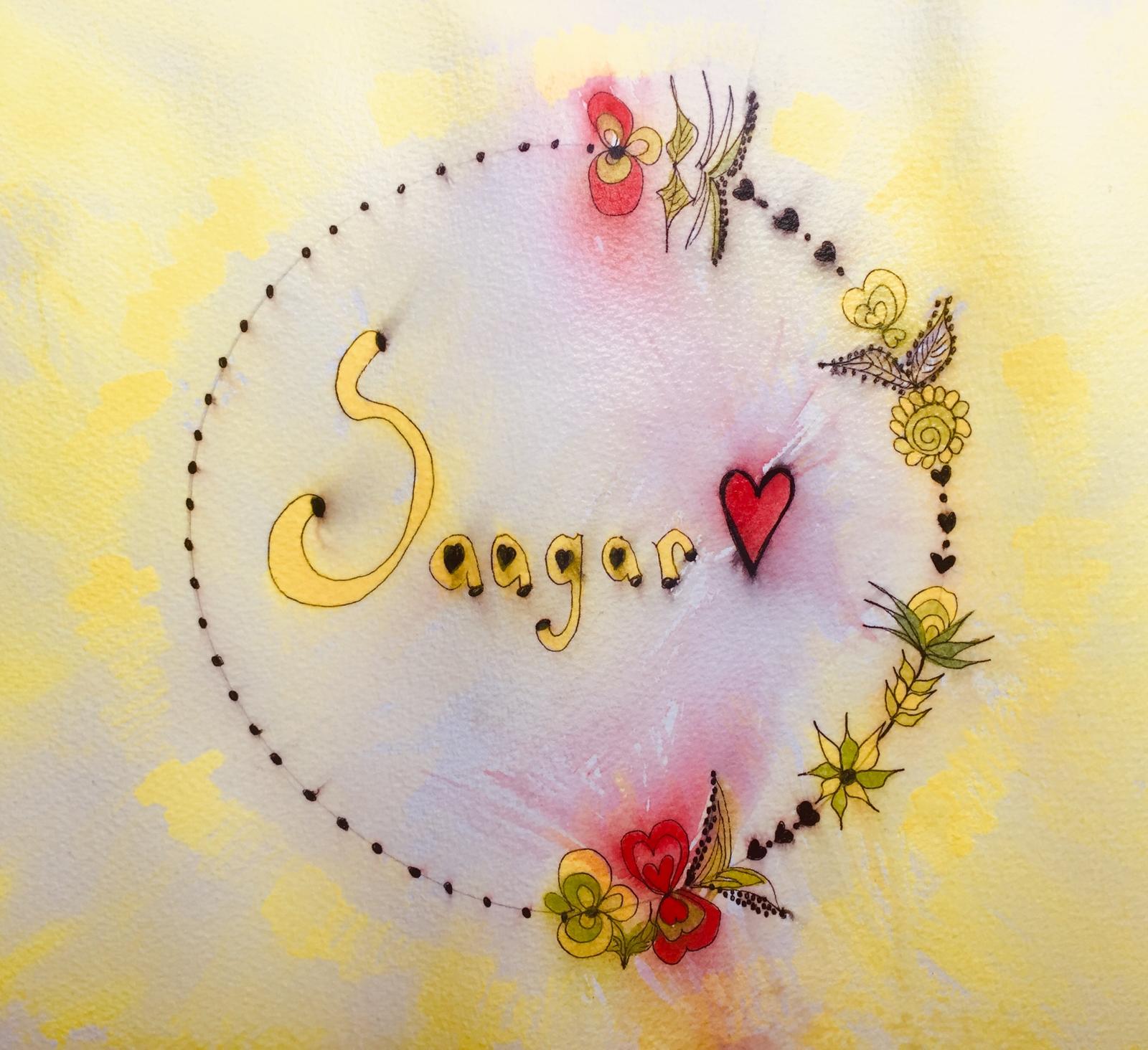
S A A G A R.
In Delhi, it was simple and sweet.
In Belfast, it was a problem. It had to be spoken out slowly with exaggerated lip movements and spelt out clearly. Still, it was uttered in all kinds of ways – Segaar, Sega, Saaga, Sags, Sagsy-wagsy. “As long as you call him with love, you can say his name in any way.” I would say with a smile. But of course, it was his name. Not mine.
At the age of seven, one day he came home from school and said, “Can’t you change my name to Aran or something?” I felt for him but laughed. What else could I do? I asked him if something happened at school that day, if someone said something hurtful and he just picked up his soft stuffed grey elephant and cuddled it.
I told him the story of his name. I was 24 when I got married. My in-laws lived In Chennai. We visited them a few months after the wedding and one evening we all visited a place called Besant Nagar beach. That was the first time my eyes fell upon the expansive ocean. On the map this water body had the boring label, Bay of Bengal. The vision of a dark blue shimmer below meeting a pale blue glow above in a clean, delicate, straight line made everything else disappear. Its calm, its rhythm, its enormity, its subtle dance, its grace and openness pulled me in. All conversation faded away and there I was, completely soaked in the bliss of the ocean. My soul soothed. My body relaxed. My eyes quenched. My heart happy. I was in love. In that moment, I knew that if we ever had a son, he would be called, ‘Ocean’: Saagar. I reminded him that his name was Saagar because his heart was as expansive and as beautiful as the ocean. He smiled and wrapped his soft cuddly arms around my neck.
As he grew older, he came to own his name. He came to live it. The waters of this ocean ran deep. On the surface, it appeared playful but strong currents ran underneath. All I saw was the steady flow of gentle waves, rhythmically lapping against the shore, through all the seasons. It oscillated with the moon but the high tide was never too high and the low tide was never too low, until many years later it was.
In October 2000 we went shopping to the Abbey Centre, around Halloween. Saagar was six years old. He loved riding the miniature cars left dancing on thick metal springs atop short sturdy plinths, strategically placed outside women’s clothes stores. I planted him in a blue car, instructed him not to move and stepped into the shop for no more than a few seconds to take a closer look at a long black dress in the window. I felt the texture of the fabric between my right thumb and forefinger, looked at the label for the price and size and rushed back out of the store. He was not to be seen.
Just like that, we lost each other. He must be so scared. I was petrified! Gosh. The stories you hear… No. No. He’s got to be nearby. ‘Saagar! Saagar!’, I called out, trying not to yell, desperately hiding my panic, my eyes hunting, hurting from the assault of his sudden disappearance from the blue mini-car.
What felt like absolute eternity must’ve been no more than five minutes. An announcement sang out of the PA system. He was walking down the corridor accompanied by a big uniformed man. My son, in his blue jeans and dark blue jacket ran into my arms. Phew! I cried with relief. Thank God!!! I got down on my knees and held him tight. All colour had left his face. His eyes were wide and blank. “It’s okay beta. It’s okay. We’re fine.”
Later that day we went out to collect pine cones from the thick green grass underneath the trees within the premises of Whiteabbey Hospital. I wanted to nest with my baby. I wanted to keep him close to me in small, cozy places where he wouldn’t get out of my sight and I, out of his. We collected forty pine cones in a basket. We talking. The cones half-filled a wide spherical glass jar which took a place of pride in all of our many homes. It followed us everywhere as a reminder of the day we made the promise to never ever lose each other again.
 kidsaregifts