Day 427

It’s done.
The facts have been established.
Not all, but a few important ones.
It would have taken a few weeks of deliberation to get all of them out in the open.
I was not looking forward to it and wanted to jump to the other side of it asap.

The inquest was once again conducted in an open and investigative manner. Everyone was given time to say what they wanted to.
The verdict was:

“Took his own life while of unstable mind.”

Contributory factors identified were:

  • Poor communication with the family about Saagar’s illness, the seriousness of it and the side effects of the medications he was on.
  • Poor discharge summary and handover from psychiatrists to the GP – diagnosis and warning signs for a referral back to the psychiatrists not clearly mentioned.
  • Poor judgement on the part of the GP to have not sought specialist help for him on seeing his highest possible PHQ-9 score, possibly causing him to prescribe inappropriate medication which might have added to Saagar’s suicidal ideation.

All the things I have been going on about! 

The one person that struck me most was the witness from SLaM (South London and Maudsley) Trust who was in-charge of patient pathways and improvement in services. He had been a nurse but now is a ‘manager’ of sorts. He uttered nothing but jargon, office-speak, absolute rubbish, completely devoid of any heart or clinical sense. He claimed to disseminate the lessons learnt through ‘business meetings’. I don’t understand how the two things are connected. That is the true face of modern NHS.

While the verdict was what I had hoped for, I don’t have much hope for change as the people responsible for improvement are nothing but pimps.

I feel completely scooped out, as if my insides have been hollowed out with a blunt knife. It’s time for some rest.

Good night.
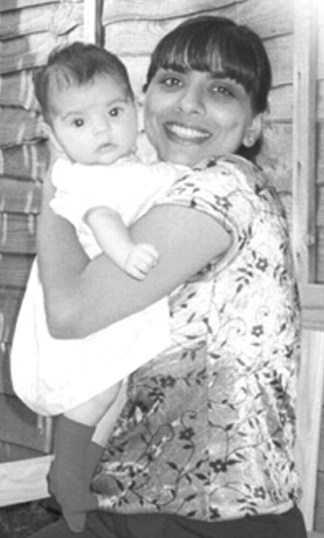
F1.large

Daksha Emson was a young psychiatrist who had been diagnosed with Bipolar disorder when she was a teenager. When she got married, she wanted to have babies hence she stopped her medications.

She and her husband were lucky. They were blessed with a little girl in June 2000. They called her Freya. On the 9th of October 2000, Daksha ended two lives – her own and Freya’s.

The investigation report highlighted a few things :

– Failure of professionals to communicate effectively and to co-ordinate care appropriately contributed to the adverse outcome in this case – no liaison between psychiatry and obstetric services.

– Care Plan was not generated as she had informal consultations with her psychiatrist for fear of being stigmatised by her colleagues.

– A ‘Closed loop’ of care was not established for her. Although she had a Community Psychiatric nurse, she was not being closely monitored and links with other members of the multidisciplinary team were not established.

– The nature of Daksha’s illness could have been predicted if her ‘relapse signature’ (collection of warning signs) had been identified. It wasn’t.

Postnatal Depression continues to be a major cause of death of young mothers. Joanne Bingley Memorial Foundation does a good job of de-stigmatising it and raising awareness.

Same old tragedies. Same old themes.


Day 404

Tutors and staff at universities struggle with the issue of confidentiality with regards to their students who are suffering with mental distress. While they are not trained counselors, they have the best interest of their students in mind. Yet, they are not allowed to take the parents of these students in confidence in the name of confidentiality.

Confidentiality is a foundational ethical standard for health professionals. It is the ethical duty to fulfill the promise that client information received during therapy will not be disclosed without authorization. It becomes a legal concern if broken, whether intentionally or not.

What if not breaking confidentiality leads to harm?
There are exceptions.

Confidentiality does not apply when disclosure is required to prevent clear and imminent danger to the client.
Protecting the client from harm must supercede the harm to the relationship that may happen due to a breach of confidentiality.

BACP (British Association for Counselling & Psychotherapy) Ethical Framework says:

“Situations in which clients pose a risk of causing serious harm to themselves or others are particularly challenging for the practitioner. These are situations in which the practitioner should be alert to the possibility of conflicting responsibilities between those concerning their client, other people who may be significantly affected, and society generally. Resolving conflicting responsibilities may require due consideration of the context in which the service is being provided. Consultation with a supervisor or experienced practitioner is strongly recommended, whenever this would not cause undue delay. In all cases, the aim should be to ensure for the client a good quality of care that is as respectful of the client’s capacity for self-determination and their trust as circumstances permit.”

The GMC reiterates the importance of confidentiality in good medical practice but does not talk of suicide in particular.

Courts usually consider two fundamental issues:

  • did the professional adequately assess the likelihood that a patient was suicidal?
  •  if an identifiable risk of harm was determined, did the professional take sufficient precautions to prevent suicide?

In general, the therapist is protected from liability if they have conscientiously performed and documented a thorough evaluation, followed by carefully considered, appropriate interventions.

Early diagnosis and treatment of mental illness is key for better outcomes. Hence the staff at schools and universities should be equipped with skills and knowledge to identify such illness in students. They should be empowered to get appropriate help for them at the earliest. 

In case of disclosure of severe suicidal ideation, the safety of the ‘at risk’ person should be the only concern.


Day 382

UK has the highest rate of self-harm in Europe.
About 1 in 10 young people have self harmed.
It is nearly 3 times more common in women than men.
The highest number of calls made to Childline are from 12 year old kids self harming.
At least half the people who end their own lives have a history of self harm.
Around 200,000 episodes of self harm present to hospitals per year.
Many people who self harm do not seek help. Hence they are not reported or recorded.

What Self harm is not :

-Attention seeking behavior.
-Manipulative
-A selfish act
-Done for pleasure
-A group or sub-culture activity
-A copy-cat response

Why is it done?

A release or distraction from emotional distress.
An expression of anguish.
An act of survival – a way to postpone suicide.
A form of self-punishment for feeling ‘bad’ or ‘dirty’.
A way of feeling’in control’
To feel real or alive if they have been feeling numb.
Difficulties in problem-solving
Low self-esteem
Anxiety/Depression
Eating disorders
Difficulty coping with anger
Difficulty dealing with sexuality.

What to do if someone is found self-harming?

  • Stay with the young person and if necessary, take them to A&E.
  • Monitor closely
  • Use Strengths and Difficulties Questionnaire  to make a judgement on mental well being.
  • Ask about suicide
  • Administer first aid
  • Advise them to get help: GPs/Psychologists/Psychiatrists/CAMHS 
  • Introduce them to self-help strategies

What not to do:

  • Do not blame them or make them feel guilty
  • Take them seriously
  • Do not act shocked even if you are
  • Avoid panic or anger
  • Be patient. It can be very hard for them to talk about it.
  • Don’t dismiss them as manipulative / attention seeking.

Day 368

‘Dying from Clear skin’ is a BBC documentary on Jesse Jones, a teenager dealing with acne like many others one might think. But he ended up taking his own life. Elements of low self esteem and bullying cannot be separated from the issue of acne. Jack Bowlby, a 16 year old from Wantage in Oxfordshire, killed himself at Cheltenham College. His inquest was told he experienced “dark thoughts and violent mood swings” after taking Roaccutane. Jon Medland, a medical student from Devon did the same after 3 weeks of starting the same medication.

Accutane (Isotretinoin) is a medicine used for treatment of acne.

Although it’s main desired effect is on the oil glands in the skin, it works on the whole body. Side effects are numerous and widespread, and affect at least 8 out of 10 patients. Side effects are most often mild to moderate and reversible, but in some cases can be severe or long-term. Accutane can cause severe birth defects if taken during pregnancy.

In reduces blood flow to the brain, causing headaches and depression as well as hearing and visual impairment.

I am no dermatologist but in my experience as a patient and a carer, doctors are not very good at telling us the side effects of the medicines they might start us on.

Parents have been noticing the connection between suicide and Roaccutane and lobbying against the drug for the past few years.

In a statement, Roche said: “Whilst no definitive cause and effect relationship has been established to directly link mood swings and depression with the drug, there have been rare reports, amongst both those taking Roaccutane and acne sufferers in general.” Figures show one in 10,000 people will experience serious side-effects. More than half a million people all over the world have been prescribed this potentially lethal medicine.