Day 953

Discrimination at all levels
download

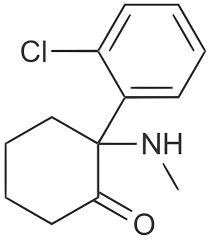
All anaesthetic drugs work in mysterious ways. They mainly work on the brain. One of them is Ketamine. I have used it many times as an anaesthetic and to treat resistant pain. It’s relatively safe even in hands with limited experience. It’s used in all age groups. It’s known to cause ‘Dissociative’ anaesthesia and pain relief. It works through blocking NMDA (Glutamate N-methyl D-aspartate) receptors. Unfortunately, it is known to cause tolerance and dependence. It is also used recreationally.

Recent studies have shown that Ketamine has a significant beneficial effect on patients with treatment-resistant Major Depressive Disorder(MDD). The improvement is often seen within 4 hours of administration. This is the subject of many recent research papers but much more needs to be done.

It is estimated that about 3% of the UK population, nearly 2 million people suffer from depression. A small proportion of them, about 158,000 have depression that resists treatment. Currently, only 101 people are able to access ketamine in Oxford. About 40% showed sustained improvement after taking it.

It is potentially life-changing treatment for those suicidally depressed. Michael Bloomfield from UCL says “Unfortunately, medical research spending for mental illnesses is extremely low compared to other medical conditions. Clearly this needs to change if we are to improve treatments in the future.”


Day 919

Prozacation

BN-OQ602_YHEALT_P_20160624161415

In 2004 the U.S. Food and Drug Administration issued a black-box warning against the use of all antidepressants in individuals up to 24 years old due to concerns about the increased risk of suicidal thoughts and behavior.

Depression often presents differently in children and adults. The very condition that the antidepressants are supposed to treat is made worse by their use in the young because their brains are still developing.

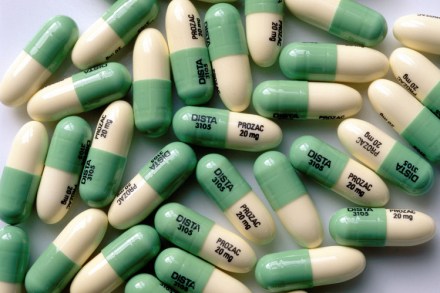
A meta-analysis of 34 RCTs published by Oxford University in the Lancet in August 2016 says that only one drug among all antidepressants is statistically better than placebo and that is Fluoxetine or Prozac. The lead author, Dr Andrea Cipriani claims no influence of the pharmaceutical industry on these findings.

Prozac has made hundreds of court appearances and billions of dollars have been paid out in compensation lawsuits.

‘The idea that it’s been a major step forward for Prozac to select serotonin only is just hypothesis,’ says Malcolm Lader, professor of clinical psychopharmacology at the Institute of Psychiatry. ‘There’s no science behind it.’ Some SSRI users have reported agitation and an inability to keep still, a preoccupation with violent, self-destructive fantasies and a feeling that ‘death would be welcome’. In Germany, Prozac was initially refused a licence after trials resulted in 16 attempted suicides, two of which were successful.

For mild depression, talking therapies are recommended. Young people with moderate to severe depression are often believed to need medication. They need frequent and close monitoring. However, there are huge variations in practice. It is easier to write out a prescription at a brief consultation rather than delve deep into details. As for the usefulness and safety of antidepressants, the jury is still out.

Saagar was on Citalopram for a few weeks before he died. The GP investigator said he should have been on Prozac but she didn’t write it down in her report. The representative of the Psychiatric hospital was a Clinical Psychologist. She said she could not comment on medications. The mud is watery. 

Ref:

Lancet August 2016: http://thelancet.com/journals/lancet/article/PIIS0140-6736(16)30385-3/fulltext

Prozac and lawsuits:
http://thesandersfirm.com/dangerous-drugs/ssri-antidepressant-lawsuits/

History of Prozac:
https://www.theguardian.com/society/2007/may/13/socialcare.medicineandhealth

Day 918

Biggest cause of avoidable deaths in children and young people – Suicide and self-inflicted injuries

image001

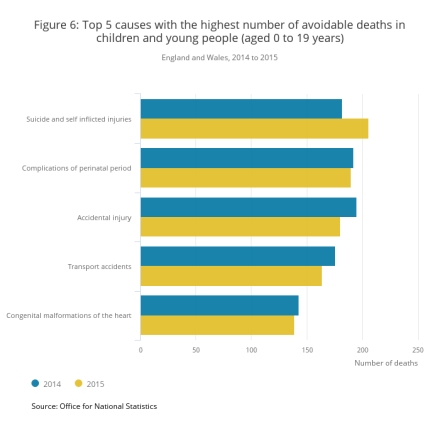
The Office of National Statistics published a report in 2015 saying that the  single cause with the highest number of avoidable deaths in children and young people was suicide and self-inflicted injuries (14% or 206 deaths of all avoidable deaths in this age group).

Of the top five causes of avoidable deaths among children and young people, suicide and self- inflicted injuries was the only cause to see an increase since 2014 by 13% or 24 deaths.

Avoidable mortality accounted for 3 out of 10 deaths of children and young people (aged 0 to 19 years), nearly the same as in 2014. Males accounted for almost two-thirds (63%) of avoidable deaths in children and young people.

The other top causes each saw a decline since 2014, with accidental injuries, which was the leading cause in 2014, experiencing the largest decline of 8% or 15 deaths.


Key Points for London

  • The rate of avoidable mortality in London has increased to 210.4 deaths per 100,000 population from 204.6 in 2014. This is significantly lower than for England (222.9).
  • The South East, East of England and South West Regions have lower rates of avoidable mortality than London. The highest rate is in the North East (266.4).
  • As in all other regions, avoidable mortality rates in London are higher for males (274.0 deaths per 100,000 population) than for females (152.9). Rates have increased for males (from 259.9 in 2014) and slightly reduced for females (154.3 in 2014).
  • Ref: https://www.gov.uk/government/statistics/avoidable-mortality-in-england-and-wales-2015


 Day 917

Entertainment or murder?

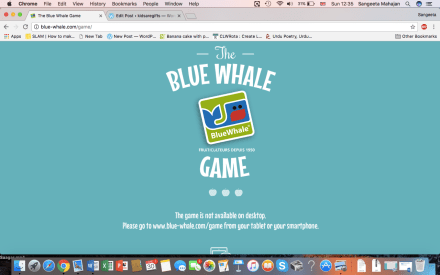
Screen Shot 2017-04-30 at 12.35.22The Blue Whale ‘suicide game’ is believed to be an online social media game which is encouraging people to kill themselves. An administrator assigns daily tasks, such as self-harming, watching horror films and waking up at unusual hours. The tasks get progressively more extreme which the members have to complete for 50 days. On the last day, they are instructed to end their life.

130 teenage deaths in Russia between November 2015 and April 2016 have been linked to this game. Yulia Konstatinova, 15, joined her friend Veronica in jumping from the roof of a 14-storey block of flats. She left a note saying ‘End’ on her social media page after she posted a picture of a big blue whale. The game is making inroads into Europe. Teenagers in Portugal, Devon and Cornwall have been found to have accessed it.

It must take a certain special kind of a sick mind to create ‘games’ like this.

’13 Reasons why’ is a Netflix series about a teenage girl’s perplexing suicide followed by tapes to unravel the mystery of her tragic death. The haunting images in it and the traumatic content is inciting self-harm within the teenage community. It is highly controversial to introduce such material into the media.

Both the above are perfect examples of everything that goes against suicide prevention best practices in the media. They are intense and they romanticise suicide.

Parents beware. Young minds, be ware.

Ref:

Blue Whale:
https://www.thesun.co.uk/tech/3003805/blue-whale-suicide-game-online-russia-victims/

13 reasons why:
https://www.netflix.com/in/title/80117470

Day 906

Last September I started writing a case study on patient safety for an academic paper. For every sentence, it required evidence. Unfortunately, the level of evidence for some of the material is not high because of the nature of the subject. Secondly, research in mental illness is poorly funded in the UK.

I am reminded of a young friend who is looking for a job but she can’t find one as they require her to have experience which she cannot gain unless she has a job. A classic chicken and egg situation.

So, the deadline has been extended time and again and finally we are going to have another attempt at submitting it before the end of this month. The lowest level of evidence to be found is Level 5 – ‘Case series or studies with no control’.

Here is one that I am going to use to support my statement: “Almost everyone who is suicidal is ambivalent. They don’t necessarily want to die. They just want the pain to end.” Hopefully it will be accepted. 

Kevin Hines is one of less than 1% of people to survive a jump from the Golden Gate bridge in a suicidal attempt. He is now a mental health advocate and works actively towards suicide prevention.

“The millisecond my hands left that rail, I thought, ‘what have I just done? I don’t want to die, God please save me’, and then I hit the water,” he said.
“You fall four seconds, you hit the water and get vacuum sucked down 70 or 80 ft – when I opened my eyes I was alive. “All I desperately wanted to do was survive – suicide experts call this being ‘shocked into reality’.”

Ref:

Kevin Hines:
http://www.bbc.co.uk/news/uk-northern-ireland-29995470

Youtube clip:
https://www.youtube.com/watch?v=WcSUs9iZv-g

Website: http://www.kevinhinesstory.com/bio/