Day 901

In the USA, the number of suicides in 2014 was 42,773. Of these, deaths by firearms were 21,334. So, approximately one-half of suicides are completed by firearm, accounting for two-thirds of all firearms deaths.

In the UK, the most common method used in the United Kingdom is hanging. Suicide using firearms accounts for only a very small fraction, possibly due to tight gun control. Only 4% of households in the UK possess them. Self poisoning and overdosing are the common methods used by women.

Removal of methods is one of the basic strategies for suicide prevention.

Details of suicide methods in the media have been shown to prompt vulnerable individuals to imitate suicidal behaviour. With this in mind, Samaritans recommend these media guidelines:

Avoid giving too much detail.
While saying someone hanged themselves or took an overdose is acceptable, detail about the type of ligature or type and quantity of tablets used is not. Avoid any mention of the method in headlines as this inadvertently promotes and perpetuates common methods of suicide.
Extra care must be taken when reporting the facts of cases where an unusual or previously unknown method has been used. Incidences of people using unusual or new methods of suicide have been known to increase rapidly after being reported widely. Reporting may also drive people to the internet to search for more information about these methods.
Remember that there is a risk of imitational behaviour due to ‘over-identification’.
Vulnerable individuals may identify with a person who has died, or with the circumstances in which a person took their own life. Never say a method is quick, easy, painless or certain to result in death. Try to avoid portraying anything that is immediate or easy to imitate – especially where the ingredients or tools involved are readily available.

The Golden Gate Bridge is identified as the scene of the most suicides in the world. Today a ceremony in San Francisco launched the building of a net to prevent suicides from occurring on the bridge. Excellent leadership has led this effort. Eduardo Vega explains beautifully how this leadership has impacted the decision to move toward a prevention of suicide on this world famous landmark in this video: https://youtu.be/bUSpiGOwoMk

Ref: Media Guidelines:

http://www.samaritans.org/media-centre/media-guidelines-reporting-suicide/advice-journalists-suicide-reporting-dos-and-donts


Day 890

UNIVERSITIES MISS CHANCE TO IDENTIFY DEPRESSED STUDENTS
– A study from Chicago, by Marla Paul in Jan 2011.

This study surveyed 1,622 college students. One out of every four or five students who visits a university health center for a routine cold or sore throat turns out to be depressed, but most centers miss the opportunity to identify these students because they don’t screen for depression, according to new Northwestern Medicine research.

About 2 to 3 percent of these depressed students have had suicidal thoughts or are considering suicide, the study found.

“Depression screening is easy to do, we know it works, and it can save lives,” said Michael Fleming, professor of family and community medicine at Northwestern University Feinberg School of Medicine. “It should be done for every student who walks into a health center.”

The consequences of not finding and treating these students can be can be serious and even deadly. “These kids might drop out of school because they are so sad or hurt or kill themselves by drinking too much or taking drugs,” Fleming said.

“Things continually happen to students – a low grade or problems with a boyfriend or girlfriend — that can trigger depression,” Fleming said. “If you don’t take the opportunity to screen at every visit, you are going to miss these kids.”

The frequency of depression and suicidal thoughts among campus health clinic users was nearly twice as high as rates reported in general college samples.

Depressed students need treatment, which may include counseling and medication. These students are more likely to drink, smoke and be involved in intimate partner violence, the study found.

With new technology, screening students is simple. While waiting for an appointment at the health center, the student could answer seven simple questions – a depression screening tool that that could be immediately entered into his electronic health record. “They can answer those seven questions in a minute,” Fleming said. Universities typically separate mental health treatment from primary care treatment. If a student comes to a campus health center and complains about depression, he is referred to a counseling center.

“If we screen, we can try to find every student that is depressed.”

Historical perceptions and biases against preventive screenings are that kids who need treatment the most don’t go to campus health centers, and they won’t tell the truth about their depression.

That’s wrong. “Students will tell you the truth,” Fleming said. “If they are sad and depressed, they will tell you that. And, kids who are drinking too much or who are suicidal do go to the campus health centers.”


Day 888

Dying from Inequality – Samaritans commissioned eight leading social scientists to review and extend the existing body of knowledge on socioeconomic disadvantage, ie. being poor, addressing three key questions:

  • Why is there a connection between socioeconomic disadvantage and suicidal behaviour?
  • What is it about socioeconomic disadvantage that increases the risk of suicidal behaviour?
  • What can be done about it?

A few excerpts:

Neighbourhoods that are the most deprived have worse health than those that are less deprived and this association follows a gradient: for each increase in deprivation, there is a decrease in health. Additional support for those living in deprived areas is needed to reduce geographical inequalities in health and the risk of suicidal behaviour.

Economic uncertainty, unemployment, a decline in income relative to local wages, unmanageable debt, the threat or fear of home repossessions, job insecurity and business downsizing may all increase the risk of suicidal behaviour, especially for individuals who experience socioeconomic disadvantage.

Unmanageable debt is an important risk factor for suicidal behaviour. Financial advice and support for those at risk of having unmanageable debt can help reduce the risk of mental health problems and suicidal behaviour.

Suicidal behaviour and mental health problems, such as mild-to-moderate anxiety and depression, could be reduced through labour market policy design, such as higher spending on active labour market programmes and unemployment benefits.

People living with socioeconomic disadvantage and inequalities are more likely to experience negative events during their life, such as job loss, financial difficulties, poor housing, and relationship breakdown. This can lead to negative emotions and increase the likelihood of suicidal behaviour.

Ref:

Dying from Inequality: http://www.samaritans.org/sites/default/files/kcfinder/files/Samaritans%20Dying%20from%20inequality%20report%20-%20summary.pdf

arundhati-roy_picture-quote

Day 886

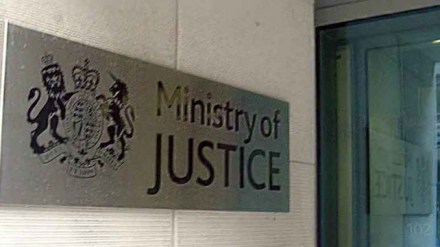
Ministry-of-Justice1-678x381

“More people are being detained by police under the Mental Health Act as Psychiatric services struggle to cope” says Jacqui Wise in the cover story of the British Medical Journal of 18th March 2017.

Statistics tell us that deaths in custody are up by 21%.
Self-inflicted deaths are up by 13%.
In the female estate, the number has doubled from 4 to 8 in this 12 month period.
Self-harm incidents up by 26%.
Individuals self-harming up 23%
Assaults up by 34%.
Assaults on staff up 43%.
Natural cause deaths up 17%, explained by the ageing population.
5 apparent homicides, down from 7 in the same period of the previous year

Could there be a co-relation between the facts stated in the first and the second paragraph?

“The police to an extent have always been used as an emergency mental health service” says Michael Brown, a police inspector. He adds that police receive little formal training in managing patients with mental health problems. “A highly agitated person may be experiencing Serotonin Syndrome due to the mismanagement of their antidepressant medications. The signs are subtle and most police officers won’t be able to pick up on that. We need to have a proper debate about the role of the police in this area.”

Ref:

Safety in Custody Statistics 2016: https://www.gov.uk/government/uploads/system/uploads/attachment_data/file/562897/safety-in-custody-bulletin.pdf#page=6
Blog about Mental health and the Criminal Justice system:
https://mentalhealthcop.wordpress.com/
Serotonin Syndrome:
https://patient.info/doctor/serotonin-syndrome

Day 878

Gary’s story.
The Last Word.
Work Under Pressure.

These 3 powerful videos appear on the website of Mates in Mind (MiM). Suicide kills far more construction workers than work place accidents.  MiM is a charitable programme to improve and promote positive mental health in construction. It has been co-founded by Health in Construction and British Safety Council.

At present, one in 6 workers in the UK is experiencing depression, anxiety or stress. 6% of the UK work force is made up of construction workers, that is 2.1 million people. Hence at any given time at least 350,000 people in the industry will be dealing with mental ill health and possibly feeling alone. Raising awareness and generating champions through modular training in that community means there will always be someone close by who can help or are dealing with similar feelings.

A recent article in the BMJ states 5 facts about the conditions in anaesthetic training –

Workload – Nearly all had stayed beyond their shift. Nearly two thirds (62%) said that in the previous month they had gone through a shift without a meal, and 75% had done a shift without drinking enough water.

Health – Sixty four per cent of the anaesthetics trainees thought that their job had negatively affected their physical health, and 61% thought it had negatively affected their mental health.

Morale – Poor work-life balance, the burden of assessment, career uncertainty, frequent rotations, and terms and conditions of service sapped their morale.

Patient safety – This had worsened due to lack of available hospital beds, staff morale, and staff shortages.

Burnout risk – 85% of these young doctors were at risk of burnout.

I think Mr Hunt can take credit for some of these issues.

Mate in Mind is a fantastic example for other industries to make a concerted effort to address the well being of their employees in these difficult and uncertain times.

Ref:
https://www.matesinmind.org/employers.html

http://careers.bmj.com/careers/advice/Five_facts_about_conditions_in_anaesthetics_training