Day 906

Last September I started writing a case study on patient safety for an academic paper. For every sentence, it required evidence. Unfortunately, the level of evidence for some of the material is not high because of the nature of the subject. Secondly, research in mental illness is poorly funded in the UK.

I am reminded of a young friend who is looking for a job but she can’t find one as they require her to have experience which she cannot gain unless she has a job. A classic chicken and egg situation.

So, the deadline has been extended time and again and finally we are going to have another attempt at submitting it before the end of this month. The lowest level of evidence to be found is Level 5 – ‘Case series or studies with no control’.

Here is one that I am going to use to support my statement: “Almost everyone who is suicidal is ambivalent. They don’t necessarily want to die. They just want the pain to end.” Hopefully it will be accepted. 

Kevin Hines is one of less than 1% of people to survive a jump from the Golden Gate bridge in a suicidal attempt. He is now a mental health advocate and works actively towards suicide prevention.

“The millisecond my hands left that rail, I thought, ‘what have I just done? I don’t want to die, God please save me’, and then I hit the water,” he said.
“You fall four seconds, you hit the water and get vacuum sucked down 70 or 80 ft – when I opened my eyes I was alive. “All I desperately wanted to do was survive – suicide experts call this being ‘shocked into reality’.”

Ref:

Kevin Hines:
http://www.bbc.co.uk/news/uk-northern-ireland-29995470

Youtube clip:
https://www.youtube.com/watch?v=WcSUs9iZv-g

Website: http://www.kevinhinesstory.com/bio/
Day 899

 More Vietnam veterans have died by suicide than were killed in Vietnam. According to the Veterans Administration, one veteran dies by suicide every hour in the USA. 

‘The survivor is a disturber of peace. He is a bearer of ”unspeakable” things. About these he aims to speak, and in so doing he undermines, without intending to, the validity of existing norms. He is a genuine transgressor, and here he is made to feel real guilt. The world to which he appeals does not admit him, and since he has looked to this world as the source of moral order, he begins to doubt himself. And that is not the end, for now his guilt is doubled by betrayal– of himself, of his task, of his vow to the dead. The final guilt is not to bear witness. The survivor’s worst torment is not to be able to speak.’ – Terrence Des Pres in ‘The Survivor’.

”If the thing they were fighting for was important enough to die for then it was also important enough for them to be thinking about it in the last minutes of their lives. That stood to reason. Life is awfully important so if you’ve given it away you’d ought to think with all your mind in the last moments of your life about the thing you traded it for. So, did all those kids die thinking of democracy and freedom and liberty and honor and the safety of the home and the stars and strips forever? You’re goddamn right they didn’t.” – Dalton Trumbo in ‘Johnny got his gun.’.
Viktor E. Frankl said, ” Suffering ceases to be suffering when it has meaning.” 
Meaningless violence gives birth to more meaningless violence. There are no winners. All sides loose. 

Day 888

Dying from Inequality – Samaritans commissioned eight leading social scientists to review and extend the existing body of knowledge on socioeconomic disadvantage, ie. being poor, addressing three key questions:

  • Why is there a connection between socioeconomic disadvantage and suicidal behaviour?
  • What is it about socioeconomic disadvantage that increases the risk of suicidal behaviour?
  • What can be done about it?

A few excerpts:

Neighbourhoods that are the most deprived have worse health than those that are less deprived and this association follows a gradient: for each increase in deprivation, there is a decrease in health. Additional support for those living in deprived areas is needed to reduce geographical inequalities in health and the risk of suicidal behaviour.

Economic uncertainty, unemployment, a decline in income relative to local wages, unmanageable debt, the threat or fear of home repossessions, job insecurity and business downsizing may all increase the risk of suicidal behaviour, especially for individuals who experience socioeconomic disadvantage.

Unmanageable debt is an important risk factor for suicidal behaviour. Financial advice and support for those at risk of having unmanageable debt can help reduce the risk of mental health problems and suicidal behaviour.

Suicidal behaviour and mental health problems, such as mild-to-moderate anxiety and depression, could be reduced through labour market policy design, such as higher spending on active labour market programmes and unemployment benefits.

People living with socioeconomic disadvantage and inequalities are more likely to experience negative events during their life, such as job loss, financial difficulties, poor housing, and relationship breakdown. This can lead to negative emotions and increase the likelihood of suicidal behaviour.

Ref:

Dying from Inequality: http://www.samaritans.org/sites/default/files/kcfinder/files/Samaritans%20Dying%20from%20inequality%20report%20-%20summary.pdf

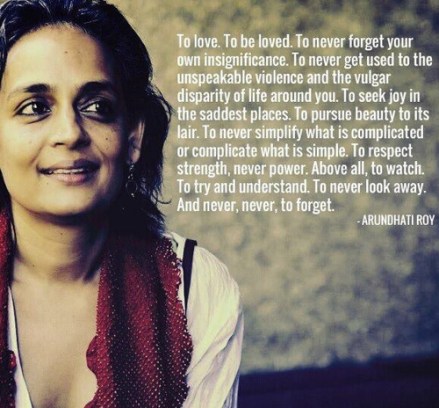
arundhati-roy_picture-quote

Day 886

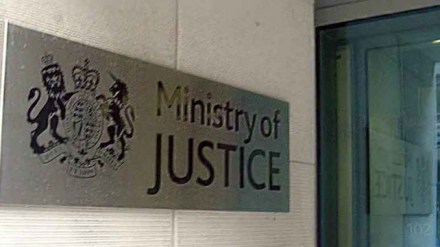
Ministry-of-Justice1-678x381

“More people are being detained by police under the Mental Health Act as Psychiatric services struggle to cope” says Jacqui Wise in the cover story of the British Medical Journal of 18th March 2017.

Statistics tell us that deaths in custody are up by 21%.
Self-inflicted deaths are up by 13%.
In the female estate, the number has doubled from 4 to 8 in this 12 month period.
Self-harm incidents up by 26%.
Individuals self-harming up 23%
Assaults up by 34%.
Assaults on staff up 43%.
Natural cause deaths up 17%, explained by the ageing population.
5 apparent homicides, down from 7 in the same period of the previous year

Could there be a co-relation between the facts stated in the first and the second paragraph?

“The police to an extent have always been used as an emergency mental health service” says Michael Brown, a police inspector. He adds that police receive little formal training in managing patients with mental health problems. “A highly agitated person may be experiencing Serotonin Syndrome due to the mismanagement of their antidepressant medications. The signs are subtle and most police officers won’t be able to pick up on that. We need to have a proper debate about the role of the police in this area.”

Ref:

Safety in Custody Statistics 2016: https://www.gov.uk/government/uploads/system/uploads/attachment_data/file/562897/safety-in-custody-bulletin.pdf#page=6
Blog about Mental health and the Criminal Justice system:
https://mentalhealthcop.wordpress.com/
Serotonin Syndrome:
https://patient.info/doctor/serotonin-syndrome

Day 881

The school project entailed each student discussing what they would put in Room 101 and why. Room 101 is where the bad things go.

For Saagar, it was translucent curtains. He thought they were pointless. They didn’t keep the sun out. They didn’t hold any warmth in. They blew in the wind. They annoyingly got in the way. Close up they were see-through. They twitched in the hands of old ladies. Their flimsy paperiness didn’t have a pleasant texture. They collected dust. They looked like nothing much. As far as he was concerned, they didn’t serve any purpose They definitely belonged in Room 101.

When I look back to my younger days, I can see me making similar arguments. At that time things fell into distinct boxes – good and bad, right and wrong, beautiful and ugly, royalty and commoner, black and white – concepts inspired by fairy tales, cartoons and films, Cinderella and Snow White to name a couple.

As the years went by, I learnt that a lot of life happens in grey zones, many rights and wrongs are based on a given context, some things can be beautiful and ugly at the same time, royalty can be common and the good and the bad resides in all of us.

Maybe his young mind told him there were only two available choices – life or death. Maybe if he was a bit older he would have known that there are other choices, one of them being, waiting it out.

“Nothing worked but the passage of time … It’s an illness and it ran its course. I had always described myself as melancholy or depressive but I hadn’t a clue. Anything I had before was a blue day by comparison. This was altered perceptions, a mental illness.” Says the Irish novelist, Marian Keyes, 53, about her severe depression in 2009. Writing was her “rope across the abyss”. She started with short stories and her 13th novel is soon to be released.

 “Have patience with all things but first of all with yourself.”
-Saint Francis de Sales.

Ref:

Room 101 : http://www.definitions.net/definition/ROOM%20101

Novelist Marian Keyes reveals fight against constant ‘suicidal impulses’ : https://www.theguardian.com/books/2017/mar/12/novelist-marian-keyes-reveals-fight-against-constant-suicidal-impulses