The older I grow, the lesser I know.

A book with frayed edges sat tucked inside the pocket behind the driver’s seat. After an overnight train journey from Sakleshpur to Goa, we were going home in a taxi. No coffee yet. I was not quite switched on. Bleary eyed, I pulled the book out of the elasticated edge. It was Walden by Henry David Thoreau. Some poor tourist had mistakenly left it behind while traveling to the airport to fly back home.

Thoreau wrote this book while he lived in a cabin he built near Walden Pond, hundred and eighty years ago. He was testing the idea that divinity was present in nature and the human soul. He stripped his life down to the barest of essentials and secluded himself as much as he could, living off the land as much as possible. He wanted to find out just what in life is necessary and what is superfluous.

(Picture, courtesy Maria Popova )

Having chosen to live in a place where, for hundreds of miles very few people speak our language, with no cinema halls, restaurants, therapists or book shops, where the food is of one particular kind, but nature is abundant, that question has arisen for me too.

A few weeks back, a quote by Thoreau had whistled right into my heart:

“Life! who knows what it is, what it does?”

Such a beautiful sentiment. I had wished for more of his writings. After learning some more about him and his love of birds, streams, woodlands and meadows, I got busy with other things.

When I brought this question to CORe, it generated a rich discussion.

“What is our relationship with not knowing? What feelings does it provoke?”

Some excerpts from our conversations:

  • It is a real test of oneself, dropping how things should be and taking each day as it comes. It took me a long time to realise how much my mind was tied to certainty. In Africa, the relationship with death is very different. They have many ways to remember a loved one. They believe they’re still here and it gives them great joy.
  • Anxiety of the need to know at work. I have to change my mind set to curiosity. Some things we’re not meant to know, such as, where is he? It would spoil it. I must accept that I’m not meant to know.
  • When he went, I didn’t want to be here. Now I do. I have a life that I want to have. I have lots of godchildren who have promised to take care of me. I have a vision of him and his dad, which I hope will come through in my own death. Maybe when it’s my time they’ll be there, and their peace will be shattered.

Yes. The older I grow, the lesser I know. There is a freedom in that, to be with whatever is happening. It allows for the mystery of life to unfold as it will and it allows me to witness it without conditions, with an open heart. The smallest things. The book that I had wished for a month ago, appears right in front of me after I had forgotten all about it.

Life. Who knows what it is, what it does?
Everything living on Earth is food for the Moon.

So much of everyday life, including the innumerable religious festivals in India are dominated and determined by the lunar calendar. While the gross impact of the moon on water, especially the tidal waves is well known, the more subtle effects on humans and plants, less so. Biodynamic methods of farming acknowledge the cycles of the moon as fundamental to a good harvest as they incorporate cosmic energy to minimise disease and aid growth.  

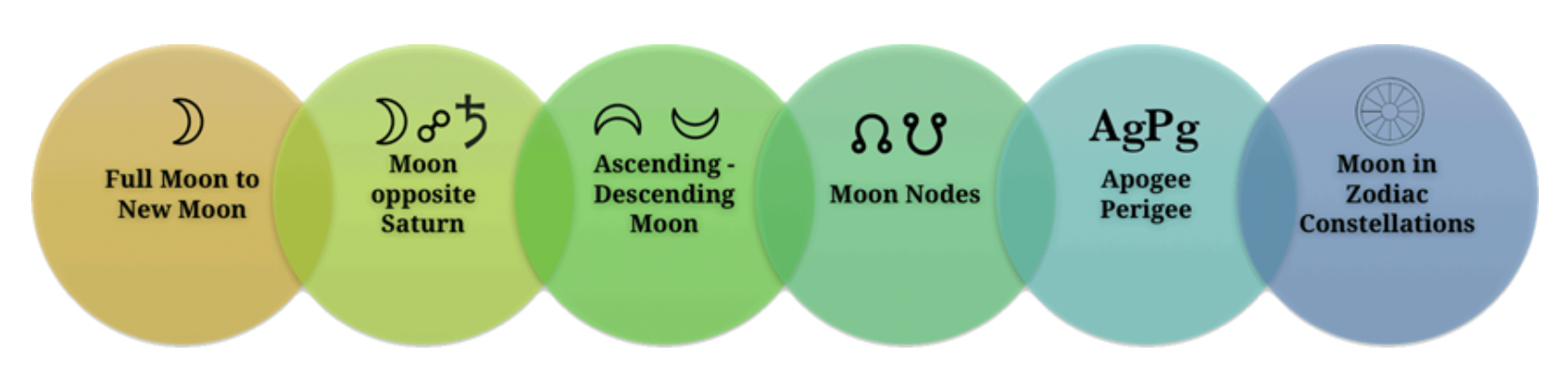
At a recent Biodynamic meeting, I was fascinated to see a Planting Calendar based on the 6 cycles of the moon. I thought there was only one – Full to New and back.

Every 27.3 days, the Moon and Saturn are on opposite sides of the Earth. This is a great time for planting as their forces synergise to produce strong plants of high quality. Organic wine growers have been using this technique for a long time.

Like inhalation and exhalation, the Moon ascends and descends. The ascending phase is great for harvesting as the natural flow of energy is upward and the descending phase is a good time for transplanting saplings as the downward energy helps them take root.

Apogee is when the Moon is furthest from the Earth, a great time to sow potatoes. Perigee is the point in the orbit of the moon when it is nearest to the Earth. This means there is more moisture in the soil, making the plants more prone to fungus and insect attacks.

Nodes occur when the Sun-Earth-Moon are in line. It happens twice every month. It’s a bad time for any horticultural activity as the Sun’s beneficial influence is negated on these days.

As the Moon passes through various Zodiac constellations, it exerts different influences on different types of plants. At this point, my cognitive abilities were saturated, and I had to leave the rest for later.

I shall have mercy on you and stop here.

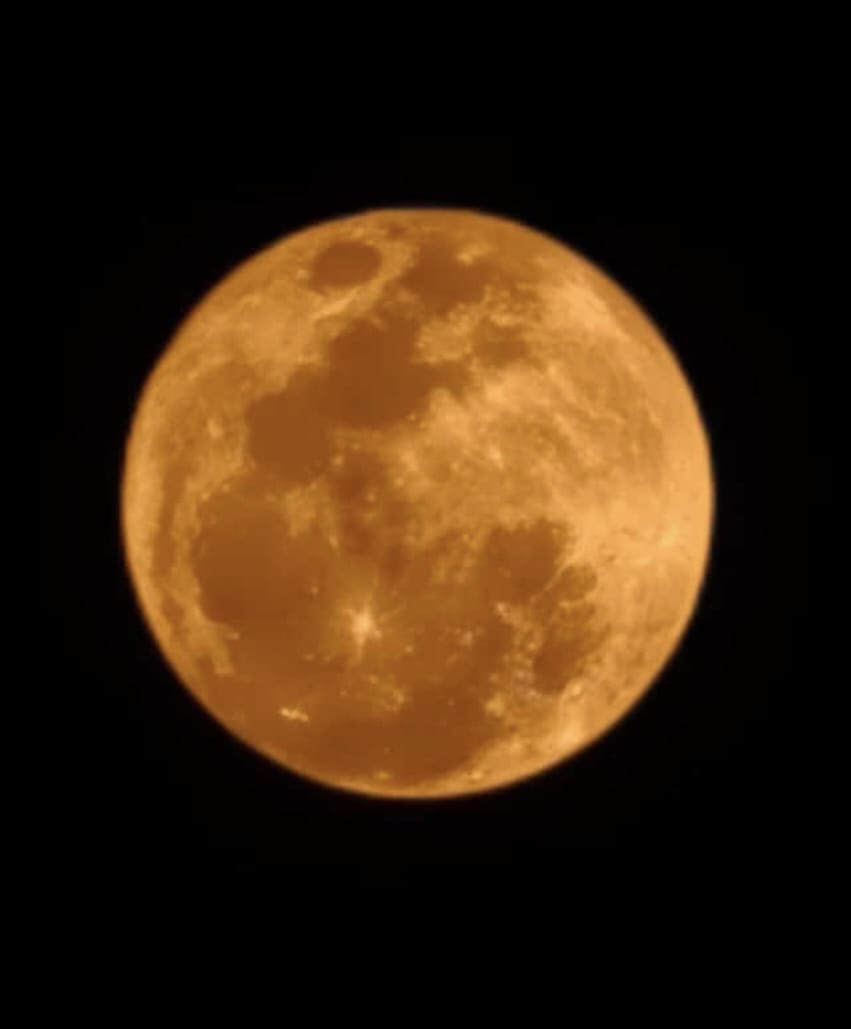
Splendiferousness from last night. I am sure Saagar would say something like,”Big-ass Moon. Innit?”

PDA

(Awakening Needs Cards Created by Linda Nolan and Karen Plumbe)

It was natural, spontaneous and normal in London. Now, we must look around to ensure no one’s watching us.

Holding hands in public? At our age? Oh my God! At any age. Strange.

A hug. Inappropriately bold.

A peck on the cheek? Unthinkable.

A quick kiss on the lips to say hello or bye. Absolutely scandalous.

“Your husband even holds the umbrella for you in the market”, an acquaintance remarked.

I had not given it a thought. “Yes. He’s very good”, I said. I was tempted to defend his actions by making statements like, it’s easier for him as he’s taller than me or it helps me use both hands to select the fruit and veg but I stopped myself. He needs no defending. I was learning about what is normal here.

Affection isn’t a thing here. Public Display of Affection (PDA) is prohibited.

Food. Yes. Gifts. Yes. Laughter. Yes. Folded hands as greeting. Yes.

Hugs. No.

A young man of seventeen studies Biology with me for an hour, twice a week. He wants to be a doctor. He showed me an MCQ that he did not understand. It was about Barrier contraception. I asked him if he had covered the chapter on Sexual Health in School. He said the teacher had completely omitted it. She had asked the students to read and learn that chapter on their own.

The next day I found myself retrieving a little square white and blue packet from the small cupboard outside the door of the local Health Centre. It was labelled Nirodh (the Government sponsored condom). I had not signed up for this, but I turned out to be the one to explain Sexual health to him.

In a society where men and women pretend, they never touch each other and it is somehow wrong to do that, how can the adolescents learn affection, let alone intimacy?

“Affection is responsible for nine-tenths of whatever solid and durable happiness there is in our lives.”

– CS Lewis.

Dad, boys and crow.

Once upon a time there were two boys who purposefully misremembered things about their father. It made them feel better if they ever forgot things about their mother.

There were a lot of equations and transactions in their small family. One boy dreamed he had murdered his mother. He checked it wasn’t true, then a put a valuable silver serving spoon that his father had inherited in the bin. It was missed. He felt better.

One boy lost the treasured lunchbox note from his mother saying ‘good luck’. He cried alone in his room, then threw a toy car at his father’s framed Coltrane poster. It smashed. He felt better. The father dutifully swept up all the glass and understood.

There were a lot of punishments and anticipations in their small family.

Eight years ago it was hard work and I could remember it only vaguely.

I read it for the second time this morning. It felt brand new, easy, fun and hearbreaking. Part memoir, part sound-poem. A bit more than 100 pages long. No more than 18 thousand words. The ‘missing’ in the life of a young family after the mother dies suddenly is palpable. In the background rings the sound of a crow flapping its wings. One big black feather has dropped on the ground. It lies near my right foot.  

PS: Losing a parent or a close relative or friend at a young age puts the young at a high risk of suicide.

Wolf-moon.

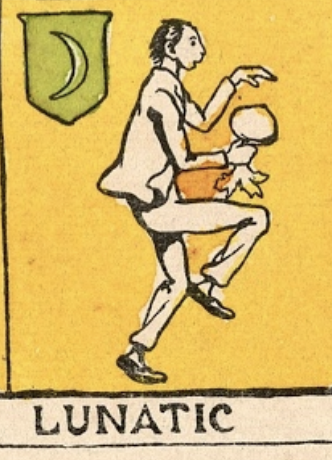
Twelve years ago the word ‘lunatic’ was removed from all federal laws in the USA. It was replaced with ‘of unsound mind’.

Edgar Alan Poe has said, ‘I became insane with long intervals of horrible sanity.’

Emily Dickinson begged pardon for her sanity and claimed that much madness is divinest sense. Some days, sanity is a serious challenge as all I do is dart around from one home to another. I have five homes – illusion, reality, the past, insanity and my breath. I wonder if others do too. Do you have a few? Happy full-moon!