Day 955

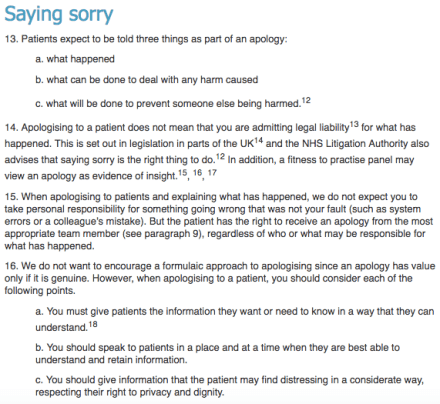
GMC says

Saying sorry

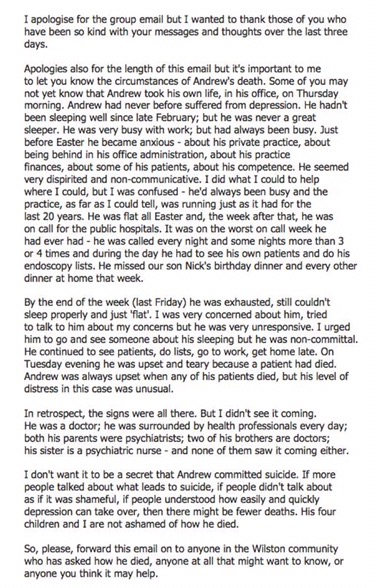
A letter I wrote this morning to the world’s first medical defence organisation that is proud of its rich history of guiding, supporting and defending its members:

Dear Medical Defence Union,

Here, I speak more as the mother of a deceased child than as a Consultant Anaesthetist. When a patient comes to my hospital to have surgery, there is a legal contract between him/her and the hospital. As per that, the hospital is obliged to safely complete his/her operation.

When I see that patient on the morning of their surgery, I speak with them and gain their confidence. The trust they place in me when I look into their eyes and assure them safety is not legislated for. Trust is an empowering human sentiment essential to the patient, enabling them to come for their operation. Trust is the basis of any meaningful relationship.

2 days before my son died, his GP, Dr F assured us that he was on the right medications and would soon start showing signs of improvement. After my 20 year old son, Saagar Naresh’s death on the 16th of October 2014, I didn’t hear at all from our GP. Not a word of condolence or sympathy. Complete silence. At the Coroner’s court the GP said that he followed the advice given to him by the MDU, to not call me after my son’s death.

Considering he knew me for 10 years and I entrusted my child’s well-being in his hands, I think it would have been ‘basic decency’ for him to call or visit. Legally speaking, a 20 year old is not a child. But for me he is. Human relationships are way beyond ‘legal’.

In light of GMC’s Duty of Candour, please rethink your advice in the future. The practice of medicine is founded on humanity.
Please do not take it away.

Kind regards,
SM.


Day 954

photo (4)

Recovery Room is also known as POCU – Post Operative Care Unit. While most patients have a smooth emergence from anaesthesia, others may feel disorientated or confused. They might feel mild pain, nausea or experience other side effects of surgery and anaesthesia.  The calm and caring presence of Recovery nurses helps them smooth over all these turbulences and come back to themselves before being sent to the ward.

K is one such nurse. Her sweet voice and soft Australian accent is unmissable. She smiles all the time. She listens and asks intelligent and relevant questions. She is full of kindness and clever ideas to get around problems. She respects other people’s priorities and time. She is an old soul.

Last Saturday, after work she went out to a pub with friends. She heard some troublesome noises on the street and went out to help. I can picture her excusing herself, ”I’ll just nip out and be back in a sec.” Little did she or her friends know that that would be her last act of kindness. She was killed in the incident near London Bridge that night.

How is it that some people can go out of their way to be vicious and others can show extraordinary kindness at a huge cost to themselves? We all belong to the same race. We all cry the same salty tears and bleed the same red blood. We all feel the same insane love for our kids and the same burning pangs of hunger. Ultimately we all want to be free, to be loved and understood for who we are. Why this deep divide?

Can I imagine K not offering to help? No. That is just the kind of person she was – true to herself till the very end. Bless you K. We love you and miss you. Recovery Room is not the same without you and this world is a better place because of you.

Love and blessings from London to all broken lives and hearts, everywhere.


Day 953

Discrimination at all levels

download

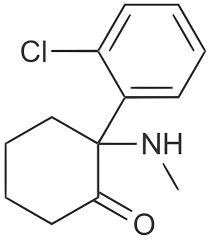
All anaesthetic drugs work in mysterious ways. They mainly work on the brain. One of them is Ketamine. I have used it many times as an anaesthetic and to treat resistant pain. It’s relatively safe even in hands with limited experience. It’s used in all age groups. It’s known to cause ‘Dissociative’ anaesthesia and pain relief. It works through blocking NMDA (Glutamate N-methyl D-aspartate) receptors. Unfortunately, it is known to cause tolerance and dependence. It is also used recreationally.

Recent studies have shown that Ketamine has a significant beneficial effect on patients with treatment-resistant Major Depressive Disorder(MDD). The improvement is often seen within 4 hours of administration. This is the subject of many recent research papers but much more needs to be done.

It is estimated that about 3% of the UK population, nearly 2 million people suffer from depression. A small proportion of them, about 158,000 have depression that resists treatment. Currently, only 101 people are able to access ketamine in Oxford. About 40% showed sustained improvement after taking it.

It is potentially life-changing treatment for those suicidally depressed. Michael Bloomfield from UCL says “Unfortunately, medical research spending for mental illnesses is extremely low compared to other medical conditions. Clearly this needs to change if we are to improve treatments in the future.”


Day 952

A surgeon’s wife writes

img_1418

The Dark side of Doctoring is an insightful blog written by a surgeon.
The common themes that push doctors into dark despair are:

1.Loss of control.
2. Loss of support. 6am. Repeat.
3. Loss of meaning.

One would think that those who look after other people would know how to look after themselves and their colleagues. Not so at all.

Thank you Dr Eric Levi.


Day 951

download

Who? The young. 

1 in 6 people is an adolescent. More than 3000 adolescents die every day from largely preventable causes, according to a new report from WHO and partners. That amounts to 1.2 million deaths per year.  Many key risk factors for future adult disease start or are consolidated in adolescence. Adolescent mental health and well-being are often overlooked.

In 2015, more than two-thirds of these deaths occurred in low- and middle-income countries in Africa and South-East Asia. Road traffic injuries, lower respiratory infections, and suicide are the biggest causes of death among adolescents.

Most of these deaths can be prevented with good health services, education and social support. But in many cases, adolescents who suffer from mental health disorders, substance use, or poor nutrition cannot obtain critical prevention and care services – either because the services do not exist, or because they do not know about them.

“Adolescents have been entirely absent from national health plans for decades,” says Dr Flavia Bustreo, Assistant Director-General, WHO. “Relatively small investments focused on adolescents now will not only result in healthy and empowered adults who thrive and contribute positively to their communities, but it will also result in healthier future generations, yielding enormous returns.”

Suicide and accidental death from self-harm were the third cause of adolescent mortality in 2015, resulting in an estimated 67 000 deaths. Self-harm largely occurs among older adolescents, and globally it is the second leading cause of death for older adolescent girls. It is the leading or second cause of adolescent death in Europe and South-East Asia.

“Improving the way health systems serve adolescents is just one part of improving their health,” says Dr Anthony Costello, Director, Child and Adolescent Health, WHO. “Parents, families, and communities are extremely important, as they have the greatest potential to positively influence adolescent behaviour and health.”

At long last, the world is waking up and so is the World Health Organisation.

Podcast:
In conversation with Meera S and Dr George at Business FM, Malaysia:

Doctor in the house: Adolescent Health