The Change

images-1

It’s January. It’s cold, damp and dark. I feel tired all the time. All I want to do is hibernate – sleep, read, potter around the kitchen drinking endless cups of tea, listen to the radio and watch films. Is this normal? Are other people feeling the same way? Most people I talk to say they do. Those who routinely exercise, like Si, are the ones that look happy and buoyant. They strongly recommend exercise. I promise I am thinking about it.

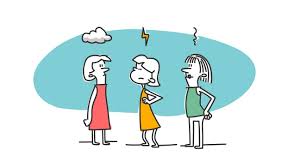
Could it be an under-active thyroid? Am I anaemic or is this natural for this time of year? 51 is the average age for levels of oestrogen in women to drop. Could this be incipient hormonal chaos? No personal weather system yet. That must be good news.

However, the symptoms of menopause can start up to 4 years before and carry on for many years after. Just as puberty is a difficult time of change, so is menopause. Feelings of irritability, fatigue, anxiety and depression are common. Juggling a demanding job, ageing parents, teenage kids and a full- fledged household can be stressful. Collectively or individually, they can all bring on tiredness, worry, insomnia and low mood. It’s easy to overlook menopause as a cause.

Many women struggle around this time as they may be confused by their symptoms. The problem is often compounded by the fact that they are poorly understood by their partners, kids, employers and colleagues. Many are wrongly started on antidepressants without addressing the cause of the problem or the side effects of the medication.

Hormone Replacement therapy (HRT) helps with most symptoms but is associated with a higher incidence of Breast Cancer. It is the recommended remedy but is controversial. It’s best to read about it and consult a gynaecologist. The joys of womanhood!

Books:
“Is it me or is it hot in here?” by Jenni Murray
“How hard can it be?” by Allison Pearson


It’s everywhere.

0fe78e72872f186ef1dd7a10f4f09be0

A few decades ago, cigarettes were everywhere. It was normal for men and women to smoke. Physicians were known to recommend smoking. The advertising machinery glorified it.

Today, Electro-Magnetic Fields (EMFs) are everywhere. They wrap us all in multiple layers of invisible weaves of radiations arising from cell-phones, baby monitors, cordless phones, bluetooths, wi-fi routers, smart meters and microwave ovens. There is very little information out there about the effect these gadgets have on our bodies and minds.

According to Dr Mercola’s research these EMFs cause a significant oxidative stress on our cells leading to the release of free radicals which in turn cause serious mitochondrial damage. Mitochondria are “powerhouses” of each cell, breaking down fuel molecules and creating the energy the cells need to perform their functions. Children are at greater risk of such damage than adults. Damaged mitochondria have been held responsible for anxiety, depression, autism, Alzhiemer’s disease, rhythm disorders of the heart and infertility. Dr Mercola also gives practical suggestions on how to minimise the damage.

In 2008, a Danish study involving more than 13,000 mothers revealed some sobering potential effects. Children born of mothers who used cell-phones during pregnancy as compared with children born of mothers who did not, experienced a :

  • 49 % increase in behavioral problems
  • 35 % increase in hyperactivity
  • 34 % increase in peer-related problems
  • 25 % increase in emotional issues

These findings indicate a huge impact on public health and need for further research. Mobile phones are now essential to our lives. Our days begin and end with them. Some people have it right beside them even when they sleep. Lack of one is considered odd. Not being able to locate one’s phone can induce a state of panic. ‘Low battery’ is a highly undesirable state. There is an official term for fear of being without a phone, NoMoPhobia (No Mobile Phobia). I think our generation was the last one to have reached adulthood without cell-phones. Now, they are  everywhere. 

Jo is a dear friend and mother to a 9 year old who is on the Autistic spectrum. Here she shares what it’s like to advocate for her son and how hard it is to ensure that he receives appropriate care. Thanks Jo.

PS: Incidentally all antipsychotic medications are known to cause severe mitochondrial damage too.

Confidentiality versus Life

Three years back I joined a club no one wants to be a member of. I became a parent who lost their beautiful child to suicide. He was 20. I didn’t think it was possible. I trusted his doctors to take good care of him. I trusted they would tell me if there was a real risk of him dying, given I am his mother and was his prime carer. I thought they had the expertise to identify and address ‘crisis’ when they saw it. Suicide was not in the script. It was not supposed to happen. I turn the fact of his sudden traumatic death over and over in my head and it makes no sense.

There are hundreds of distraught and bewildered members of this club. Common themes emerge from their stories. The commonest one is:

“They knew our child wanted to end his/her life but they didn’t tell us anything about it.”

Who are they?
Decision makers – Medics. Universities.

Why?
Because he/she is over 18, hence, technically an adult.
Their ‘confidentiality’ is paramount.

Is it?
Is it more important than helping them stay alive?

The Hippocratic oath states:
“I will follow that system of regimen which, according to my ability and judgment, I consider for the benefit of my patients, and abstain from whatever is deleterious and mischievous.”

According to experts[1], these are the essential components of an effective suicide prevention safety plan:

  1. Discussing the reasons for living
  2. Safe environment
  3. Identify distress triggers
  4. Removing ways to harm yourself
  5. Activities to calm/lift mood or distract
  6. Contacts for general support
  7. Specific suicide prevention support
  8. Professional support
  9. Emergency contact details
  10. Personal commitment to follow safety plan

Most of the above cannot be implemented without the help of carers and families if the person in question is seriously unwell. This has been recognised by the Department of Health, Royal Colleges of Psychiatrists, GPs and Nursing along with The British Association of Social Workers and The British Psychological Society. Together they published a consensus statement entitled[2] “Information Sharing and Suicide Prevention” in 2014, the same year that my son, Saagar Naresh[3] passed away. It clearly states that practitioners should disclose information to an appropriate person or authority if this is necessary to protect a child or young person from risk of death or serious harm.

“If the purpose of the disclosure is to prevent a person who lacks capacity from serious harm, there is an expectation that practitioners will disclose relevant confidential information, if it is considered to be in the person’s best interest to do so.”

This is still not being practised. The world of medicine is a conservative and defensive one. Until the regulatory bodies, NHS Trusts and the Government come forward to reassure practitioners that their decision to share information appropriately will be supported by them, nothing will change.

While the world carries on, innocent youngsters die from lack of support and understanding from the very people who are best placed to help them. PAPYRUS, a UK charity dedicated to prevention of young suicides[4] demands that information be appropriately shared with carers and families by all who take care of vulnerable young people at risk of suicide.

Confidentiality versus Life. It’s a no-brainer.

References:

[1] https://www.healthcareconferencesuk.co.uk/news/newsfiles/alys-cole-king_1219.pdf

[2] https://www.bl.uk/britishlibrary/~/media/bl/global/social-welfare/pdfs/non-secure/i/n/f/information-sharing-and-suicide-prevention-consensus-statement.pdf

[3] www.kidsaregifts.org

[4] PAPYRUS (https://www.papyrus-uk.org/)

Treatment versus Care

In her entry to this year’s BMA News Writing Competition, a consultant psychiatrist relates the experience of her postpartum psychosis and explains that, although grateful for her treatment, something was missing from the care she received.

images

The Human Factor

I am a consultant psychiatrist. Two years ago, I had a taste of my own medicine.

Three sleepless nights after the birth of my daughter, I became acutely ill. I slowly realised I couldn’t sleep — something strange was happening. Within six hours, I was experiencing a kaleidoscope of symptoms — elation, fear, heightened senses, delusions. I wanted to kill myself and my daughter.

Postpartum psychosis is a medical emergency and a consultant perinatal psychiatrist was at my house within the hour. I literally ran to her ward in my socks, my mum running behind, having forgotten her shoes too.

My first night was terrifying, but the staff were fantastic. As I rode an emotional rollercoaster, they reassured me, calmed me, gave me the sedation I desperately needed. Soon, I settled into a mild mania. Though at times it was very scary, I was fascinated. I noted with curiosity how my brain behaved. I felt great love for my daughter, and beneficence for my fellow man. I enjoyed all the activities the ward had to offer.

Five weeks later I was happily home. But what goes up, must come down. Gradually, I became unsettled, filled with self-doubt. I became convinced my baby was autistic. The anxiety became intense, and I considered suicide. My consultant coaxed me into hospital again. ‘It will only be two weeks,’ she promised. ‘I think you need to start lithium.’

You cannot breastfeed on lithium. One day I was connected with my baby, the next she fed from a bottle. My heart broke as my breasts filled to burst. It was a symbolic change, from wonderful to awful. She smelled wrong, artificial. I began a tiresome regimen of sterilising, preparing and cooling bottles, when all the while my baby yelled, to my great shame. As if in protest, she vomited spectacularly after every feed.

This time, the ward seemed an unfriendly place; swelteringly hot, noisy, tedious, excessively rule-bound. The other patients seemed uninteresting and depressing. My eldest son was bewildered: he wasn’t allowed on the ward. Why wasn’t mummy coming home? He became rejecting and oppositional. My heart broke some more.

I begged for leave but developed extreme insomnia and could not get well. I remember one night getting up, sitting down, and getting up again for seven hours, unable to decide whether to wake my baby for a change. A burly nurse was recruited to force me unceremoniously to move to a room near the nurses. I was told I would be sectioned if I tried to leave. An informal patient, I was allowed out for only half an hour each day.

I told my consultant I wasn’t depressed, her ward was the problem. ‘You’re depressed’ she repeated, implacably, and brought in a second-opinion doctor. I was desperate to leave as soon as I arrived, yet those two weeks became two months.

Having a mental illness is one of the most disturbing and frightening experiences one can ever have. The rug is truly pulled out from under your feet. Suddenly you are somehow lesser, rendered powerless. I was one of the lucky ones. I knew what was happening, and was more able than most to speak up for myself. I got treated very quickly. Many don’t.

My consultant was a former colleague of mine, a peer. She was kind but paternalistic, and my care became a battle of wills. She believed her plan was faultless and that her ward was entirely beneficial. She conducted her ward rounds like job interviews and treated me like an adolescent. I watched helplessly as she pathologised my normal behaviour and denied promises to get me to comply.

We were fragile mothers, but were often shamed like naughty children for not ‘doing the right thing’, sometimes berated across the ward for all to hear by opinionated nursery nurses with little sensitivity to our mental state. Mothering a screaming baby during an intense crisis of confidence was a tortuous task, yet it was rarely considered that our babies were exacerbating the problem. Scared and disturbed women were managed by intimidating rapid response teams.

I lost trust in them, I hid symptoms. One night I nearly killed myself but never told.

I now can understand how my patients feel when they say they no longer want to go back to ‘that place’. How lack of insight guides them away from reminders of restraint, coercion, scrutiny and endless questions. How it is difficult to trust people who don’t treat you as fully human.

Despite all the positives and the expertise in my care, an important element was missing. Care needs to be more than medication, therapies and keeping people safe. Now I’ve had a taste of my own medicine, I always ask: ‘What is this like for you, what do you really need to help you get well?’

We have further information on doctors’ well-being and our doctors for doctors services

Small talk saves lives.

It’s a dry winter morning. I am in my favourite red jumper and floral denims, on my way to the therapist. I have seen him for 3 years and I remain completely unfinished. My train will arrive at this platform, Platform number 1, West Norwood Station in 4 minutes. There are only 2 tracks and only 2 platforms here. The sun is in hiding and all trains are delayed, allegedly due to bad weather. Despite 2 people ahead of me in the queue there is enough time for me to get a cappuccino with one and a half sugars from the newly-opened kiosk, the Blackbird Bakery. The pair of sweet,  smiley girls behind the counter have a way of making things work while maintaining an environment of relaxed, chatty friendliness.

A toddler in a pram doesn’t want her half-eaten kitkat anymore. She wants to feed it to the birds. Her mum takes it from her and lovingly puts it in her own mouth. She gets a quizzical look from her daughter. She beams a gentle smile back on to her baby.

Just as the train pulls up behind me, my order is ready. In the here and now, the yellowness of the foliage on the ground and on trees is bright as stippled sunshine. My drink smells like the warmth of Brazil. Grateful for no rain, I turn around and step onto the train holding my hand-warming  and heart-warming treat.

I look for a forward-facing window seat with a table. The one I find seats an unclaimed blue knitted scarf, coiled up like a snake. An overweight elderly lady sits with a smile opposite me.

‘Is this your’s?’ I ask.
The train starts to move.
‘No.’ says she.
‘How are you?’
‘I am ok’, she says in a strong Spanish accent.
‘Doing anything nice today?’
‘Going to see a friend in Victoria. We don’t talk much. We meet once a week. We go for hot-chocolate.’
‘That’s nice.’
She looks down at a picture of 3 pretty young women in her magazine.
‘I always wanted daughters but I got 2 sons and1 grandson. No girls.’
‘Boys are lovely too.’
‘Yes. But I would have liked a girl.’
I smile.
West Norwood station is well behind us by now.
Saagar, my son comes alive in my mind.
Platform 1 was where he spent his last couple of hours. That was 3 years ago. He was more than I could have dreamt of. All I wanted was him, his happiness. Nothing else.

He was there for at least two whole hours. No one spoke with him. Small talk saves lives. For every life lost on the railway, 6 are saved by those around them. Only if someone had interrupted his train of thoughts. Only if someone had trusted their instincts enough, to act. Only if someone had cared enough to ask if he was ok. Only if everyone had the basic tools of suicide prevention, just like they do for choking and drowning. Who knows?

Now, all I want is for him to come back to me.

Free on-line training for all, in Suicide prevention, launched by the Zero Suicide Alliance. 20 minutes of life-saving skills : https://www.relias.co.uk/zero-suicide-alliance/form.