Not before 12th April

Building up to today, hope of movement. Till this morning, half-fearing the radio might say – it’s been cancelled. After nearly 13 months of this regulation and that and then the other, bungled numbers coming from unreliable sources, u-turns based on dodgy science, I am not sure what is to be believed.

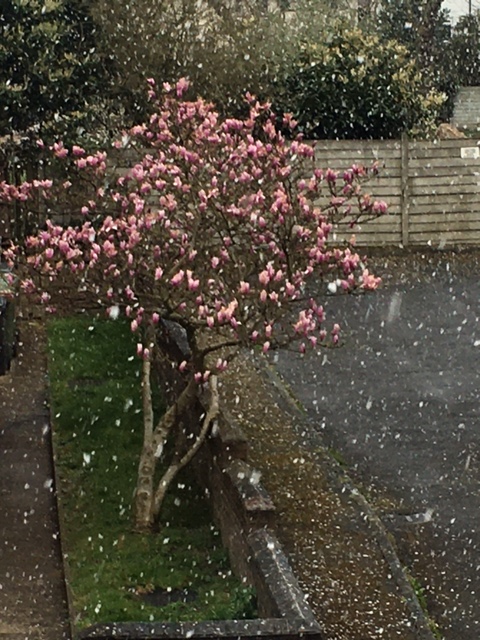
This morning I opened my eyes to snow descending like down-feathers, dancing and swirling outside my window. Wow! There is hope. A clean, fresh start.

As an anaesthetist, over the last few months I’ve been speaking with patients, re-assessing their fitness for the operations that they were supposed to have March 2020 onwards, which have not happened yet but will hopefully happen soon. Several of them have had to live with painful knees and hips and other uncomfortable conditions for at least a whole extra year, unable to move around and exercise. Many of my patient’s health has deteriorated over the last year. They have gained substantial weight, some are drinking much more than before. A few have decided not to have their operations as they are worried about visiting the hospital, leave alone be admitted, for fear of getting the virus.  

A few got Covid and have recovered fully while a small proportion have lingering issues. Others have discovered new health conditions like heart disease, diabetes and asthma. Some elderly patients have developed new ‘minor’ issues after having the vaccine, like loss of balance, making independent living impossible. So many have lost confidence.

The incessant repetition of “you may be next to die a terrible death alone soon” on TV and radio has filled the psyche of the populace with terror. The thorn of fear has made a home in so many chests. It’s easy to put it there but difficult to pull it out. How insiduously our greetings have changed from ‘Have fun!’ to ‘Stay safe’.

Monday, a good place to start afresh. May we find the courage to recover, open and experience life in all its fullness in the coming weeks and months.

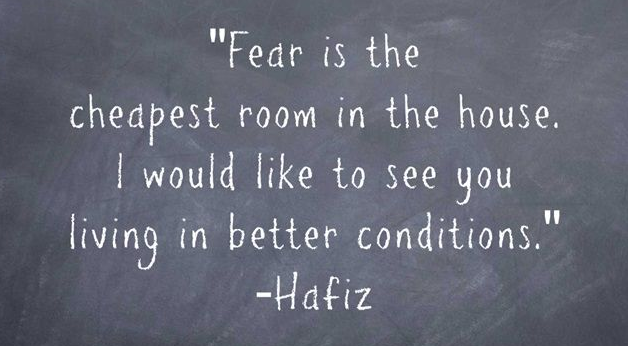
“Avoiding danger is no safer in the long run than outright exposure. The fearful are caught as often as the bold.” -Helen Keller

It changes. And changes again.

Over and over I asked myself – Now what? Now what? What happens after a severance such as this? How long do one’s bones bleed? Do the tears ever finish? What does ‘recovery’ look like? Is it even possible? How does one keep placing one foot in front of the other? Where is the road? Where does it come from? Where does it go? How long and meandering is it? When does the screaming in my head stop? How long can I keep up the facade? Pretend to be sane? Is this what a new diagnosis of a terminal illness feels like? Is forgiveness possible? Self-forgiveness? Acceptance? Surrender? All these big words! Surrender what? To whom? Who am I now? What do I do?

No answers. Silence. The tilted earth keeps spinning around its imaginary axis. It keeps cradling me. The sun stays at the center of its orbit. My son stays at the center of my being. My breath keeps coming and going. I grow new eyes. My bones carry my weight even though they bleed. The road appears under my feet. It reveals itself one step at a time. Rumi and Khalil Gibran come and hold my hand. The screaming softens. The wall of bricks that was my body, loosens. I come to know the terror and the joy of being insane, catch glimpses of being free. Respect for those who went before and sadly others, who follow. I stop fighting with the big words and keep it simple. Watch. Observe. See. Open. Let the gash in my heart, allow the light in.

A recent talk for The Compassionate Friends, a charity dedicated to supporting bereaved families.

Poverty and the Mind

Vikram Patel is a psychiatrist and a Professor of Global Health who works tirelessly to improve the mental health of people living in low and middle income countries like India and Ethiopia.

His recent research has found that all countries are ‘developing’ countries when you look at the low proportion of the health-budget they spend on mental health. Some wealthy countries may have better systems of care for maternal and child health but overall, mental health remains universally, at the end of the queue.

At present, COVID has overtaken all other agendas. However, now more than ever before, there is a recognition of the two-way relationship between poverty and mental ill-health. This may be a historic opportunity to get this right.

The relationship between poverty and mental ill-health is a complex one. How can we distinguish a normal response to poverty from a disease process? Poverty can increase the risk of poor mental health via multiple pathways, for example, poor physical health, high levels of noise pollution, violent neighbourhoods, insecurity and humiliation.

Can an increase in income improve mental health? Yes. It can but it needs to be sustained.

The fact that having a mental illness may induce poverty is less well recognised. It may affect one’s education and hence, employment opportunities. In low and medium income countries, health care is paid for by people. Due to the length of time it takes to find an effective treatment, much effort and money is wasted in doctor-shopping. Depression is inequitably distributed in society but not recognised as such because wealthy individuals also get it. We accept that long term expensive therapies cannot be delivered to the poor, so what’s the point in studying them?

After nearly a year of job-losses, the number of people below the bread-line all over the world will increase by tens of millions. In India alone, the gains made in economic growth over the last decade are predicted to be wiped out this year. The historically disadvantaged will fare worse, suffer more.

We can expect a surge in mental health problems like we did after the 2008 global financial crisis, mainly led by suicide and drug misuse. Sir Angus S Deaton, a Nobel prize winning economist wrote extensively about these deaths of despair. Economists and global health experts warn that this one will possibly be far worse.

In India, while the state is spending all its energies on the pandemic, livelihood-based organisations are finding very poor mental health in their members. Taking a broad, multidisciplinary approach to depression and anxiety rather than viewing it through the lens of a medical specialty is the need of the hour. Policies all over the world need to de-medicalise the emphasis on specialists and empower front-line providers and communities to enable them to foresee, identify and address this problem.

The bi-directional relationship between mental health and finances means that appropriate mental health interventions can improve finances. Can we persuade policy-makers world-wide to listen to global health experts and economists, look at this fast-approaching  avalanche and steer policies to protect those who are being and will be hit by it?

Talk: Poverty and Depression (https://voxdev.org/topic/health-education/poverty-and-depression-how-improving-mental-health-can-help-economic-wellbeing) – this talk was available till last night but has since disappeared.

Research Papers:

  1. Angus Deaton on the Financial crisis and the well-being of Americans (June 2011):

https://www.nber.org/papers/w17128

2. Vikram Patel on Causal evidence and mechanisms of Poverty, Depression and Anxiety (May 2020):

https://www.nber.org/papers/w27157

To my brothers … lean on me.

This video was made after a spate of suicides by senior NFL players in the USA as they were starting to feel the effects of Chronic Traumatic Encephalopathy (CTE). Michael Irvin spoke from the heart without a script and his truth is visible.

If your isolation is getting the better of you, know that you are not alone. You are loved, silently. Reach out your hand and they will be there.

No flu this year?

Lock-down, we thought it would last a few weeks and then life would resume as normal. Then it was a few months and now it’s questionable if it’ll be a few years or for ever?

Confusing messages came at us from big people who made big decisions – the same people who then blatantly broke the very rules they made and yet, expected everyone else to follow them. First, we were doing it to protect the NHS and now we’re doing it to protect our loved ones. We are law-abiding citizens and want to do the right thing. We are considerate and we follow the rules, even when we know that they are not based on good science.

The government is working on the ‘worst case scenario’. Well respected scientists with a nuanced view on the validity of lock-downs, such as Sunetra Gupta(Oxford), Ivor Cummins(Dublin), Mark Woolhouse(Edinburgh) and Carl Henegan(Oxford) are rubbished by the media and subject to ad hominem attacks.

What about us, the common people? What drives our behaviours? Are we well informed or are we plain scared? The news doesn’t tell us that most people who get the virus get better. It doesn’t tell us that the average age of death in the UK is 82 with or without Covid. It doesn’t tell us that there is no ‘gold standard’ test for the virus and that if you test positive does not mean you have the plague.

Also, we need to have a grown-up conversation about death, which is the only definite fact of life.

November is the month we pay homage to all those who gave their lives to win us our freedoms but this November, we are seemingly, willingly giving our freedoms away.

Fear is a tool for manipulation. It overrides love. It can easily be transformed into hate. Despots throughout history, including Nazis and the Stasi used it effectively to make common people like you and me, enemies of each other.

George Orwell said, “In a time of universal deceit, telling the truth becomes a revolutionary act.” I, like many others, have been forced to consider how far I would be driven by my fear – snitch on a neighbour, not see a friend who might be recently bereaved or hurting for any other reason? Am I willing to live the rest of my life being told what I can do and what not? Is this the freedom for which those we remember died?

Now, the World Economic Forum in partnership with the global elite is setting out ‘The Great Reset’ on their website. At the same time BBC and New York Times are calling it a Conspiracy theory. Who am I to believe? This picture was taken from a short promotional video taken from a clip on Twitter, posted by the WEF. When I went back to look for it, it was gone.

Whatever the truth, I refuse to let fear rule.

In my world, love rules.