Day 657

When someone becomes depressed, many of their activities function as avoidance and escape from aversive thoughts, feelings or situations. Depression therefore occurs when a person develops a narrow range of passive behaviours. As a result, someone with depression engages less frequently in pleasant or satisfying activities and obtains less positive reinforcement than someone without depression.

40 years ago the first behavioural treatment for depression was described by Lewinsohn et al. Many successful trials were done which somehow got forgotten with the advent on CBT in the 1980s.

Behavioural Activation (BA) focuses on activity scheduling to encourage patients to approach activities that they are avoiding. It focuses on encouraging people to take part in meaningful activities that are linked to their core values. It helps people find out which activities make them feel better. Patients are also taught how to analyse the unintended consequences of their ways of responding, including inactivity and rumination.

A recent paper published in the Lancet by Richards et al at University of Exeter studied 440 people with depression. They were randomised into 2 groups – one received BA and the other received CBT. They found that BA, a simpler psychological treatment than CBT, can be delivered by junior mental health workers with less intensive and costly training, with no lesser effect than CBT. Hence, effective psychological therapy for depression can be delivered without the need for costly and highly trained professionals.

Professor David Richards says:

“Effectively treating depression at low cost is a global priority.
Our finding is the most robust evidence yet that Behavioural Activation is just as effective as CBT, meaning an effective workforce could be trained much more easily and cheaply without any compromise on the high level of quality.
This is an exciting prospect for reducing waiting times and improving access to high-quality depression therapy worldwide, and offers hope for countries who are currently struggling with the impact of depression on the health of their peoples and economies.”

UK is one of those countries.
Day 656

While sorting out my clothes and listening to BBC Radio 4 this morning, it hit me  that life will never be the same again. Some of these clothes will never be worn by me again. They are not me. They are what I used to be but now everything is different. My body and my being are different. The planet I live on now is different. There is a huge chasm between where I live now and where I lived when Saagar was alive. Every incident in the past belongs either on this or that side of the chasm. Everything has happened in relation to that one incident – before or after. And there is no way of going back to the planet before. 

The landscape on this planet used to be bare, completely lacking in possibilities, lifeless. But it is slowly changing. It is being nourished by meaningful, authentic and loving relationships. All dead-heads are being removed and vegetation carefully pruned of nonsense. What remains is real. It is guided by a sense of purpose. It is a space that allows for expression and creativity. Most of all, it works on the love principle. There are possibilities. Everything here is tinged with the absence of Saagar yet, it is a place of hope. The essence of the human being that was Saagar is here for everyone. His friend said in her e-mail, “We missed our Saagar dearly at graduation. We wish he — and you — could have been there, of course, and in a way it almost felt wrong that we should get to graduate without him. But all of us carried his memory with us, and without him we wouldn’t have grown and learned the way we did (and still are). I miss him every day.’ 

There wasn’t a penny to his name and yet he was rich enough to enrich all our lives. 

It is for us to discover the potential for pure joy. It is here, on this planet. 

Day 655

When I first came to the UK, a couple of myths in my mind about this country were busted within the first week.

  1. Education is free, so everyone must be literate and educated.
  2. The government looks after people who are unable to work, so everyone must be happy.

I was puzzled by the fact that at least 1 in 3 patients I saw before an operation were on regular antidepressants. Some patients took St John’s Wort. I had never heard of that before. Some didn’t admit to having any problems with their health but on a closer look at their notes, were taking antidepressants.

Over the last 10 years, the use of antidepressants has doubled in the UK. Some science tells us that these drugs have a history of proven efficacy and some other science tells us that the benefits are marginal and short term. Occasionally the effects are very harmful. One such effect is ‘Akathisia’, defined as a movement disorder characterised by a feeling of inner restlessness and a compelling need to be in constant motion, as well as by actions such as rocking while standing or sitting, lifting the feet as if marching on the spot, and crossing and uncrossing the legs while sitting. People with akathisia are unable to sit or keep still, complain of restlessness, fidget, rock from foot to foot, and pace.

The Pill That Steals Lives’ is a book written by documentary maker Katinka Blackford Newman. It is one woman’s terrifying journey to discover the truth about antidepressants.

In it she talks about one year of hell that she lived through after being started on Escitalopram(Lexapro). She describes the thoughts of violent acts that crept into her mind while on that drug. She got full blown delusions about having killed her two young children. She had to be hospitalised and was put on multiple medications that made her loose the ability to look after herself or her children.

More than 10 years ago America’s National Institute of Mental Health set out to measure the effectiveness of antidepressants. They found that only 26%of patients responded positively to these meds and at the end of one year only 6% were well. Conclusion: ‘the findings revealed remarkably low response and remission rates’.

Saagar was started on Citalopram (a drug used for unipolar depression and unsuitable for young people) 4 weeks before his death. The dose was doubled from 10 to 20 milligrams per day, 2 days before his death. The riskiest time is when they are started, when they are stopped and when the dose is changed. How much did these medicines contribute to his death? We will never know.

Day 654

Driving around in hot weather, I found myself looking for a shady spot to park the car so that it wouldn’t be too hot when I came back to it. Walking in the piercing sunshine, I found myself once again, looking for shade. I just expected trees to be there when I needed them. I stopped to think how many trees had I planted myself to rightfully expect them to be there for me. None. Not one.

Oprah Winfrey talks about the poverty she faced in childhood. One year her mother took her aside and said there would be no Christmas. However, at midnight there was a knock on the door and a few nuns brought gifts for Oprah and her siblings. She was deeply moved by the fact that someone remembered them and their predicament that night. She went on to raise funds for thousands of poor children to receive gifts on Christmas. ‘Give what you are given’ she says.

great_dream_1000_400x566

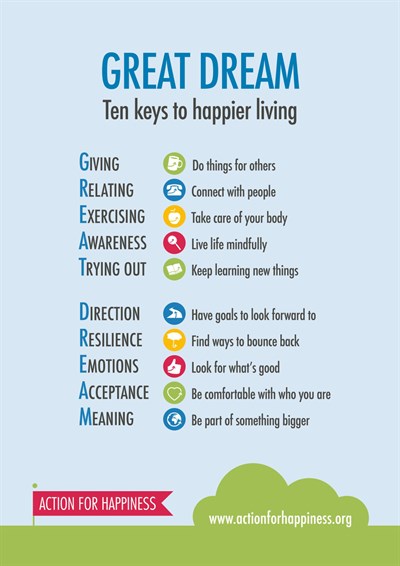
If you want to feel good, do good.

I did plant a bay tree about 12 years ago but after 3 years it died. I felt awful and stuck with indoor plants thereafter. I think it is time to try again.


Day 652

Of all developed nations, Japan has one of highest suicide rates, third only to Hungary and South Korea. In the year that Saagar died, 25,000 people died of suicide in Japan, making it 70 people per day! Shockingly, this number is more than 3 times that in the UK. Male to female ratio is nearly 2:1 in Japan as compared to 4:1 in the UK.

Why is it so?

Japan’s long tradition of “honourable suicide” makes it a noble thing to do. It is perceived as people taking responsibility for themselves.

“Isolation is the number one precursor for depression and suicide,” says Wataru Nishida, a psychologist at Tokyo’s Temple University. This is particularly applies to elderly people. Many lone deaths of elderly people are never fully investigated by the police. The almost universal practice of cremating bodies here also means that any evidence is quickly destroyed. This also means that suicide is underreported.

The Oxford English Dictionary has recently added the word hikikomori . In Japanese this term describes a type of acute social withdrawal in which a person does not leave their home or room for a period of at least 6 months. In 2010, roughly 700,000 people were living as hikikomori in Japan. Their average age was 31 years. A recent survey of young Japanese people’s attitudes to relationships and sex by the Japan Family Planning Association, it found that 20% of men aged 25-29 had little or no interest in having a sexual relationship. Technology may be making things worse, increasing young people’s isolation.

_68545751_200907_messy_room6

Japan is a very rule-orientated society where young people have no way of expressing their anxiety or frustration. There is an acute shortage of psychiatrists. Treatment is essentially by medication as professional psychological support of good quality is not easily available.

Until the late 1990s, depression was not widely recognised in Japan as an illness. An advertising campaign run by a pharmaceutical company called it ‘a cold of the soul’ which helped raise awareness but is now blamed for employees faking depressive illness to take time off work.

This cartoon by Torisugari is his ‘manga therapy’ according to his psychiatrist but it does help improve the broader understanding of the condition.

_90430606_image-1-976

{“The world that had supported me up until now is breaking up and falling away! I can’t even stand up any more!” says the character, Watashi (whose name means “I” in Japanese).}


The suicide figures have started to fall over the past 3 years but the absolute numbers still remain alarmingly high.