Day 561

This year I turn 50.
When I was young I could think of turning 30 and 40 but somehow turning 50 had never crossed my mind and here I am, just a few months short of it. It sounds like too many years but I suppose it is as big a deal as I make of it. Si, my family and friends are keen on planning a celebration far more than I am. Although I would be happy to play along, I am not quite in the mood for a big ‘celebration’.

Being here in peaceful surroundings, breathing clean air, drinking naturally pure water, eating fresh organic vegetarian food, doing yoga and meditation everyday, not chasing time and getting good sleep every night has made me look at life and me differently. Most of the things listed above are for free and yet invaluable. The cost of living is so low here and yet I choose to work unearthly hours just to make ends meet. It has often felt like running like crazy on a treadmill, going nowhere.

Some very basic existential questions have come up for me. Of course I need my body and mind to experience the world but I am neither my body nor my mind. What if I stood back from both and looked at my existence that is beyond these two?

How would I live if I had no fear of suffering?
Nature has left us free to choose, trusting our intelligence, trusting that naturally we would seek the highest.

The choice exists in every moment.
Day 548

suicideGreatRecession03

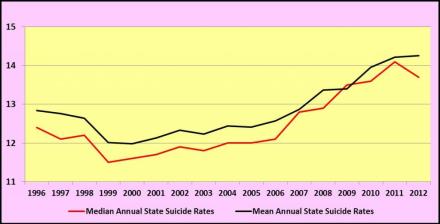
Yesterday a couple of things happened that made me think of the relationship between suicide rates and financial crises; there was a letter in the post for Saagar from Wonga offering him money and we watched “The Big Short”.

The 2008 global financial crisis affected economies around the world. It led to the deepest UK recession since World War II, with rises in unemployment, debt and home repossessions. Young people experienced particularly high levels of job losses and unemployment. In England, as in the rest of the world, the greatest rise in the incidence of suicide appeared to be in young men.

Disputes over benefits, wage cuts or demotions and reduced hours are among the other sources of distress. A range of sources of debt were identified, including loans (e.g. hire purchase and student loans), mortgage, rent arrears, gambling and debts to friends and family. Many people do not get in touch with mental health services or their GP in situations like these.

People in the ‘know’ seem to think that we all are headed towards another global financial crisis. Austerity measures and job losses are all over the news. Several studies have shown that the people most vulnerable to job loss and debt are individuals with pre-existing mental health problems or past psychiatric illness. Thus vulnerable individuals may become more vulnerable during periods of recession.

Countries with more generous unemployment benefits and more investment in active labour market programmes (e.g. job search assistance, apprenticeships, subsidised employment) experience the smallest rises in suicide during recession.

A policy focus on creating work opportunities for young people is particularly important during periods of recession. Young people are the group most likely to be made redundant and experience difficulties finding work. Negative first experiences of job seeking and the labour market may have a permanent scarring effect.

Frontline staff most likely to be in contact with individuals whose mental health is affected by economic and employment difficulties should receive training in recognising and responding to risk.


Day 485

During a chance meeting with a friend who takes very good care of herself and exercises regularly it was clear that she was very critical of her body. Her stomach wasn’t flat enough, her back wasn’t straight enough and her neck just wasn’t long enough. Oh dear! The situation was a source of constant dissatisfaction for her, bordering on unhappiness.

Last evening when Si got back after 2 days from his trip abroad he gave me a big hug. It felt heavenly! I could access that pleasure through my body. The lovely fragrance of incense, the delicious chocolate ice cream, the beautiful English countryside, the sweet mewing of the cats, the solitary pink rose in my garden, our new brown leather sofa – so many pleasures to be experienced through the body and the five senses. I feel immensely grateful for it.

In the Bhagwat Geeta, Lord Krishna describes the body as clothing for the soul. Just like the clothes we wear do not represent the real state of our physical body, the state of our physical body does not represent the truly unchangeable, pure and permanent nature of the soul that resides within it.

It is a vehicle that allows our soul to express itself.

Without a doubt, it is important to have a healthy body. However the disproportionate importance given to the idea and pursuit of a ‘perfect’ body in our society is a cause of much angst amongst young and old.

We need to look after ourselves, love and honour our bodies, be grateful for them and know that we are much more than just our physical form.


Day 412

The young lady, possibly 25 years old, sitting 2 tables across from me in the restaurant was alone as was I. Her phone was of course keeping her good company. She paid a lot of attention to it. Every few minutes she called a number and held the phone up to her ear. She got no response. Or may be she got the answer phone message. This happened again and again and again. Each time her face fell further and further to the floor. The light in her eyes diminished a little each time and she went pale and then paler still.
I watched her as discreetly as possible, wondering if she was ok. I wondered if she had called the same number each time or a different one. I wondered if someone was unwell or there was a wobble in a relationship or she wanted to make an appointment with her doctor or …… the possibilities were many.

After half an hour of this process repeating itself she got up to leave. There was no bounce in her step. It looked like she had dragged herself out. Her head hung by her neck. She was visibly upset. I was so tempted to reach out to her and ask her if she was alright and if I could do anything to help. I wanted to offer to stay with her and listen if she wanted to talk about anything. I would listen – no judgements, no advice. Just listen. But I didn’t do that. Or shall I say couldn’t do that? Living in big cities often doesn’t allow for offers like that. That kind of behaviour is far, far away from the norm. In fact, just making proper eye contact with a stranger is tricky. What I was thinking of doing would have probably scared her and she might have thought of me as a ‘freak’.

How come we live in a world where reaching out to someone in distress is not normal? Even if we don’t know each other, we know the human condition, the ebb and flow of life, the value of connectedness between beings. The next time this happens, will I do anything different? What is the worst that can happen? They might not accept my help, which will feel like rejection.

If I can be ok with that then I can do it.


Day 410

Parents, partners, friends and siblings of those lost through suicide can take forever to get back to ‘normal’. They are haunted by events and memories associated with it for many years. This is especially true for those who are unfortunate enough to be the ones to find the bodies of their loved ones. The unimaginable pain stays with them like a dagger in their hearts forever.

Even today, the sound of fast moving trains completely rattles my being. The events of ‘Day 0’ replay like a film in my head many times a day. Most often it’s the first thought in the morning. I break into a sweat and my heart pounds violently. I hold back from screaming outwardly but inside I am wailing. I have millions of screams stored up inside me. I fear one day they will explode into a deafening wail that will enfold the whole world.

Direct experience of horrific events; witnessing trauma in others; learning that traumatic event(s) occurred to a close family member or a close friend, especially where the actual or threatened death is violent; repeated or extreme exposure to aversive details of the event – a history of all of these is DSM-5 criteria for the diagnosis of Post-traumatic Stress Disorder or PTSD.

Talking therapies (Cognitive Behavioural therapy and EMDR, Eye Movement Desensitisation and Reprocessing), Group therapy and self help strategies are very useful for management of PTSD.

Guidelines from the National Institute for Health and Care Excellence (NICE) suggest that trauma-focussed psychological therapies should be offered before medication, wherever possible.  UK Psychotrauma Society has published an evidence based guide for management of stress caused by trauma.

Following on from yesterday, is it any wonder that mental illness is rife in war torn countries?

I am no psychiatrist but I don’t think what I have is PTSD. I have an understandable response to a catastrophic event. I am gradually getting better at handling it. I can keep a semblance of ‘normality’ in my day to day life even though I am hurting deeply.  Some recently bereaved ‘patients’ are started on antidepressants within weeks by their doctors. One of them said to me, “I don’t feel anything. Just blank.”

http://www.ukpts.co.uk/site/assets/UKPTS-Guidance-Document-120614.pd