Little things.

“Where you from?”

I wonder why so many people in my own country make this query. They ask often enough to annoy me enough to make me stop and think. Why?

Is it because my grey hair seems odd in a country where almost everyone adorns black hair, irrespective of age? Is my accent too strange for my own people? Do I dress funny? My mother believes it’s because I say ‘Thank-you’ much too often. At the end of a meal in a restaurant, accepting the bill, Thank you. Waiter handing me the card machine, Thank you. Making the payment and handing him back the machine. Thank you. Receiving a copy of the receipt. Thank you. Leaving the restaurant through a door held by a doorman. Thank you.

Do other people do it to the same extent or is my thanking over the top?

Do I really mean it each time I say it or is it a mindless habit? An automatic impulse? Spontaneous blurting?

Well, do I need to convert my gratitude into a problem? It has to be a good thing. Right? They say more gratitude makes for less stress, better relationships, good mood, optimism and connection. It helps us celebrate goodness in the world and newness of the present moment. It blocks negative emotions like envy, resentment and regret. It improves my social ties and self-worth as I feel that someone is looking out for me. Research has proven it to be essential to happiness. It is the ‘queen of all virtues.’ They say it’s not merely a sentiment but a practice. It can be cultivated by noticing little things, sights and smells, sounds and sensations, tastes and shapes and movements. Writing them down.

Do I actually feel grateful for the little things others do for me? Do I smile and make eye contact with them? Do I meaningfully connect with the person in front of me? Do I hold the attitude of gratitude in my body? Yes.

So, I am comfortable with not taking small things for granted, even if it translates to saying thank-you too often. The next time someone asks “Where you from?” I will say, “Thank you for asking.” 😉

Resources:

Gratitude Quiz: https://greatergood.berkeley.edu/quizzes/take_quiz/gratitude
Things people say.

Dr Indu was broken inside out. She felt like a big black boulder and could barely hold her weight. After all these years of marching on alone and doing the ‘right’ things, this was her reward. Most of her friends had no clue what to say or do. After a few days it was clear that many of them could only stand by her for a week or 10 days max. This is when Indu remembered a passing acquaintance, Ruhi, a girl who wore long flouncy colourful skirts and big dangling ear-rings made of feathers and other dreamy things. She thought of her as a girl even though Ruhi had silvery grey hair and was seven years older than her.

Indu wanted to see Ruhi again. She didn’t know why but it had to be done. Indu posted her an invitation and as back-up, sent her a text with details.

The clear bright day was trying to cover-up the immensity of this death. Ruhi came in a flowing black dress with multiple strings of black wooden beads in various lengths cascading down, from her slender neck to her shapely waist. The ends of her long black sleeves opening-up like flowers to reveal her delicate hands. Not only did she have a pink lip-gloss on but also a serene smile. On this tearful day, she smiled on as if that was the most natural thing to do. No defiance or disrespect. A subtle involuntary smile, puzzling and misplaced.

She walked up to Indu and held both her hands in hers for a few frozen moments. She went on to open her arms and enclose Indu in them like a baby. “One day you’ll be grateful for this”, she whispered in her ear. By now Indu was used to hearing non-sense like “be brave”, “you’re so strong”, “such is life” and so on. She had learnt to ignore a lot. It took too much out of her to do anything more than that. “You have no idea what this is like” she thought to herself, feeling like a duplicate of herself amongst all these people. She drew back from Ruhi and looked into her dark brown eyes through her tearful ones. “Believe me. You will” Ruhi said softly.

Seven years have passed. Now Indu is as old as Ruhi was then.

And she remembers her horror at what Ruhi had whispered in her ear that day. The chains are falling off. Her vision is clearing. She notices more, within and without. She wants to live the truth. Be it. She knows it now. It’s all a ‘seeming’. All of this. It’s so clever. It fools us into believing it’s real. She has felt the presence of the divine in her broken heart. The blessings of a few fleeting golden moments of absolute grace have left her charmed with life and thirsty for more.

Indu and Ruhi meet up at the café that plays Bossa Nova jazz all day. They catch-up over large mugs of cappucino, sing and dance and take long walks together. They laugh and cry with abandon. Both wear pink lip-gloss and without knowing, they smile. Light as dust.

Herbal life

Whenever he picks mint or basil or bay leaves, he says a polite ‘thank you’ to the plants with a subtle bending of his head and all. I watch him and smile. How pointless, I think. If that’s his way, fine by me. Happy to be entertained for free by Si, the country-boy.

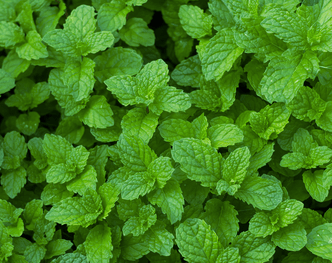
All the extra time at home over the last few months has meant lots of herb-pots overflowing in the garden. The relative dryness has meant lots of watering of the plants. An urbanite at heart, every two days I go around with a watering-can and make a leisure activity out of it. Slowly, select the order in which I go, pick the spots where the water drops in and carefully consider, how much.  As I tilt the can into the basil, a waft of basil-fragrance envelops me. Am I imagining this? On to the thyme, a cupful of water and the air suffused with thyme-odour. I had never noticed this before. I wasn’t convinced. I move to the lavender and pour more generously, and there it is again, filling the air. The same unmistakable gesture comes from the profuse apple-mint.

I am not imagining this. They are all saying ‘thank you’.

For the first time, I am paying attention.

Simply 2020

The impeccable house we were invited to, shouted out the immense efficiency of our hosts. It was spotless, warm and welcoming. But every few moments something ‘not right’ was vociferously highlighted by our wonderful hosts. The unacceptable way the red silk cushions were left scrunched and squashed, compressed into corners of the plush golden sofas by the rude backsides that had been resting on them. The panic about the imminent possibility of too high a quantity of left-overs. Or the worry over a small chance that there won’t be enough. The width of the cake wedges was either too thin or too thick. The imperfect consistency of the gravy, the flatulence inducing artichoke soup, the highly undesirable heat generated by the log-fire, the terrible noise coming from the television, the spot of annoying stickiness left behind on the jar of honey by an inconsiderate user, the five brown crispy crumbs of bread left shamelessly sticking to the neat rectangular slab of butter on the gold-rimmed china butter dish, the uncouthness of the incorrect placement of the ornate silver by the staff, the inconvenient timing of a phone call with a relative abroad and so on …

Despite the absolute beauty of this home, the air was imbued with the smell of ‘dissatisfaction’, the well-known fundamental state of most human existence.

Do we change overnight or just carry on with the desire for things to be different? Time is a continuum going in waves, up and down and round and round. The ‘start’ and ‘stop’ points are nothing but artificial. The solstices and equinoxes mark time, connecting us with the movements of nature and linking various planetary bodies with one another.

Ordinary events present us with gems. Its up to us to spot the gems, pick them up and drop them in our pockets.

This year, I wish you and me the ability to appreciate and adopt Deep Simplicity. The ability to recognise the futility of being in a constant state of dissatisfaction, to switch our attention from imperfection to gratitude for all that is, to compassion towards ourselves and others, to patience with others and ourselves as we evolve. It takes time.

Day 751

you-and-me-2

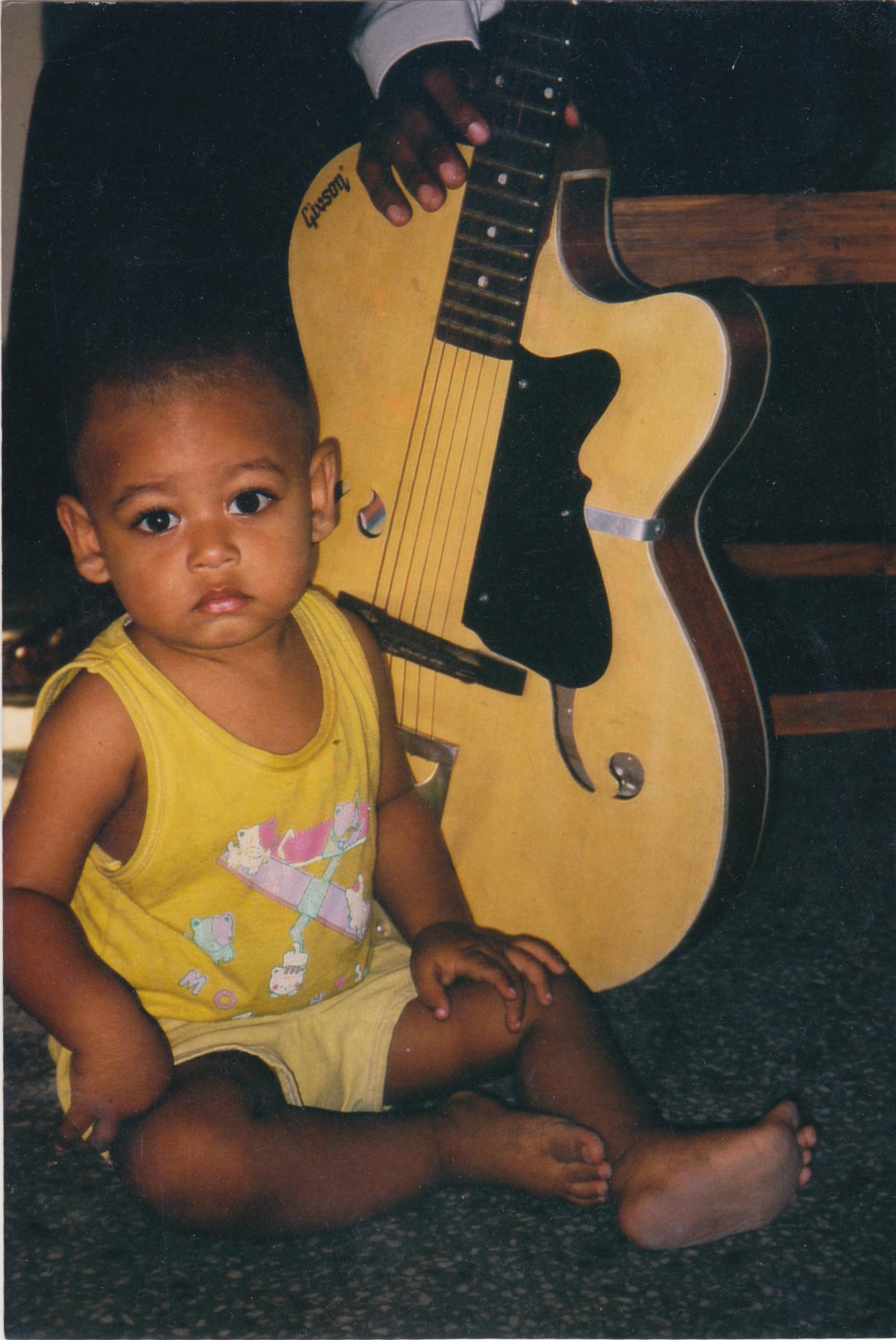
Shaving of heads is an age-old tradition in India. Some hindu families tonsure kids at about 1 year of age. It is believed to liberate them from the ties of their previous life. It is also felt that the new growth of hair is healthier and thicker than the old one.

Tonsuring is an act of surrender. It also means giving up one’s vanity. It can be a sign of mourning in some southern states in India. Father’s soul can find peace after death if his son shaves his head. Shaving is a way of raising funds for charity and for showing solidarity with a cause, such as free Tibet.

Saagar had beautiful soft curls. They were shaved when he was a toddler. It was a shock to him but it helped him cope with the hot summer. When he visited Uganda for charity work at 18 years of age he shaved his head again. This time it was a shock to me. I thought it was a big step for a teenager, especially one who angled his head and checked out his hair each time he purposefully or accidentally came face to face with a mirror. He was very much his own man, my boy!