Day 604

‘Dying from a mental illness is just the same as dying from any other disease’ says Paulie O’Byrne, a young man from Canada.

Paulie suffered sexual abuse at the age of 19. It took a long time for him to get past his shame and tell someone about it. Many people didn’t believe him including his parents. He suffered with anxiety, depression and PTSD and took to drugs and alcohol in a big way to be able to cope with the pain. He felt suicidal on many occasions.

His recovery could only begin when somebody believed what he had to say. That’s his message – when someone tells you they have a mental illness or that they are suicidal or that they have been abused, all they ask for is to be believed.

‘As much as I love my support and friends and family, for me I would not call them. The reason I say this is because in my mind it would cause more hurt and confusion if I told someone close that I have a plan to end my life. I thank god every day for crisis lines- the humans that work for them are angels among us. I can boldly state right now I’ve called the crisis line over 50 times since 2010, and I’m still here. I’ve thought about ending my life on my birthday before, for the sole reason people will only have to feel sad 1 day a year, not my birthday and death day.’

He worked incredibly hard to get out of the dark place where he was. His counsellors didn’t give up on him and he didn’t give up on himself. He started a movement called ‘1 in 5’, the motto of which is ‘strength from pain’. He speaks and blogs about the high incidence of sexual abuse in men (1 in 5) in Canada and encourages other victims to come forward and speak about their experiences by doing so himself.

He lives in gratitude, one day at a time.
‘I am grateful for the fact that I can breathe.’
Day 601

‘Never let an aircraft take you where your brain didn’t get to five minutes earlier’ – this is a commonly understood concept amongst pilots.

While none of us can predict the future, the ability to anticipate problems that might arise given a particular set of circumstances is a basic requirement for many high risk jobs such as fire fighting, policing, armed combat and medicine. Doctors do have a licence to kill and they inadvertently use it when they can’t or don’t anticipate problems. Working backwards, if we don’t think the worst might happen, we don’t actively look for it and definitely don’t plan for it. Before we know it, it’s too late and the adverse outcome is inevitable.

Four days into it’s maiden voyage, the largest passenger liner of its time, the Titanic sank. It received six warnings of sea ice on 14 April 1912 but continued travelling near her maximum speed when her lookouts sighted an iceberg in its path. Unable to turn quickly enough, the ship suffered a killer blow and slowly sank over the early hours of 15th April. 1635 of the 2224 people on board died.  The vast majority of the crew were not trained sailors but were either engineers, firemen, or stokers, responsible for looking after the engines or stewards and galley staff, responsible for the passengers. They were taken on at Southampton on short notice and had not had time to familiarise themselves with the ship. Knowing what we know now, is it surprising that the ship sank?

Saagar gave us warnings but we didn’t pick them up. Shouldn’t alarm bells be ringing nice and loud when a young man with a recent diagnosis of a mental illness is discharged in a hurry from Psychiatric services and he scores 27/27 on his PHQ-9? Whose responsibility is it to join up the dots?

When a plane goes down, the pilot goes down with it. When a patient dies, often nothing happens to anyone else. There is no black box. Tracks get covered, mothers over-react, things get forgotten and life goes on….


Day 600

photo

Craters on the surface of the earth indicate something magnificently terrible happened here.

A hundred days have gone by six time over since the crater in my chest was created. I have surrounded myself with the ruins and cherished them ever since. I have held on to every scrap as tightly as I could, painfully parting with a few as if I was giving away fragments of myself.

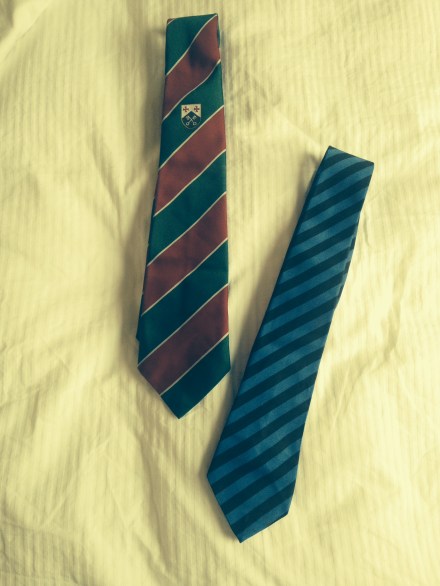
Today I felt ready. It was a day of going through Saagar’s jumpers, t-shirts, shorts, scarves, ties, belts and shoes, looking at them and remembering how he looked in them, putting them down on a white sheet and taking pictures of them and then putting everything lovingly and neatly into cardboard cartons, loading up the car with 4 such boxes and driving to the Mind charity shop nearby, telling the story to the lady at the counter in about 6 words: My son had Bipolar. His things…

Although I thought I was ready, it was still like giving away a big chunk of myself. Another crater. I still hold on to a few scraps – a school tie and a university tie. I think he would appreciate that. May be not. No idea.

Well, these are only his things that I give away.
He is right here. In my heart.

Day 594

Mental ill health is the largest cause of disability in the UK.
(WHO, 2008)
The economic cost of mental illness in England has been estimated at 105.2 billion pounds/year.
(Centre for Mental Health, 2010)
Amongst teenagers the rates of depression and anxiety are up by 70% over the last 25 years.
(Mental Health Foundation, 2005)
In a survey conducted by UNICEF in 2007, UK ranked at the bottom in children’s well being as compared to North America and 18 European countries.

Why?
Is the incidence of poor mental health on the rise or is it being reported/ recorded more often?
When I think of the environmental changes over my lifetime so far, here are a few things that are obvious:

  1. As a child I didn’t know many people who lived alone.
  2. There were no 24 hour TV channels.
  3. Many mothers stayed at home and spent time with their kids.
  4. The pollution levels in the air and water were much lower.
  5. Children played outdoors a lot more. 
  6. The society was not dominated by fear of terrorism, financial problems, job losses and sexual abuse.
  7. Bombings and beheadings were not a common sight on TV.
  8. The contrasting extremes of wealth were not so starkly visible.
  9. Not many people moved away from their families – from villages to cities or across continents.
  10. Divorce rate was much lower, almost nil in India.
  11. Most kids had at least one sibling, if not two.
  12. There were some role models.
  13. People had time.
  14. There was no social media / information overload.
  15. No one country dominated most international affairs.
  16. Capitalism was not as huge a beast as it is now.

Why this rise in suffering?
All of the above?
None of the above?
Some of the above?
Who knows?

Day 592

Today’s question at Re-create Psychiatry was: What is therapeutic?

Everyone’s reality is different. Their stories are diverse. People have many thousands of different types of experiences. So, a generic label eg. depression, has to be false. Are diagnoses a western construct, enabling us to put people into neat and tidy little boxes? ‘What is happening to you?’ is surely a more appropriate question as opposed to ‘What is wrong with you?’

Medics need to extend their frame of reference beyond medical to social and psychological dimensions. We need to have various ways of understanding illness, not limiting ourselves to the biochemical imbalance model. When we hold very tightly to one way of thinking, then conflict arises.

For some horticulture is therapeutic, for others homeopathy or acupuncture or meditation or yoga or art therapy or music. However modern allopathic medicine has rubbished all other ancient modalities of treatment. The fact that these practices still exist could imply their value through many generations. There is enough evidence in their favour but unfortunately they do have the influence of the pharmaceutical industry behind them.

‘Connectedness’ is definitely therapeutic. Modern medicine doesn’t have time for that. It is much quicker to print out a prescription but often that is not what the soul needs. The ‘evidence base’ for the needs of an ailing soul may be a little bit harder to gather than that for a broken arm.