Day 700

When our GP heard of Saagar’s death, the first phone call he made was to the Medical Defence Union and they advised him not to call us. Despite having known us for more than 7 years and seeing Saagar every 2 weeks with us for the last few months of his life, he did not call us on his death.

A qualitative study of GPs’ experiences of dealing with parents bereaved by suicide by Emily Foggin et al was published last month in the British Journal of General Practise.

It acknowledged that bereavement by suicide is a risk factor for suicide but the needs of those bereaved by suicide have not been addressed and little is known about how GPs support these patients, and how they deal with this aspect of their work. 13 GPs in the UK were interviewed in a semi-structured format. It explored experiences of dealing with suicide and bereavement.

GPs disclosed low confidence in dealing with suicide and an unpreparedness to face parents bereaved by suicide. Some GPs described guilt surrounding the suicide, and a reluctance to initiate contact with the bereaved parents. GPs talked of their duty to care for the bereaved patients, but admitted difficulties in knowing what to do, particularly in the perceived absence of other services. GPs reflected on the impact of the suicide on themselves and described a lack of support or supervision.

It concluded that GPs need to feel confident and competent to support parents bereaved by suicide. Although this may be facilitated through training initiatives, and accessible services to refer parents to, GPs also require formal support and supervision, particularly around significant events such as suicide. Results from this qualitative study have informed the development of evidence-based suicide bereavement training for health professionals.

Ref : http://bjgp.org/content/early/2016/08/15/bjgp16X686605

This evening a vigil was held by SOBS (Survivors Of Bereavement by Suicide) at Hyde Park to remember those lost through suicide. Some of the people there had lost a brother 25 years ago or a sister 5 years ago or a friend 1 year ago and so on. Some of the families had not been able to speak about it for many years. Others had kept quiet as they were not sure if anyone would understand. But in that space, we sat together on the brownish-green grass with the pictures of our loved ones and lit candles in their memory and we opened our hearts. For about 2 hours we claimed that space and made it our own knowing full well that we are being listened to and perfectly well understood. What a rare gift that is!

When it comes to suicide, post-vention is pre-vention.

 

Day 698

“Take care of your feet” has been the resounding advice and part of best wishes from all my friends and colleagues over the past few days, on hearing of the upcoming long walk. Guess what. All that distance and not a single blister. Regular trainers. Nothing fancy. Regular hiking socks and lots of ‘compede’ in the bag but none on the feet. My feet just don’t blister. Must be my thick skin!

Before the walk, I didn’t think I could do it.
Before Saagar passed away, I didn’t know I could survive it.
After the walk, I know I can even though at times it seemed impossible to go on.
Nearly 2 years after Saagar, I know I can, even though at times it seems impossible to go on.

Both of these experiences, while not comparable, took me right outside my comfort zone and put me in a very vulnerable and painful place. And I am still here, learning new things about myself and the world around me everyday.

A young man from Scotland survived a serious suicide attempt in May 2015. He suffers with depression. He is now cycling around the world to raise awareness of mental health and suicide prevention. His journey will take him to 80 countries on 6 continents. He calls himself ‘The Tartan Explorer’  (http://tartanexplorer.com/) and his name is Josh Quigley. Good luck young man!

screen-shot-2016-09-13-at-23-03-27


Day 681

About 5 months after Saagar’s passing, one of my close friends sent me a subtle message suggesting that I should be careful about what I write in my blog as a few of my work colleagues read it regularly and if I appear to be too fragile or vulnerable, it might have a negative impact on my professional life. I understood her concern. The medical profession is not known for its understanding and compassion for mental frailty in colleagues.

Dr Wendy Potts was a GP in Derbyshire who blogged about living with Bipolar Disorder on a regular basis. One of her patients read the blog and complained to her Practise. The doctor was suspended. A few weeks later she ended her own life.

Firstly, I don’t understand the basis of the complaint. Would patients complain if their GP had diabetes or cancer?

Secondly, I don’t understand the basis for suspension from work. If the doctor’s performance was not questionable, then there is no ground for that.

Ref : https://www.theguardian.com/uk-news/2016/aug/26/gp-found-dead-after-being-suspended-over-bipolar-disorder-blog?cmp=oth_b-aplnews_d-2

This is one of many examples of poor treatment of medical colleagues with mental health issues. I think we are a long way from seeing parity between physical and mental illnesses as the ones who are supposed to put that into practise are themselves caught in the stigma associated with mental illness.

(PS: apologies for not being able to insert the link to the article in a better way. The ‘link’ icon on my page doesn’t seem to work anymore. Any ideas? )


Day 673

stress

The stress vulnerability model was proposed by Zubin and Spring (1977). It proposes that an individual has unique biological, psychological and social elements. These elements include strengths and vulnerabilities for dealing with stress.

In the diagram above person “a” has a very low vulnerability and consequently can withstand a huge amount of stress, however solitary confinement may stress the person so much that they experience psychotic symptoms. This is seen as a “normal” reaction. Person “b” in the diagram has a higher vulnerability, due to genetic predisposition for example. Person “c” also has genetic loading but also suffered the loss of mother before the age of 11 and was traumatically abused. Therefore persons “a” and “b” take more stress to become “ill”.

This model is obviously simplistic. However it does help with the understanding of psychosis. Vulnerability is not a judgmental term but a different way to approach the variables involved. We all have a different capacity to take on stress depending on how vulnerable we are. At different times in our lives we can be anywhere on the curve, depending on these variables. 
Increasing coping skills or altering environmental factors (family, work, finance, housing etc.) and specialist help can reduce vulnerability and build resilience. Attending a peer group may help to build self-efficacy, self-esteem and self-acceptance all of which may be protective against relapse and form a buffer to demoralisation. It gives hope!

Day 667

4221396001_4144985290001_CC

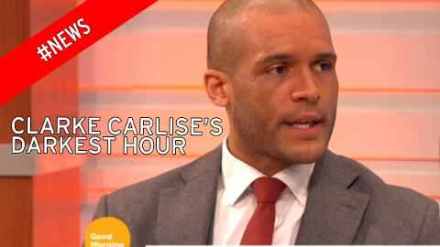
Clarke Carlisle, a former footballer speaks openly about his experience of depression and two failed suicide attempts. His honesty comes through very clearly in this film titled:

‘The Silence of Suicide’
(https://www.youtube.com/watch?v=f86rz60Jcso&feature=youtu.be)

As he speaks, it breaks my heart to watch the tears roll down this handsome young man’s cheeks. I admire him for normalising vulnerability. He shares how depression makes one believe that everyone would be better off without them. He thinks that the stigma associated with suicide comes from the ‘mystery’ associated with the condition. Those left behind search within themselves and ask many questions but there are no answers. It is impossible to not personalise it. That makes it very hard for us to talk about it as individuals. Because it is so hard to speak about suicide for us as individuals, it is the same for us as a society. But it is essential and urgent for us all to talk about suicide. It is of paramount importance.

How can we encourage people to do this?

By ‘normalising’ it.
Statistics say that 1 in 4 people suffer from mental ill-health. However this may be a gross underestimation as many people are not very aware of how they feel. They may not really know and recognise their feelings.

His advice for anyone who might be thinking of ending their life is – Tell someone. Tell anyone. Once you do that, the power of that thought over you diminishes.