A good death

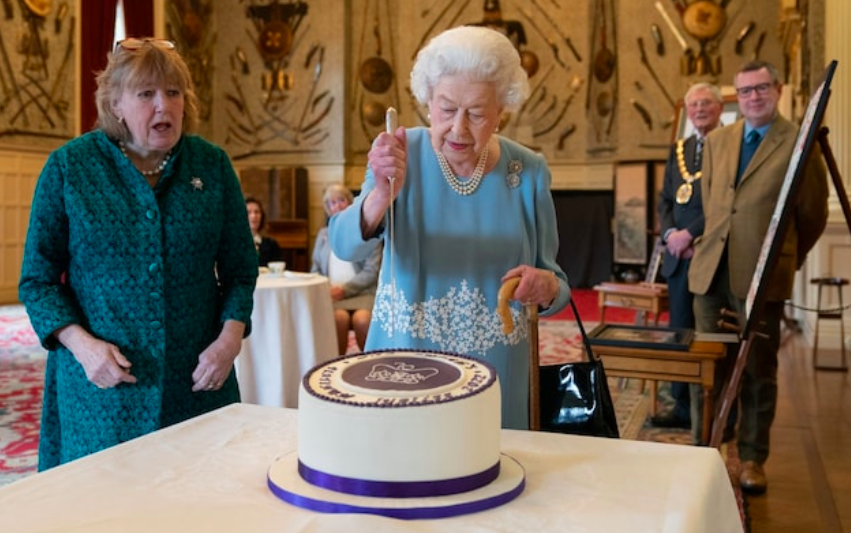
Yesterday all national flags were at half mast, here in Delhi. Yes. It is sad. She was and will be an icon and an inspiration to many. Her dignity unmatched and her sense of duty unwavering.

She died in her bed, in her home, surrounded by her children and grand-children. She could say her final good-byes to those she loved. They could hold her hands while they were still warm. I am sure her corgis were not too far away. Her doctors kept an eye on her till the very end. She possibly had no physical or emotional pain and her spiritual needs were met, I am sure. Her family was certainly prepared. The newsreaders were kind enough to forewarn her people.

She could fulfill her duties right up to two days before her death. She left no debts unpaid, I am sure. No business unfinished, I hope.

Supremely dignified, even in her exit.

She was 96. She had a life well lived.

She had a death well died.

Long lived the Queen.

Loved and cherished forever.

Entrances and exits.

The two little lads were inseparable. Saagar and Rohan. They cycled together all evening after school and kicked a ball about for hours. They had dinner at each other’s houses. They created snowmen and played with snowballs together. They even shared a bath every now and then. Luckily, they lived right next to each other and their parents were friends.

At Ulster Hospital in East Belfast, the staff accommodation is a set of six flats. Rohan‘s family lived in the one just below us. His mum, Shruti, was the best grower of indoor plants. A gentle, sweet lady. She was also a doctor but at that time, was not working. Over time our families became close friends and continued to visit each other even after we moved to London and they moved to the north of England. If you ask me to name my oldest friends in the UK, Shruti’s name would be on top.

Eventually Shruti started working in Psychiatry and seemed to enjoy it, even though the exams were a struggle as they are for many of us, when they must fit somewhere in between work, kids, husbands, homes, pets, friends, sleep and homesickness.

When Saagar was diagnosed with Bipolar disorder, I needed to speak with her. I needed her. I asked her by text what time would suit. She said she’s call me after work and she did.

“Hi Shruti. Thanks so much for calling.”

‘No problem. I am driving so we may get cut off. I’ll call you back if that happens.’

As soon as I started speaking it got cut off and she called back and the same thing happened again. And again. And then she didn’t call back.

When Saagar died, she came to see us the very next day with her husband, utterly shocked.

A month later I needed to connect with her again. She said she’d call me back after work. She called while driving. She had to pick someone up from somewhere or drop someone off somewhere. She was on the move. On – Off – On – Off : our phones connected and then rudely disconnected mid-sentence and stayed disconnected for seven years.

Two days back a message arrived from Shruti on Whatsapp saying, “Please join us and bless the couple.” Rohan gets married soon. A nice little electronic invitation to the reception was posted underneath the message. The invitation wasn’t for anyone in particular. It had no names on it. I can’t be entirely sure it was for us.

I am happy for the family and for Rohan. Wishing them all possible happiness, I RSVP’d with apologies for being unable to attend. There’s nothing here and let’s not pretend there is. I felt sad for a little while at this loss of a valued friendship, but not for long. This is an opportunity to let go. Yet again. If there is one thing I want to be skilled at, it is to keep letting go, remembering what the Bard of Avon said – ‘All the world’s a stage, and all the men and women merely players: they have their exits and their entrances …’ I get it.

I would like to live

like a river flows

carried by the surprise

of its own unfolding.”                                    

John O’Donahue

Thank you for noticing.

She was listed for a minor surgical procedure on my list. I called out her name in the waiting area and escorted this pleasant, middle aged lady into a cubicle for her pre-anaesthetic check-up. We both sat down at right angles to each other. She had an unmissable racoon’s eye on the right side of her face. I looked again. Just to be sure. It was there in its fading pinky-blueness. She was in hospital for a totally unrelated reason but I ventured into asking, “What happened here?” pointing to the eye.

‘Oh. I had a run-in. Couple of weeks ago.’

“A run-in with what?”

‘You know … It’s okay. I don’t want to talk about it.’

“Have you spoken to anyone about it?”

‘Yes. I am okay. I really don’t wish to speak about it.’

“That’s fine. How are you doing today?”

We went ahead, staying focused on preparing her for the upcoming procedure.

I took a moment to call the Safeguarding department of the hospital. They said that it was normal for people suffering abuse, to not talk about it for a long time. They advised us to signpost her verbally. A written set of resources might make her more vulnerable, if discovered by the wrong set of hands.

Two women are killed by a partner or former partner every week in England and Wales.

One in five people suffering domestic violence will plan or attempt to take their own lives.

One in eight of all female suicides and attempts in the UK are due to domestic violence and abuse. This equates to 200 women taking their own lives and 10,000 attempting to do so due to domestic abuse every year in the UK. That’s nearly 30 women attempting to complete suicide every single day. 

Men endure domestic abuse too. This can include physical violence, as well as emotional and psychological bullying, sexual violence or financial control and abuse. 

It is living hell. An invisible prison. Isolating, with no one to confide in.

It takes great courage to speak. It’s often ignored. Many suffer in silence.

Survivors do come in contact with health and social services but disclosure is difficult.

If done right, it is life changing. Appropriate response is invaluable.

Front-line staff must recognise signs and highlight issues.

It is important to ask and act.

After her procedure, I went to see her in the Recovery room.

“Have a nice evening.” She said. “Thank you for noticing.”

Resources:

https://www.rcn.org.uk/clinical-topics/domestic-violence-and-abuse/general-resources-and-support

No words.

Two years back, it could not be screened as scheduled. After a long wait, last weekend it was, at Clapham Picture house where Saagar often went with his friends. People came from Leicester, Salford, Cornwall, Cardiff and Birmingham. Some, I had only ever seen on screen. Others, when they were school kids. They brought their sisters, spouses, friends and colleagues. They stayed for hours afterwards, talking about themselves in a way they never had. They fell in love with Saagar’s big brown eyes and mischievous smile. They saw what a treasure had been carelessly lost. Everyone felt something. Many had no words but there was a profusion of overdue hugs all around. Many felt they knew him even though they had never met him. Some introductions were made to link up the leaders from various sectors of society so they could form stronger and safer networks.

That woman in the film was not just me. She spoke for the fifteen families in the UK, who are plunged into this harsh reality every day. More than 6500 every year.

That young man in the film was not just Saagar, but everyone who has ever blamed themselves for their troubles and felt shame for things that have happened to them, hiding behind their beautiful smiles. Unseen. Unheard. Each one who lost their tribe and couldn’t find a way back.

These were not just Saagar’s friends, but all those who are left behind, trying to figure out how this could happen to someone they loved. Wondering what they could have done then and what they can do now.

This film laments a future lost. It mourns silent suffering. It also illuminates a path that appears out of darkness. It also celebrates love and smiles. It also gives us permission to soften, lighten, loosen. It breaks open our hearts so we can hear the unspoken pain that lies behind the mask of another face and our own. It makes us one.

This is what it means to be human. Here, on this beautiful Earth, there is no other. Only us. Not us and ‘them’. Just us.

PS: International film awards: Eight.

‘1000 days’ is made by Me and Thee films for educational purposes. Hence it is not yet freely available on social media. It was screened in the ‘Lived experience’ section at Middlesbrough, for the Hartlepool and Stockton Safeguarding children’s Partnership and South Tees Safeguarding Children’s Partnership Conference on the 12th of July. It made a profound impact on roughly 350 attendees, motivating them to make individual and collective change so as to protect young lives and their happiness. Will keep you posted on the opportunities to watch it. Thank you for your love and support. Please do share any constructive ideas/ thoughts you may have for the film in the comments section.

What do I do with this thing?

It churns inside me all the time. This thing does not settle. It does not sit still. It burns my tummy, wets my thirsty eyes, parches my tongue and pokes its elbow into the longing in my heart. It doesn’t rest and doesn’t allow me to rest. It kisses my forehead, only to kill me with its kindness. It stays with me, no matter where I go – to the park, to work, on a bike-ride, at my desk, in the kitchen. It seeps into my words. Into the movements of my hands. Into the mirror. Into the songs, I choose. Into tea and toast. There is no getting away from it. It pervades my silences and my sleep.

I wish it had never appeared but it has. It wish it wasn’t mine but it is. The problem is, it won’t leave me alone. Not for the briefest of moments. In a Stockholm Syndrome way, I hold on to it and defend it. How I wish it wouldn’t tear me up so mercilessly.

What do I do with this thing?

Once I heard a Therapeutic Writing Coach say: Name it. Claim it. Tame it. Re-frame it. Proclaim it.

‘Re-frame it’ stayed with me. It does not mean I tell myself false pacifying stories but encourages me to see it for what it is, beyond the drama. Grief, as love that has no place to go. Longing, as the other side of the coin of love.

If I don’t transform it, I will keep transmitting it and I don’t want to do that.

(Resource: Therapist and Writing for Well-being Coach

Nigel Gibbons : http://www.nigelgibbons.co.uk/About-Me.htm)