Day 950

IMG_3147

Let me not defer…

Rush hour in London is a perfect example of organised chaos. Buses, cycles, pedestrians, taxis and cars miss each other by millimetres and head purposefully towards their respective destinations. The sun shone generously this morning, throwing light on every minute detail.

He sat on the edge of a low shop window on York Road. I saw him on my way from the bus-stop to the hospital. He sat there holding his head in both his hands – the classic pose. He must have been in his mid-twenties. There was darkness in his eyes, a small blue travel bag by his right foot. Not sure if he spoke English. He didn’t look drunk. I walked past him. I wanted to stop and talk to him but I knew this could take time and I would get late for work. I kept walking. Hundred yards ahead, I turned around and looked. He was still there. Still in the same position. Something needed attention. I thought I would quickly go to work, see if I could be spared and come back asap.
I did exactly that. I came back after 40 minutes but he was gone.

What could I have done? There are so many people, each one with their own problems and stories. What difference can I make?

I can ask – Are you ok? Can I help you?
I can offer my phone if they want to make a call.
I can have a phone number handy – 0808 800 4444 (Shelter)
I can have the belief that there is something I can do.

Postponing a positive action is a sure way of missing the entire fleet.
I was unaware that every day 150 families in Britain become homeless.

 

Day 949

Iatrogenic

download

Antipsychiatry – I knew the sentiment but I didn’t know the word.
Dr Bonnie Burstow has helped hundreds of “highly suicidal patients,” as a psychotherapist. She’s come to believe that conventional psychiatric treatment isn’t in their best interests.

For half a century, scholars have been looking closely at Psychiatry as a coercive instrument of oppression. Dr Burstow is a prominent figure in the field of antipsychiatry, which she describes as “a movement of both psychiatric survivors and professionals saying that we need to abolish psychiatry”. She’s the author of “Psychiatry and the Business of Madness” and “The Myth of Mental Illness”.

“Longitudinal studies have shown that people who go off their drugs after a few years do better in the long run than people who stay on them. But guess who does the best of all? The people who were never on them in the first place. So, then the answer is, no one should be on them in the first place. These are not medical substances. They do not address a single chemical imbalance. They, in fact, cause imbalances and not surprisingly they cause all sorts of problems for people who can then never get off them because they now have a disordered brain that is caused by the medical profession. You know I spend a lot of time building up that and showing how it happened. But once you take in that position, it is a very convincing argument for abolition.

Since the 19th century, psychiatry has been defrauding vulnerable people. There was dunking people in cold water. There was rotating people in chairs. There was also opium. There was bleeding. Remember we had bleeding for a long time. There was also genital mutilation, just don’t forget they thought madness was being caused by masturbation.”

The University of Toronto has recently started a scholarship in Antipsychiatry. It is a historical breakthrough and hopefully a precursor to a better society. It signals to the world that this field of inquiry has come of age.


Day 948

Why Pinky?

My deepest thoughts are in Hindi. Only when I am in a hurry do I think in English. It’s my second language. A legacy of the Raj. Even though I have been using it for most of my personal and professional life, I need to constantly work at it. Being bilingual means one has 3 languages to have fun with – Hindi, English and Hinglish.

The English in the UK is different from the one I learnt as a child. That English was more a medium of education. As a teenager I started to enjoy it, especially through Tintins – billions of bilious blue blistering barnacles.

The usage of a language in its native country is very different from anywhere else. I had no idea what ‘Pinky’ was. For me it’s a person’s name, mostly a girl but could also be a boy. Little finger? Really? It would never have crossed my mind.

This notice in the loo on the train showed me the endearing way in which vernacular can be used : ‘Please don’t flush nappies, sanitary towels, gum, old phones, unpaid bills, junk mail, your ex’s sweater, hopes, dreams or goldfish down this toilet.’

‘Numpty’ is not quite the same as idiot. It has a particularly affectionate tone to it. Cute! Again, a new one for me. ‘Skulking’ is not as simple as loitering. It is, moving about shadily, with something to hide. It has a naughty/sinister connotation to it. ‘Four Weddings and a Funeral’ introduced it to me.

This evening I asked 2 English men their favourite word and both of them perfectly pronounced the same one:  Floccinaucinihilipilification.

Recently I was flattered to be asked to write an article for the charity Mind, about a simple coping mechanism that has helped me and can help anyone. I wrote about writing. This is how I grieve: Woes and Prose.


Day 947

Schools have counsellors. Kids can go to them to speak about their problems. The kids of counsellors don’t go to their own parents. They find someone else. What is the difference between a parent and a counsellor? Parents are judgemental. Counsellors are not judgemental.

Our neighbour’s kid comes to us when they are in trouble and we tell them, ”Nevermind. It’s ok. Let’s see what we can do now.” Do we say that to our own kids when they make a mistake? Parental default mode when in shock is – How could you do this? You can’t be my kid. You must have been swapped at the hospital and so on… We bail out all the rejection in the world to the most important person in our lives.

When one makes a mistake, what do they need at that moment? For instance, if someone slips and falls, they need support. Second thing they need is healing. Later on, softly one can say, “Careful next time. Tricky spot.”

If at the very time of the fall someone says to us,”Can’t you see? There are only two steps here and even those you can’t manage.” How are they going to feel? Is that what they need at that time? They are in severe physical or emotional pain,  they are unable to take any advice on board. All they need is love and support. When we don’t pay attention to our state of mind, the smallest of mistakes upset us. In that case, how can we handle bigger problems? In fact the bigger the mistake, the more love and support needs to be given but we do the opposite – bigger the mistake, more the shame and humiliation.

A child is tempted to try a cigarette when his friends were doing the same. Is it normal for their curiosity to get the better of them? Can we understand that? Can we remember the time when we were that age and felt that way in a similar situation? Can we say to them that we understand? That it’s the habit of smoking that’s wrong. They are not wrong. Can we make them feel ok about themselves and empower them to choose what’s best for them? If yes, they might trust us with the truth.

It is not our job to discipline people or control their behaviour. It is our job to empower them to think for themselves. That power comes if they feel understood and accepted. When we can say to our friend, spouse or child that they are right, then they might think that we are right. If they constantly feel rejected by us, they will reject us too.

(Yesterday’s and today’s posts are transcripts from a counsellor speaking to a group of parents in Hindi in India. Name unknown.)


Day 942

download-1

My optimism is foolish

For more than 25 years, I have practised anaesthesia. One would think that by now I would know for sure that procedures take much longer than they are scheduled for and that every list these days is overbooked. Still, foolishly I hope to finish in time every day. Even though I have had to cancel after-work plans on many occasions, at every new opportunity I want to give a chance to the possibility of a desirable outcome.

When Saagar was ill, I was optimistic. I believed that he would get better. That it was only a matter of time. The messages I got from professionals reaffirmed that belief. My faith in life and confidence in Saagar and myself kept that belief strong.

Now when I am with worried parents and friends, I hold their uncertainty and mine. Things can go one of many ways. We don’t know. We just need to be with that uncomfortable uncertainty with positivity. That is compassion. Understanding.

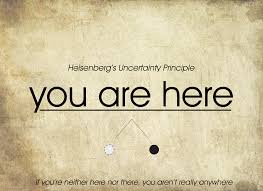
In quantum physics, Heisenberg’s principle of Uncertainty says that there is an inherent uncertainty in the amount of energy involved in quantum processes and in the time it takes for those processes to happen. Vacuums are often defined as the absence of everything. But not so in quantum theory. It is possible that for very, very short periods of time, a quantum system’s energy can be highly uncertain, so much that particles can appear out of a vacuum. This is well within the laws of quantum physics, as long as the particles only exist fleetingly and disappear when their time is up. Uncertainty, then, is nothing to worry about in quantum physics and, in fact, we wouldn’t be here if this principle didn’t exist.

“One misconception is that entrepreneurs love risk. Actually, we all want things to go as we expect. What you need is a blind optimism and a tolerance for uncertainty.”

-Drew Houston