Day 936

download

Born to run

“Patti will observe a freight train bearing down, loaded with nitroglycerin and running quickly out of track… she gets me to the doctors and says, ‘This man needs a pill’.”

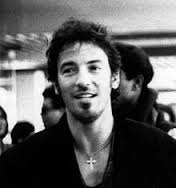
 His new memoirs speak a lot about his long battle with depression. Bruce Springsteen had a strong family history of mental illness. He didn’t do drugs as a rock star which is unusual. He was afraid  they would unmask his genetic potential for insanity but he was already suffering  with serious melancholia.

On the therapeutic value of touring he says, “You are free of yourself for those hours; all the voices in your head are gone. Just gone. There’s no room for them. There’s one voice, the voice you’re speaking in.”

His wife of 25 years, Patti understands his illness. She helps him manage it. “A lot of his work comes from him trying to overcome that part of himself”, she says.

The media often reinforces negative stereotypes of people with mental illness, depicting them as inadequate, unlikable, dangerous, confused, aggressive and unpredictable. The Boss’s devotion to many progressive causes sharply contrasts that image.

Public stigma leads to self-stigma. It stops us from talking about mental illness and worse, ask for help when we are struggling. Patti was initially apprehensive about the book in which Bruce speaks openly about how years of depression left him crushed. It would be read by millions. But then, she saw the value in that.

I watched Bruce Springsteen in 1985 at a Live Aid Concert in Delhi. I was terribly envious of the young lady he invited on to the stage from the audience to dance with him.

Long live The Boss!

“In the day we sweat it out on the streets of a runaway American dream
At night we ride through the mansions of glory in suicide machines
Sprung from cages out on highway nine,
Chrome wheeled, fuel injected, and steppin’ out over the line”
H-Oh, Baby this town rips the bones from your back
It’s a death trap, it’s a suicide rap
We gotta get out while we’re young
`Cause tramps like us, baby we were born to run.”

 

Day 932

images

A Cast for a Pod?

When I was in India for a couple of weeks, I missed all the Archers and Desert Island discs. I couldn’t listen to BBC Radio 4 but was content in the knowledge that I could listen to these programmes when I got back as they would all be downloaded as Podcasts on my I-pad. While in the Himalayas, I attended a writing retreat where we talked about blogging and podcasting. I learnt that I could make podcasts of my own and put them on-line. I didn’t believe it but I liked the idea of trying it some day.

One of Saagar’s friends, Nate kindly came to cat-sit for us while we were away. He was home when we got back and it was a delight to have him around. I was assured of excellent technical assistance with him here and he very kindly agreed to be the first guinea pig. So, we got on with it and made a little recording this morning.

Here’s our first experimental, unscripted, unedited podcast. A brief conversation (8 minutes) between 2 amateur participants about what the world looks like from the standpoint of this young man. Comments, suggestions and volunteers welcome. 🙂


Day 928

Metamorphosis

When something like this happens, it changes who you are and how you live your life. Your alignment with the universe shifts and you transform into an avatar of your former self. There are some similarities but huge differences.

I can’t remember what I used to be like.

Large swathes of my mental canvas have been rendered blank. Maybe it’s a defence mechanism. Maybe it’s the accelerated ageing process. Maybe shock and grief have gobbled up millions of my grey cells. Maybe part of my brain has mulched into pulp.

Whole new plantations have made an appearance in this barren space. I feel like I am going mad about MAD – making a difference. Writing was a miniscule and secretive part of my life but now it claims a lot of territory. I used to spend a lot of time and energy on my job. Now it takes up only a small part of my time. My job used to be satisfying and pleasurable. Now it sits in the back-ground. I find fulfilment in writing, connecting with people and volunteering my time to raise awareness of mental health issues.

Keeping Saagar alive through sharing his story seems like the most meaningful thing to do. Repeating his story as many times as it takes, to change things that need to change is of paramount importance.

Living in gratitude is the only way to live.

Last week I wrote this article sitting at the dining table in my parent’s house with the intention to mark the Mental Health Awareness week. Thankfully Huffington post published it today.

Thirty months on:

http://www.huffingtonpost.co.uk/sangeeta-mahajan/thirty-months-on_b_16412078.html


Day 926

AYA-5

Finally something wholistic. Is it?

Ayahuasca is a foul tasting, nauseating brown Amazonian psychoactive brew.

The name comes from the Quechua language where aya means soul, ancestors or dead persons and wasca (huasca) means vine or rope. One interpretation of the name is “vine of the soul” and another is “rope of death”. Of late more arguments are being made in favour of the former than the latter.

This Shamanic concoction has been the core of many religious, magical, curative, initiation, and other tribal rituals for millennia in the indigenous and mestizo populations of South America. They respect the brew as a sacrament and value it as a powerful medicine for physical and mental problems, social issues and spiritual crises. It is traditional medicine and cultural psychiatry.

During the last two decades Ayahuasca has become increasingly known to both scientists and laymen. Its popularity is spreading all over the Western world. People seeking improved insight, personal growth; emotional healing and contact with a sacred nature, deities, spirits and natural energies have given rise to the phenomenon of ‘drug tourism’.

In the correct therapeutic/ritualistic setting, with proper preparation of the user and subsequent integration of the experience, Ayahuasca has proven effective in the treatment of substance dependence and depression. The therapeutic effects of Ayahuasca are best understood from a bio-psycho-socio-spiritual model.

The first Randomised Clinical trial, led by Draulio Barros de Araujo at the Federal University of Rio Grande do Norte in Natal, Brazil has been published.  2 similar groups of 14 and 15 patients with resistant depression were randomised to receiving either placebo or the active drug. They filled out standard questionnaires the day before receiving their dose and 2 and 7 days later.
64% of patients who took Ayahuasca felt the severity of their depression fall to half. This was true for only a quarter of those who took placebo. The inference drawn is that Ayahuasca is better than placebo at least for the short term. More studies are required to see if the effects are sustained over longer periods.

Roughly 350 million people experience depression globally. Between one-third and half of  them do not respond well to medications. In addition to psychedelics such as Ketamine and Psilocybin, Ayahuasca is being investigated further as potential treatment for resistant major depression.

Ref:
Articles:
1. Therapeutic Potentials of Ayahuasca https://www.ncbi.nlm.nih.gov/pmc/articles/PMC4773875/
2. Rapid Antidepressant effects of Ayahuasca: http://biorxiv.org/content/early/2017/01/27/103531

Presentation by Draulio Barros de Araujo: https://vimeo.com/143399447

Day 925

Vulnerability. Not weakness.

Stories are data with a soul. Researcher and storyteller Brene’ Brown has taken the time to take a deep hard look at shame and vulnerability.

She believes that ‘connection’ is neurobiologically why we are here.

Shame is fear of disconnection or not feeling like you are worthy of connection. For example, not good enough, not pretty enough, not strong enough, not rich enough and so on. All experiences of excruciating vulnerability.

After 6 years of researching ‘Shame’ she took a closer at a sub-group of individuals with ‘Worthiness’, people with a strong sense of love and belonging who believe they are worthy of love and belonging. She called them  ‘Wholehearted’. This group had a few remarkable  traits:

  1. Courage – to be imperfect
  2. Compassion – ability to be kind to themselves and others
  3. Connection – ability to give up the idea of perfection

They fully embraced their vulnerability. They believed that vulnerability makes them beautiful. They were willing to reach out their hand first, to invest in a relationship that may or may not work out. It was not comfortable but they did it anyway.
Vulnerability is also the birthplace of tenderness, belonging, love and joy.

What makes us vulnerable?
The simplest things like asking for help, waiting for the doc to call back, initiating sex, loosing a job, asking someone out on a date and many more.

Why do we struggle with vulnerability?
The uncertainty is too uncomfortable. So we numb it.

At present, we are most highly addicted, medicated and obese populace ever.
We can’t selectively numb feelings.
When we numb vulnerability we also numb joy and connection.

The ways in which we deal with our discomfort with vulnerability are:

  1. We make everything uncertain, certain, eg- religion.
  2. We Blame- a way to discharge pain and discomfort.
  3. We Perfect – most dangerously our children.
  4. We pretend – like what we are doing doesn’t have an effect on people.

We need to let ourselves be seen.
To love with our whole hearts even if we are unsure.
To practice Gratitude despite the uncertainty because our vulnerability means we are alive.
Lean into joy and believe – I am enough.
That enables us to be kinder and gentler to the people around us and to ourselves.

Ref:

Book :
Daring Greatly by Dr Brene Browm
TED talk by Dr Brene Brown on Power of Vulnerability: