The wrath of the years.

Do I really care?

What do people think of me? Of us?

Which landmass do I live on?

What is the weather like?

What colour is the bloody sky?

Whose child left for University?

How much money I have left?

Who is coming from where? Who is going somewhere on a holiday?

What’s for dinner tonight? Or any night.

Will I ever have a job to go to?

When will the Amazon-man deliver the stuff I ordered?

Is there any milk in the fridge?

What happens next?

The sun came up from the North-west this morning?

Do I care?

One whole decade in the world ‘after’ Saagar will be completed in the tenth month of this sort-of-new-year. Since the 1st of Jan, every time I read or write 2024, that is the singular thought that comes to mind like an unwelcome guest. How can the world tolerate this? Who authorised for all those days and months to pass? How can this even be allowed to happen? How can I still be here? Who granted permission for this kind of treachery? Is this gorge of yearning bound by any boundaries? Or is it bottomless, without any limits?

Does anybody care?

Varanasi

This ancient city of learning and burning sits on the banks of the river Ganga which is home to Saagar’s ashes. We were here twice, within a few months of Saagar’s passing for various ceremonies related with the sudden and tragic nature of his death. A year ago, my Irish medium who I have come to rely on, informed me that the elaborate prayer services that were held for him here had been greatly helpful in freeing his soul. I have no reason to not believe her as everything else she tells me makes sense.

Last month I was back in this iconic city for a long weekend, celebrating the writings of my favourite 15th century poet and philosopher, Saint Kabir.

“Scholars are never made 

from reading countless books.

You only need to understand ‘love’

to be a true scholar.”

Twenty three years ago I left India as a motivated young professional thirsty for knowledge, professional growth and ‘success’. I was a naive kid. I did not know who I was. Now it feels like I’ve taken a tortuous and torturous route to finally come back home, to myself.

Yes, I passed many exams. In the year 2000, I traveled to Dublin for the day, for my first post-graduate exam at the Royal College. As soon as I returned home, Saagar, who was six at that time asked me, “Mamma, did you win?” A huge smile descended on my face and my entire being. I forgot about the stress of that day and the preceding months and got lost in our cuddles and giggles.

I did grow in my work and was ‘successful’ but the most important lesson I am learning is to understand, experience and be love.

The only lesson that is worth learning.

Long shadows

A few months after Day 0, at a SOBS (Survivors of Bereavement by Suicide) meeting at the All Saints near Euston, I met a father who said, “Eight years” when I asked him how long it had been since his son died. I looked at his face as if he was the most spectacular and wondrous impossibility of the world. Is it possible to live as long as that after the death of a child? He was proof. It was. I had never seen anyone who had been bereaved that long, standing and smiling and speaking sense.

Last Monday I joined the 3 dads on the last leg of their long walk to Westminster alongside many people who want the government to add suicide awareness and helpful resources to the school curriculum. We walked and talked in the rain. I said ‘Nearly eight years’ in response to how long has it been since my son passed. I got the same look from a young mum recently bereaved. She stopped and looked into my eyes through the thick rain drops. Past and future, face to face. “Gosh! Does it get any easier?” she asked. It does, I replied, holding her hands.

All these years I have tried to keep Saagar alive in every way I could – writing, public speaking, teaching Youth Mental Health First Aid courses, advocating for young people, working with various people, charities, NHS, Churchill Trust and other organisations, making films and so on.

I have read other people’s accounts of loss, hoping to lessen my pain and deepen my understanding. The latest book I read was ‘The Year of Magical Thinking’ by Joan Didion. She says:

I know why we try to keep the dead alive: we try to keep them alive in order to keep them with us.

I also know that if we are to live ourselves there comes a point at which we must relinquish the dead, let them go, keep them dead.

Let them become the photograph on the table.

Let them become the name on the Trust accounts.

Let go of them in the water.

Knowing this does not make it easier to let go of him in the water.”

Eight years! No time at all.

Time is the school in which we learn.

Time is the fire in which we burn.”

  • Delmore Schwartz.

Borrowed light

It sits on my shoulder like a monkey. Annoying. I’ve had a long day, I say. Go away.

It pulls my right ear and searches for lice scrambling all its fingertips over my scalp, irritating as hell. There are none. Get lost. I am not a child.

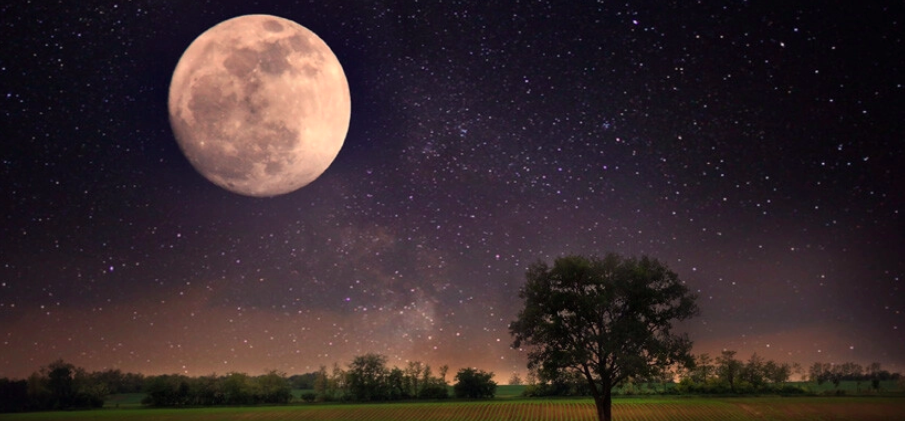
I’m losing it. The moon is winning.

Proud of its super-fullness. It is evil. The tides it excites, the fights it ignites, the way it bends minds, the resting foetuses it pulls into this cruel world, stealing sleep from the depths of the night. Milky and serene on the outside, within a serious trouble-maker resides. Hurricanes, tornados and earthquakes it invites.

You’re an imposter. I see you. A big black rough rock with nought to your name. No water. No gravity. No air. Certainly, no light. This thing you proclaim as your own is in fact not so. We all know. It belongs to the star called Sun. The one that gives life. Not you. That’s the real star. You, a mere appendage, borrowing importance, gloating in your pretend beauty, cycling and circling with poor intent.

You’re no good to me. Go away. You bad bad moon.

What do I do with this thing?

It churns inside me all the time. This thing does not settle. It does not sit still. It burns my tummy, wets my thirsty eyes, parches my tongue and pokes its elbow into the longing in my heart. It doesn’t rest and doesn’t allow me to rest. It kisses my forehead, only to kill me with its kindness. It stays with me, no matter where I go – to the park, to work, on a bike-ride, at my desk, in the kitchen. It seeps into my words. Into the movements of my hands. Into the mirror. Into the songs, I choose. Into tea and toast. There is no getting away from it. It pervades my silences and my sleep.

I wish it had never appeared but it has. It wish it wasn’t mine but it is. The problem is, it won’t leave me alone. Not for the briefest of moments. In a Stockholm Syndrome way, I hold on to it and defend it. How I wish it wouldn’t tear me up so mercilessly.

What do I do with this thing?

Once I heard a Therapeutic Writing Coach say: Name it. Claim it. Tame it. Re-frame it. Proclaim it.

‘Re-frame it’ stayed with me. It does not mean I tell myself false pacifying stories but encourages me to see it for what it is, beyond the drama. Grief, as love that has no place to go. Longing, as the other side of the coin of love.

If I don’t transform it, I will keep transmitting it and I don’t want to do that.

(Resource: Therapist and Writing for Well-being Coach

Nigel Gibbons : http://www.nigelgibbons.co.uk/About-Me.htm)