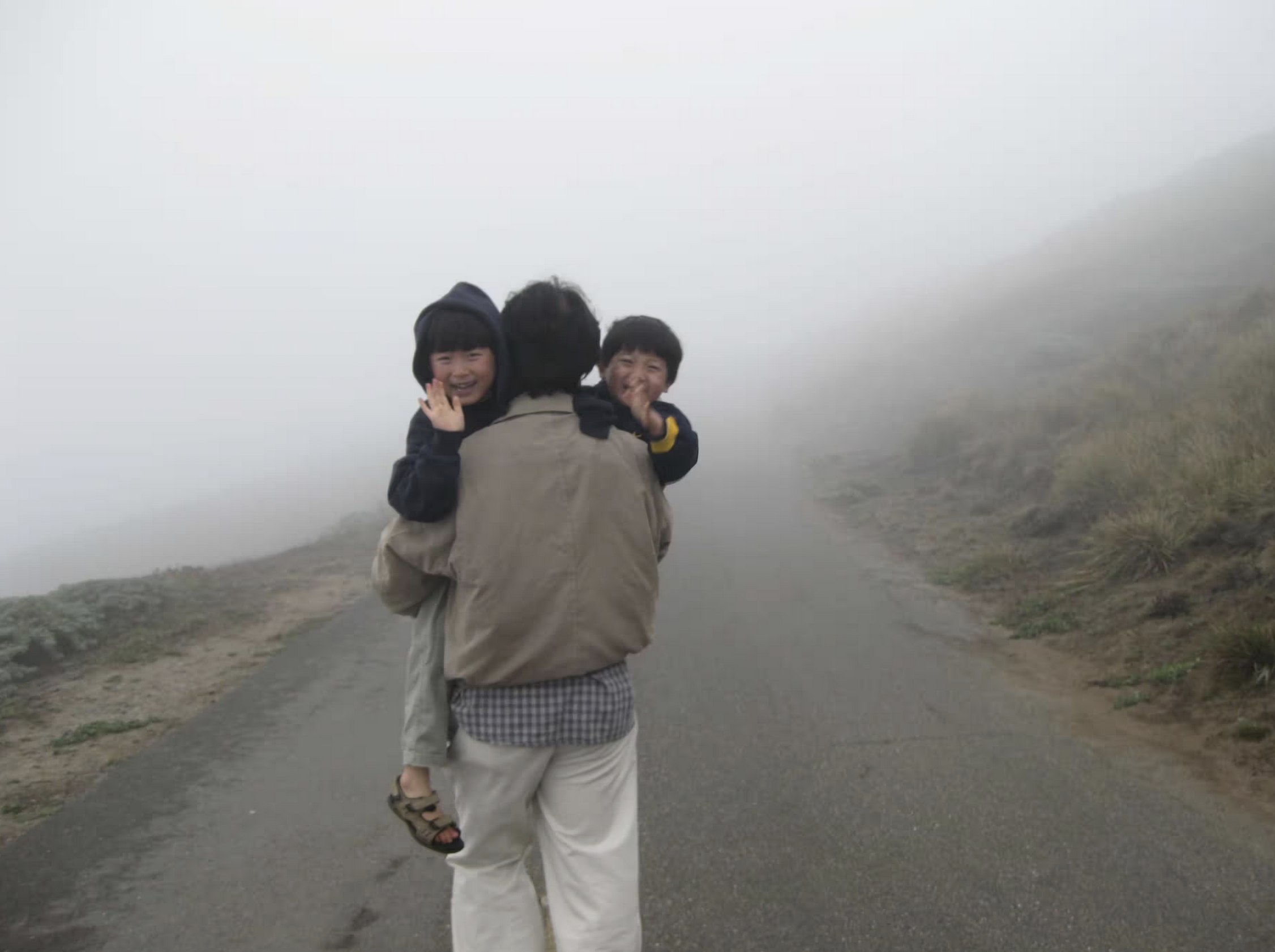
Vincent and James.

2017 – 16. Male. RIP.

2024 – 19. Male. RIP.

Brothers. Second generation Chinese immigrants in USA. Their mother, a writer who lost both of them to suicide.

Where Reasons End (2019) by Yiyun Li, after Vincent’s death.

I read this book when it was first published. An imagined conversation between her and her older son, Vincent who lived ‘feelingly’. Sixteen chapters, one for each year of his life. It has a witty and mischievous tone. Nicholai, a name he gave himself, chides his mother’s new embrace of cliches and adjectives. “If you’re protesting by becoming a bad writer, I would say it’s highly unnecessary,” he says. (“Dying is highly unnecessary too,” she shoots back.)

Things In Nature Merely Grow – Pulitzer Prize Finalist 2025, by Yiyun Li, a memoir. She wrote it within two months of her younger son, James’ death. I feel deeply for her and with her but I am not sure I want to read that book right now. A few lines from it sing true:

“I am in an abyss. If an abyss is where I shall be for the rest of my life, the abyss is my habitat.”

“My children were not my burden. My sadness is not my burden.”

“I am very realistic in that I would always acknowledge that I am limited as their mother. I was limited, and I am still limited as a mother, so I can only do my best.”

When people hold an expectation that her grief must have an end date, she retorts, “How lonely the dead would feel, if the living were to stand up from death’s shadow, clap their hands, dust their pants, and say to themselves and to the world, I am done with my grieving; from this point on its life as usual, business as usual.”

“This is a very sad fact of our lives, they took their own lives knowing we would accept and respect their decision.”

Could I accept and respect Saagar’s decision one hundred percent? I believe it was not his decision. It was his utter helplessness and desperation in the face of his illness, his unsuitable antidepressants, lack of medical care, his isolation, his inability to recommence his education, our inability to talk about it and so much more. He was driven to it. It was not by choice. Anyone who knew him, knows that. I do understand though.

I understand, my darling.

References:

https://www.theguardian.com/books/2019/feb/05/where-reasons-end-yiyun-li-review#

https://www.theguardian.com/books/2025/may/17/author-yiyun-li-on-the-suicide-of-both-her-sons

London calling.

I applied for the London job only because I was sure I wouldn’t get it. In 2006, I had finished seven years of post-graduate training in Northern Ireland and it was time to look for a Consultant post. There weren’t any openings locally so I looked at vacancies on the ‘mainland’. If nothing else, it would be an opportunity to practice my interview skills. Halfheartedly, I applied for a job in London and kept absolutely mum about it. When I was short-listed, I was a bit miffed as my only free weekend that month would be spent preparing for an interview the outcome of which I didn’t really care for. But I didn’t want to look like a complete fool so I did prepare.

I also went shopping for a black pencil skirt with a smart white and black jacket. Why not? I already had a nice white top and black shoes to match.
“Will we have to move to London?” Saagar asked. He was 12.
‘I don’t think so. Unlikely. Let’s see.’

Early one Wednesday morning I checked into my flight at the then brand new Belfast City Airport. As I was saying bye to Saagar’s father, I asked him, “What shall I do if they offer me the job?”
Take it, he said.
The Big Ben spooked me as it peered through the window of the office where I was waiting for my turn. What am I doing here? The panel seemed friendly. I felt relaxed and shared my thoughts freely, to the point of being quite blunt about the unrefined appraisal process and such like.
Why did you apply for this job? They asked.
I had been looking at your job adverts for a while and finally they stopped asking for ‘a female doctor from ethnic minorities’. That’s when I applied.
Why do you think you are right for this job?
Because I have trained twice for it – once in India and then in Belfast.

I found myself smiling as I left the room. I had enjoyed the conversation but there was no reason for them to offer me a job. I was sure London had its own candidates, like Northern Ireland had its own.

That afternoon, I was waiting for my return flight at Heathrow when the phone rang. I flipped the silver Vodaphone open.
“Hello. Is that Dr Mahajan?”
‘Yes. Hello.’
“I am Dr Cunningham from St Thomas’. We met at the interview this morning.”
‘Oh yes. How are you?’
“I am well. I am ringing to offer you the position of a Consultant Anaesthetist at our Trust.”
‘Oh. Are you sure you have the correct number?’
“Ha. Ha. Yes. I am.”
‘Right. Wow. Thank you.’
“Would you be willing to accept the post?”
‘Yes. Thank you.’
“Great. The HR department will soon be in touch with you. Good luck.”
‘Thank you. Bye.’

I said yes only because I couldn’t say no. My ego was on an all time high. Of all the people in the world, one of the most prestigious teaching hospitals in London wanted me. Why in the world would I ever say no?

When I shared this exciting news with a senior colleague in Belfast, he said, “So, from being a rich doctor in Belfast you will be a poor nobody in London?” Another said, “Oh! We might find you swanning around the Royal College in a saree?” I smiled. May be this was a lucky escape.

Working in London was one thing but living in that city was quite another.
On our first day we parked our car in front of our rental flat. While we were waiting for our truck to arrive with our household stuff, we kept an eye on the car, expecting it to be stolen within minutes. When we came down to the car an hour later, an orange plastic envelope was stuck to the front wind-shield. It was a parking ticket. A big lady in uniform stood there with her hands on her hips, “Yo’ front wheels’ half on top’o da pavement. I don’t make the rules. Innit?”
Welcome to London!

From a detached three bed-room house in a friendly, modern development to a random three bedroom flat on a random Chestnut road. From having a front and back garden, a driveway and a double garage to no gardens and parking on the street. From a safe and quiet neighbourhood of friends and acquaintances, to a nameless road-side flat in one of the fastest metropolis, with no friends or family. Once again we were going to make a start with ‘just us’.

Resource: At present, more people than ever live in a country other than the one where they were born.

Evidence for suicide prevention strategies with populations in displacement: a systematic review

Two overlapping worlds.

The Bhagavad Geeta addresses the ethical and moral dilemmas around the questions of who we are, how we should live our lives and act in this world. If this voluminous text was to be summarised in two sentences, they would be:

  1. Do what needs to be done, knowing that all actions come from God.
  2. Do not be attached to the results of your actions.

Six weeks ago, I re-entered the world of Suicide Prevention due to a presentation I agreed to make. It took me back to a familiar battleground where strong currents of injustice flowed through me. I went over our story yet again, in mind and body. It burnt me up. It made me restless and irritable. It kept me staring at the ceiling at night. It brought back the shit of guilt in big droppings. It was silly of me to agree to do it, but it was too late already. I wrote it down, prepared a set of PowerPoint slides to support the story.  I repeated it for the nth time to many. I wondered, to what end, but I did it anyway.

Four and a half years ago, when my road gradually swerved from the Suicide Prevention world towards peer support with other parents, it was like a cool breeze gently blowing in my face. That conversation felt like a proper invitation. Instinctively I knew it was good for me. Despite huge self-doubt, I trusted that path. I went with it. This work was also about preventing isolation and possibly suicide amongst parents, as our risk is 60-70% higher than others. It did not feel like work at all. We formed strong bonds of friendship. We shared deeply and held each other in understanding and compassion. This felt like home.  

The organisers at National Confidential Inquiry into Suicide and Safety in Mental Health provided me the best possible support to be able to present my thoughts. The comments on the chat were that of gratitude and inspiration to change. One person said that it was better than any training course they had attended. I am glad that I did what was needed. The strength to do it came from somewhere. Now, it can do its work and I can go back home.

The recording is here (‘Bridging the gaps’ starts 6 minutes and 45 seconds in).

Stories are us.

Why are they here? These random strange-looking foreigners? One is white and the other we’re told is from the north of India. Wonder which is worse. At least one of them is easy to steel from. Surely the other is obnoxious. But she teaches English at the Primary school for free. Wonder what’s in it for her. Oh yes. She’s using our kids to learn Kannada for free. That must be it.

The minds of the villagers are desperately trying to make sense of what we’re doing here, in this remote village. The nearest airport is 5 hours’ drive away and the closest decent hospital, at least an hour from our village. We don’t speak the local language and hardly anyone speaks Hindi or English.

The first story of us was that I am a film director and Si, an actor. We’re scouting a suitable location to shoot a period drama. But then no camera or crew showed up. So, that was discarded.

The next tale was that we are here to set up a petrol station. That’s how people with connections in high places syphon off their black money. That fits, they believed, knowing nothing about us. But then no signs of construction appeared for months.

The next guess was that we want to open a bar and restaurant. As we are close to the highway, it’s a great place to open-up something for the travellers to rest and refresh. That didn’t seem to be happening either.

What can it be? Oh. They both have seriously grey hair. All their friends must be old. They must deeply empathise with old people. They must be planning an old people’s home. Well, no signs of that yet.

What are they about after all? The dogs and kids seem to love them. They seem like nice enough people. Maybe they’re planning to start an orphanage?  Don’t know. We’ll have to wait and watch.

Well, all they seem to be doing is planting more trees and making more compost and playing music to their plants, setting up irrigation systems and so on. Maybe they’re doing all the groundwork to ultimately grow cannabis.

Oh! How we need stories!

The older I grow, the lesser I know.

A book with frayed edges sat tucked inside the pocket behind the driver’s seat. After an overnight train journey from Sakleshpur to Goa, we were going home in a taxi. No coffee yet. I was not quite switched on. Bleary eyed, I pulled the book out of the elasticated edge. It was Walden by Henry David Thoreau. Some poor tourist had mistakenly left it behind while traveling to the airport to fly back home.

Thoreau wrote this book while he lived in a cabin he built near Walden Pond, hundred and eighty years ago. He was testing the idea that divinity was present in nature and the human soul. He stripped his life down to the barest of essentials and secluded himself as much as he could, living off the land as much as possible. He wanted to find out just what in life is necessary and what is superfluous.

(Picture, courtesy Maria Popova )

Having chosen to live in a place where, for hundreds of miles very few people speak our language, with no cinema halls, restaurants, therapists or book shops, where the food is of one particular kind, but nature is abundant, that question has arisen for me too.

A few weeks back, a quote by Thoreau had whistled right into my heart:

“Life! who knows what it is, what it does?”

Such a beautiful sentiment. I had wished for more of his writings. After learning some more about him and his love of birds, streams, woodlands and meadows, I got busy with other things.

When I brought this question to CORe, it generated a rich discussion.

“What is our relationship with not knowing? What feelings does it provoke?”

Some excerpts from our conversations:

  • It is a real test of oneself, dropping how things should be and taking each day as it comes. It took me a long time to realise how much my mind was tied to certainty. In Africa, the relationship with death is very different. They have many ways to remember a loved one. They believe they’re still here and it gives them great joy.
  • Anxiety of the need to know at work. I have to change my mind set to curiosity. Some things we’re not meant to know, such as, where is he? It would spoil it. I must accept that I’m not meant to know.
  • When he went, I didn’t want to be here. Now I do. I have a life that I want to have. I have lots of godchildren who have promised to take care of me. I have a vision of him and his dad, which I hope will come through in my own death. Maybe when it’s my time they’ll be there, and their peace will be shattered.

Yes. The older I grow, the lesser I know. There is a freedom in that, to be with whatever is happening. It allows for the mystery of life to unfold as it will and it allows me to witness it without conditions, with an open heart. The smallest things. The book that I had wished for a month ago, appears right in front of me after I had forgotten all about it.

Life. Who knows what it is, what it does?