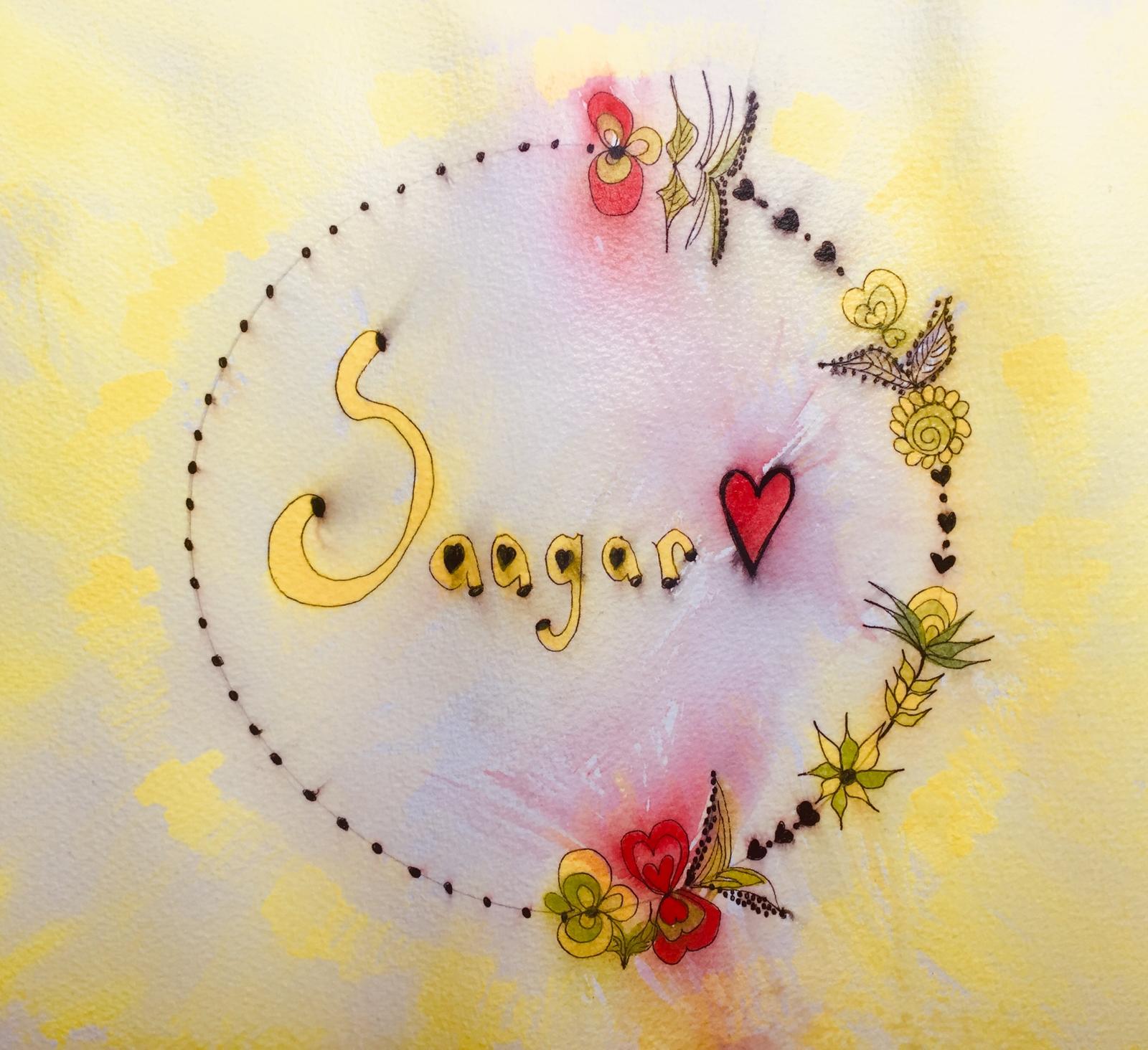
In Delhi, it was simple and sweet. In Belfast, it was a problem. It had to be spoken out slowly with exaggerated lip movements and spelt out clearly. Still, it was uttered in all kinds of ways – Segaar, Sega, Saaga, Sags, Sagsy-wagsy. “As long as you call him with love, you can say his name in any way.” I would say with a smile. But of course, it was his name. Not mine.
At the age of seven, one day he came home from school and said, “Can’t you change my name to Aran or something?” I felt for him but laughed. What else could I do? I asked him if something happened at school that day, if someone said something hurtful and he just picked up his soft stuffed grey elephant and cuddled it.
I told him the story of his name. I was 24 when I got married. My in-laws lived In Chennai. We visited them a few months after the wedding and one evening we all visited a place called Besant Nagar beach. That was the first time my eyes fell upon the expansive ocean. On the map this water body had the boring label, Bay of Bengal. The vision of a dark blue shimmer below meeting a pale blue glow above in a clean, delicate, straight line made everything else disappear. Its calm, its rhythm, its enormity, its subtle dance, its grace and openness pulled me in. All conversation faded away and there I was, completely soaked in the bliss of the ocean. My soul soothed. My body relaxed. My eyes quenched. My heart happy. I was in love. In that moment, I knew that if we ever had a son, he would be called, ‘Ocean’: Saagar. I reminded him that his name was Saagar because his heart was as expansive and as beautiful as the ocean. He smiled and wrapped his soft cuddly arms around my neck.
As he grew older, he came to own his name. He came to live it. The waters of this ocean ran deep. On the surface, it appeared playful but strong currents ran underneath. All I saw was the steady flow of gentle waves, rhythmically lapping against the shore, through all the seasons. It oscillated with the moon but the high tide was never too high and the low tide was never too low, until many years later it was.
In October 2000 we went shopping to the Abbey Centre, around Halloween. Saagar was six years old. He loved riding the miniature cars left dancing on thick metal springs atop short sturdy plinths, strategically placed outside women’s clothes stores. I planted him in a blue car, instructed him not to move and stepped into the shop for no more than a few seconds to take a closer look at a long black dress in the window. I felt the texture of the fabric between my right thumb and forefinger, looked at the label for the price and size and rushed back out of the store. He was not to be seen. Just like that, we lost each other. He must be so scared. I was petrified! Gosh. The stories you hear… No. No. He’s got to be nearby. ‘Saagar! Saagar!’, I called out, trying not to yell, desperately hiding my panic, my eyes hunting, hurting from the assault of his sudden disappearance from the blue mini-car. What felt like absolute eternity must’ve been no more than five minutes. An announcement sang out of the PA system. He was walking down the corridor accompanied by a big uniformed man. My son, in his blue jeans and dark blue jacket ran into my arms. Phew! I cried with relief. Thank God!!! I got down on my knees and held him tight. All colour had left his face. His eyes were wide and blank. “It’s okay beta. It’s okay. We’re fine.” Later that day we went out to collect pine cones from the thick green grass underneath the trees within the premises of Whiteabbey Hospital. I wanted to nest with my baby. I wanted to keep him close to me in small, cozy places where he wouldn’t get out of my sight and I, out of his. We collected forty pine cones in a basket. We talking. The cones half-filled a wide spherical glass jar which took a place of pride in all of our many homes. It followed us everywhere as a reminder of the day we made the promise to never ever lose each other again.
He was born in May. I was 28. A pleasant pregnancy. Normal birth. No fuss, just like him. The Army hospital sent us a bill for Rupees 16 afterwards.
I want to organise a party. I want to sing a song for him even though I know he’ll be embarrassed if I did that. I want to see that look on his face. I want to put together a playlist for the party. Plan a menu and draw up a list of guests. Find a venue and a theme.
Most of all, I want to see him. Wish him a happy birthday and a great year ahead. I want to kiss his forehead. I want to present him the book, “A Gentleman in Moscow” by Amor Towles. I think he will love it.
I want him to know I feel blessed to be remembering him, for all this love. I want to celebrate him and the day he was born.
Oh! The C-word. Can I?? Am I eligible?? Do I meet the inclusion criteria?
Yes. Celebrate.
I can. I want to. I will.
Notwithstanding the yearning, I celebrate the essence of him.
Despite the apparent separation, I celebrate the felt connection between us.
Though the approaching day intensifies the pain, it also pushes the roots of love deeper into the ground.
Despite everything, I cherish the little piece of eternity we shared.
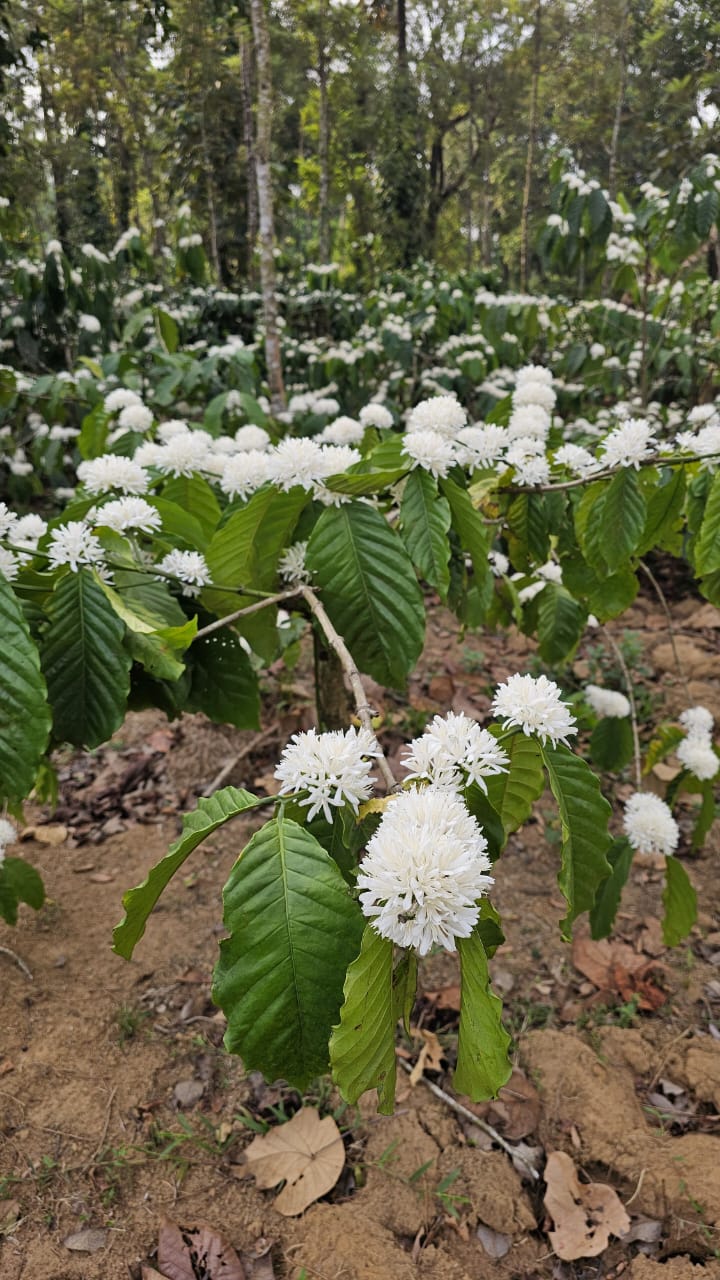
We had a proper tropical shower last week. I hadn’t seen such joy, relief and excitement from this simple act of nature before. The magic was in the timing of it. It came just when the coffee plants were thirsting to come into full blossom and release their fragrance to fill the atmosphere with Jasmine. Only in films had I seen one single rain shower give rise to such elation.
Yes. Coffee is in bloom. But I’m sick of my yo-yoing fever and this unpleasant cough. My body keeps stretching out to do all the things it wants to but it keeps getting pulled back into itself because it doesn’t have the strength. Maybe I need to raise my aspirations, then the Universe will provide more energy. Maybe I need to increase my desire to move and dance and sing and travel and trust that the body will be supported in that. Maybe I need to keep writing more of the nonsense I write so that I’m out there in the world of words and the right ones can find me. Maybe I need to keep showing up for myself and nicely saying NO to unnecessary stuff when I need to. Maybe I need to sit still and rejoice in the breeze that’s dancing with the trees. Maybe I should simply tune into the voice of the birds resonating with excitement. Maybe I need to be fully present in my body, a 100% here, unconditionally.
Before all of that, maybe I need to give my body the permission to fall ill, offer myself the care I would give someone I love, be patient and breathe with myself as though I was my own child. Excuse me, I need to make myself another cup of ginger tea.
So much of everyday life, including the innumerable religious festivals in India are dominated and determined by the lunar calendar. While the gross impact of the moon on water, especially the tidal waves is well known, the more subtle effects on humans and plants, less so. Biodynamic methods of farming acknowledge the cycles of the moon as fundamental to a good harvest as they incorporate cosmic energy to minimise disease and aid growth.
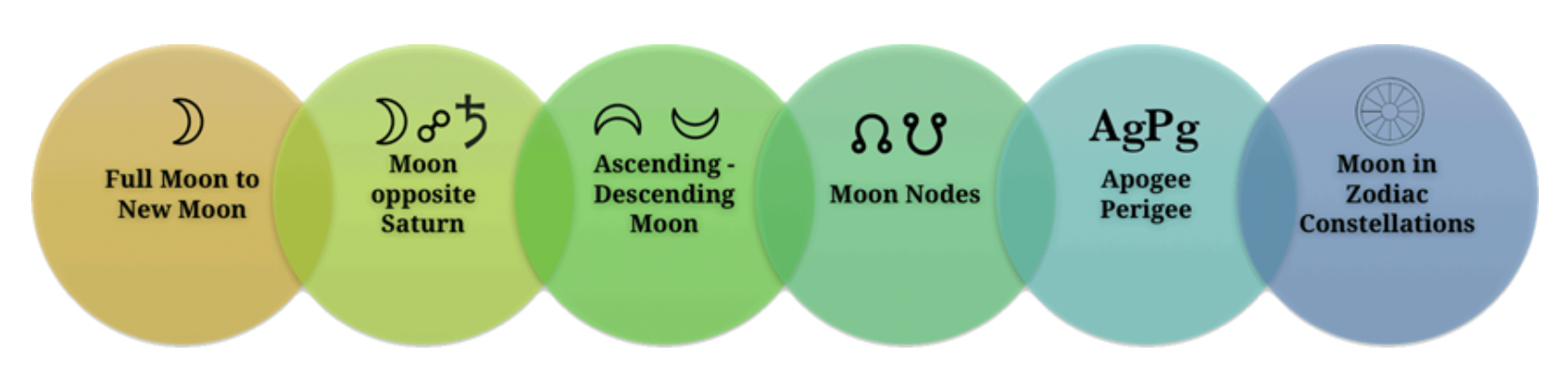
At a recent Biodynamic meeting, I was fascinated to see a Planting Calendar based on the 6 cycles of the moon. I thought there was only one – Full to New and back.
Every 27.3 days, the Moon and Saturn are on opposite sides of the Earth. This is a great time for planting as their forces synergise to produce strong plants of high quality. Organic wine growers have been using this technique for a long time.
Like inhalation and exhalation, the Moon ascends and descends. The ascending phase is great for harvesting as the natural flow of energy is upward and the descending phase is a good time for transplanting saplings as the downward energy helps them take root.
Apogee is when the Moon is furthest from the Earth, a great time to sow potatoes. Perigee is the point in the orbit of the moon when it is nearest to the Earth. This means there is more moisture in the soil, making the plants more prone to fungus and insect attacks.
Nodes occur when the Sun-Earth-Moon are in line. It happens twice every month. It’s a bad time for any horticultural activity as the Sun’s beneficial influence is negated on these days.
As the Moon passes through various Zodiac constellations, it exerts different influences on different types of plants. At this point, my cognitive abilities were saturated, and I had to leave the rest for later.
I shall have mercy on you and stop here.
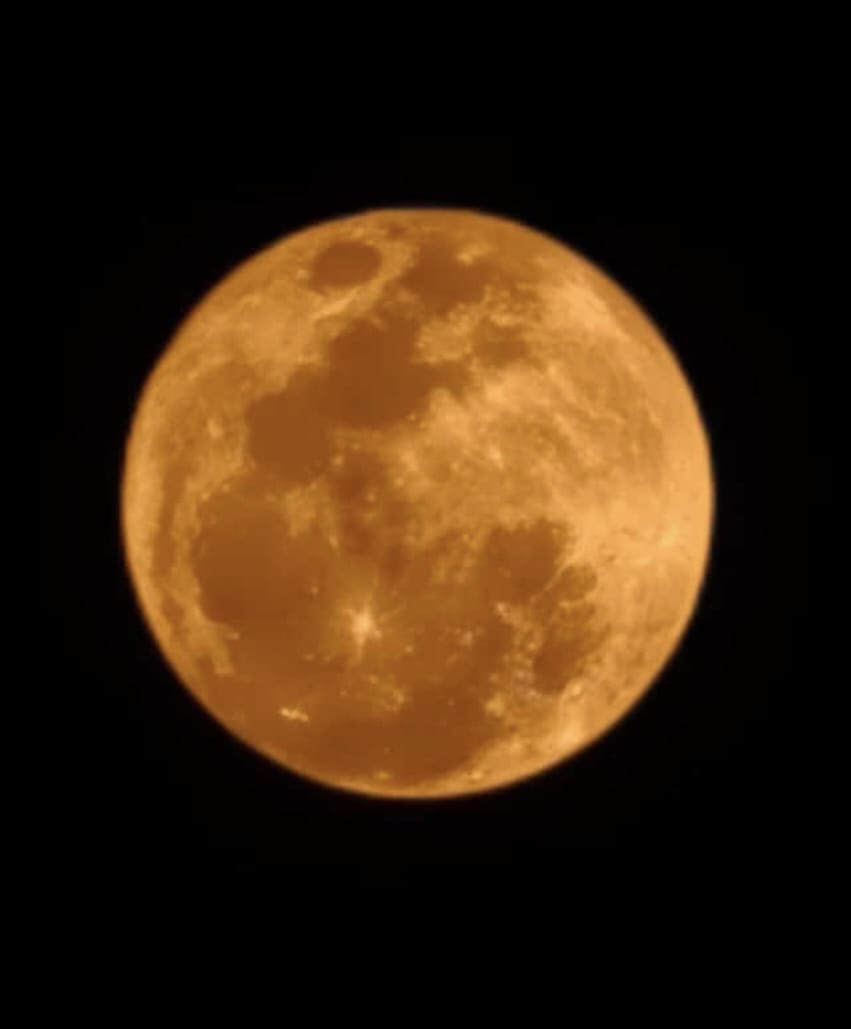
Splendiferousness from last night. I am sure Saagar would say something like,”Big-ass Moon. Innit?”



 kidsaregifts