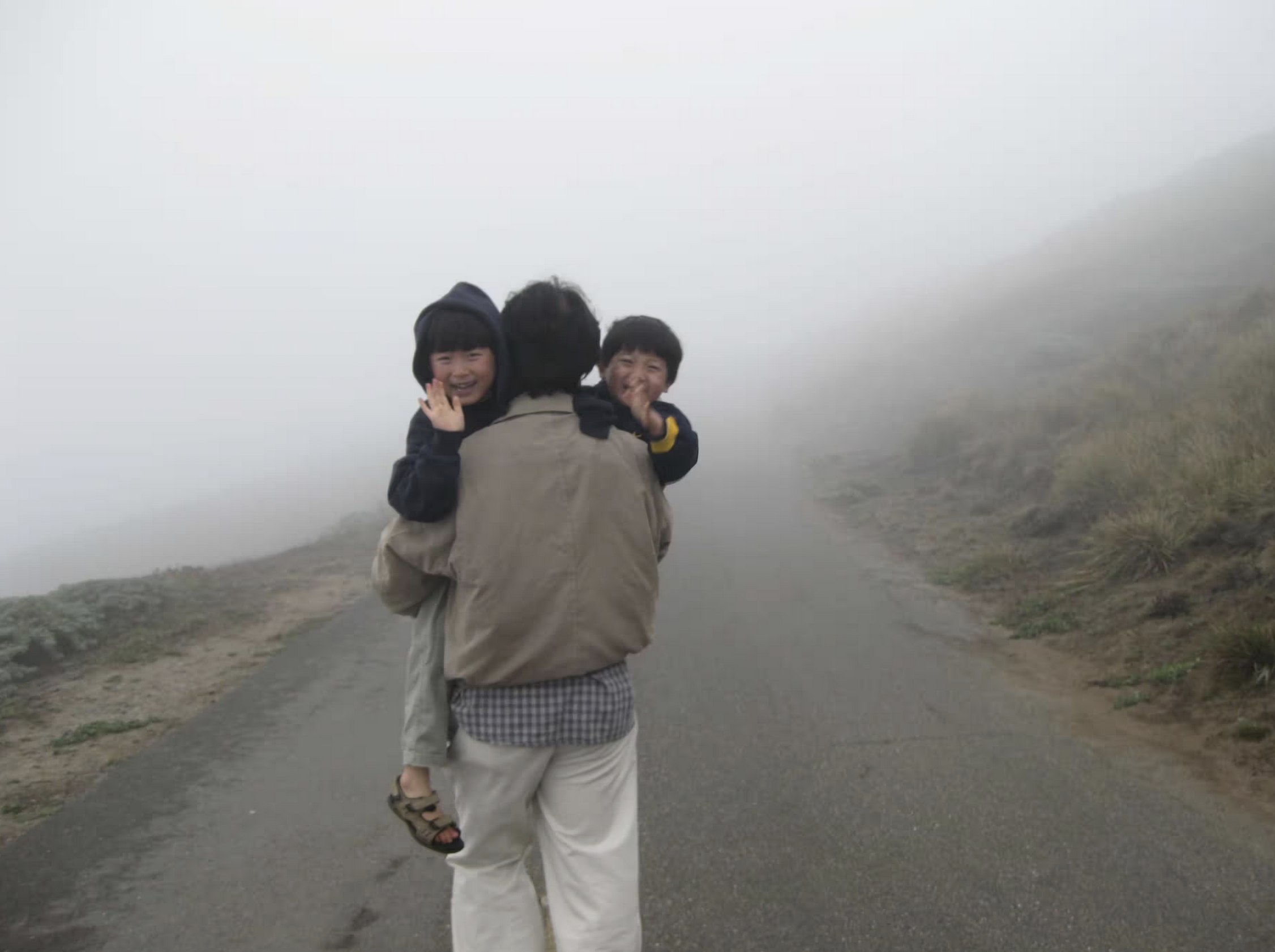
Vincent and James.

2017 – 16. Male. RIP.

2024 – 19. Male. RIP.

Brothers. Second generation Chinese immigrants in USA. Their mother, a writer who lost both of them to suicide.

Where Reasons End (2019) by Yiyun Li, after Vincent’s death.

I read this book when it was first published. An imagined conversation between her and her older son, Vincent who lived ‘feelingly’. Sixteen chapters, one for each year of his life. It has a witty and mischievous tone. Nicholai, a name he gave himself, chides his mother’s new embrace of cliches and adjectives. “If you’re protesting by becoming a bad writer, I would say it’s highly unnecessary,” he says. (“Dying is highly unnecessary too,” she shoots back.)

Things In Nature Merely Grow – Pulitzer Prize Finalist 2025, by Yiyun Li, a memoir. She wrote it within two months of her younger son, James’ death. I feel deeply for her and with her but I am not sure I want to read that book right now. A few lines from it sing true:

“I am in an abyss. If an abyss is where I shall be for the rest of my life, the abyss is my habitat.”

“My children were not my burden. My sadness is not my burden.”

“I am very realistic in that I would always acknowledge that I am limited as their mother. I was limited, and I am still limited as a mother, so I can only do my best.”

When people hold an expectation that her grief must have an end date, she retorts, “How lonely the dead would feel, if the living were to stand up from death’s shadow, clap their hands, dust their pants, and say to themselves and to the world, I am done with my grieving; from this point on its life as usual, business as usual.”

“This is a very sad fact of our lives, they took their own lives knowing we would accept and respect their decision.”

Could I accept and respect Saagar’s decision one hundred percent? I believe it was not his decision. It was his utter helplessness and desperation in the face of his illness, his unsuitable antidepressants, lack of medical care, his isolation, his inability to recommence his education, our inability to talk about it and so much more. He was driven to it. It was not by choice. Anyone who knew him, knows that. I do understand though.

I understand, my darling.

References:

https://www.theguardian.com/books/2019/feb/05/where-reasons-end-yiyun-li-review#

https://www.theguardian.com/books/2025/may/17/author-yiyun-li-on-the-suicide-of-both-her-sons

London calling.

I applied for the London job only because I was sure I wouldn’t get it. In 2006, I had finished seven years of post-graduate training in Northern Ireland and it was time to look for a Consultant post. There weren’t any openings locally so I looked at vacancies on the ‘mainland’. If nothing else, it would be an opportunity to practice my interview skills. Halfheartedly, I applied for a job in London and kept absolutely mum about it. When I was short-listed, I was a bit miffed as my only free weekend that month would be spent preparing for an interview the outcome of which I didn’t really care for. But I didn’t want to look like a complete fool so I did prepare.

I also went shopping for a black pencil skirt with a smart white and black jacket. Why not? I already had a nice white top and black shoes to match.
“Will we have to move to London?” Saagar asked. He was 12.
‘I don’t think so. Unlikely. Let’s see.’

Early one Wednesday morning I checked into my flight at the then brand new Belfast City Airport. As I was saying bye to Saagar’s father, I asked him, “What shall I do if they offer me the job?”
Take it, he said.
The Big Ben spooked me as it peered through the window of the office where I was waiting for my turn. What am I doing here? The panel seemed friendly. I felt relaxed and shared my thoughts freely, to the point of being quite blunt about the unrefined appraisal process and such like.
Why did you apply for this job? They asked.
I had been looking at your job adverts for a while and finally they stopped asking for ‘a female doctor from ethnic minorities’. That’s when I applied.
Why do you think you are right for this job?
Because I have trained twice for it – once in India and then in Belfast.

I found myself smiling as I left the room. I had enjoyed the conversation but there was no reason for them to offer me a job. I was sure London had its own candidates, like Northern Ireland had its own.

That afternoon, I was waiting for my return flight at Heathrow when the phone rang. I flipped the silver Vodaphone open.
“Hello. Is that Dr Mahajan?”
‘Yes. Hello.’
“I am Dr Cunningham from St Thomas’. We met at the interview this morning.”
‘Oh yes. How are you?’
“I am well. I am ringing to offer you the position of a Consultant Anaesthetist at our Trust.”
‘Oh. Are you sure you have the correct number?’
“Ha. Ha. Yes. I am.”
‘Right. Wow. Thank you.’
“Would you be willing to accept the post?”
‘Yes. Thank you.’
“Great. The HR department will soon be in touch with you. Good luck.”
‘Thank you. Bye.’

I said yes only because I couldn’t say no. My ego was on an all time high. Of all the people in the world, one of the most prestigious teaching hospitals in London wanted me. Why in the world would I ever say no?

When I shared this exciting news with a senior colleague in Belfast, he said, “So, from being a rich doctor in Belfast you will be a poor nobody in London?” Another said, “Oh! We might find you swanning around the Royal College in a saree?” I smiled. May be this was a lucky escape.

Working in London was one thing but living in that city was quite another.
On our first day we parked our car in front of our rental flat. While we were waiting for our truck to arrive with our household stuff, we kept an eye on the car, expecting it to be stolen within minutes. When we came down to the car an hour later, an orange plastic envelope was stuck to the front wind-shield. It was a parking ticket. A big lady in uniform stood there with her hands on her hips, “Yo’ front wheels’ half on top’o da pavement. I don’t make the rules. Innit?”
Welcome to London!

From a detached three bed-room house in a friendly, modern development to a random three bedroom flat on a random Chestnut road. From having a front and back garden, a driveway and a double garage to no gardens and parking on the street. From a safe and quiet neighbourhood of friends and acquaintances, to a nameless road-side flat in one of the fastest metropolis, with no friends or family. Once again we were going to make a start with ‘just us’.

Resource: At present, more people than ever live in a country other than the one where they were born.

Evidence for suicide prevention strategies with populations in displacement: a systematic review

Two overlapping worlds.

The Bhagavad Geeta addresses the ethical and moral dilemmas around the questions of who we are, how we should live our lives and act in this world. If this voluminous text was to be summarised in two sentences, they would be:

  1. Do what needs to be done, knowing that all actions come from God.
  2. Do not be attached to the results of your actions.

Six weeks ago, I re-entered the world of Suicide Prevention due to a presentation I agreed to make. It took me back to a familiar battleground where strong currents of injustice flowed through me. I went over our story yet again, in mind and body. It burnt me up. It made me restless and irritable. It kept me staring at the ceiling at night. It brought back the shit of guilt in big droppings. It was silly of me to agree to do it, but it was too late already. I wrote it down, prepared a set of PowerPoint slides to support the story.  I repeated it for the nth time to many. I wondered, to what end, but I did it anyway.

Four and a half years ago, when my road gradually swerved from the Suicide Prevention world towards peer support with other parents, it was like a cool breeze gently blowing in my face. That conversation felt like a proper invitation. Instinctively I knew it was good for me. Despite huge self-doubt, I trusted that path. I went with it. This work was also about preventing isolation and possibly suicide amongst parents, as our risk is 60-70% higher than others. It did not feel like work at all. We formed strong bonds of friendship. We shared deeply and held each other in understanding and compassion. This felt like home.  

The organisers at National Confidential Inquiry into Suicide and Safety in Mental Health provided me the best possible support to be able to present my thoughts. The comments on the chat were that of gratitude and inspiration to change. One person said that it was better than any training course they had attended. I am glad that I did what was needed. The strength to do it came from somewhere. Now, it can do its work and I can go back home.

The recording is here (‘Bridging the gaps’ starts 6 minutes and 45 seconds in).

PDA

(Awakening Needs Cards Created by Linda Nolan and Karen Plumbe)

It was natural, spontaneous and normal in London. Now, we must look around to ensure no one’s watching us.

Holding hands in public? At our age? Oh my God! At any age. Strange.

A hug. Inappropriately bold.

A peck on the cheek? Unthinkable.

A quick kiss on the lips to say hello or bye. Absolutely scandalous.

“Your husband even holds the umbrella for you in the market”, an acquaintance remarked.

I had not given it a thought. “Yes. He’s very good”, I said. I was tempted to defend his actions by making statements like, it’s easier for him as he’s taller than me or it helps me use both hands to select the fruit and veg but I stopped myself. He needs no defending. I was learning about what is normal here.

Affection isn’t a thing here. Public Display of Affection (PDA) is prohibited.

Food. Yes. Gifts. Yes. Laughter. Yes. Folded hands as greeting. Yes.

Hugs. No.

A young man of seventeen studies Biology with me for an hour, twice a week. He wants to be a doctor. He showed me an MCQ that he did not understand. It was about Barrier contraception. I asked him if he had covered the chapter on Sexual Health in School. He said the teacher had completely omitted it. She had asked the students to read and learn that chapter on their own.

The next day I found myself retrieving a little square white and blue packet from the small cupboard outside the door of the local Health Centre. It was labelled Nirodh (the Government sponsored condom). I had not signed up for this, but I turned out to be the one to explain Sexual health to him.

In a society where men and women pretend, they never touch each other and it is somehow wrong to do that, how can the adolescents learn affection, let alone intimacy?

“Affection is responsible for nine-tenths of whatever solid and durable happiness there is in our lives.”

– CS Lewis.

Dad, boys and crow.

Once upon a time there were two boys who purposefully misremembered things about their father. It made them feel better if they ever forgot things about their mother.

There were a lot of equations and transactions in their small family. One boy dreamed he had murdered his mother. He checked it wasn’t true, then a put a valuable silver serving spoon that his father had inherited in the bin. It was missed. He felt better.

One boy lost the treasured lunchbox note from his mother saying ‘good luck’. He cried alone in his room, then threw a toy car at his father’s framed Coltrane poster. It smashed. He felt better. The father dutifully swept up all the glass and understood.

There were a lot of punishments and anticipations in their small family.

Eight years ago it was hard work and I could remember it only vaguely.

I read it for the second time this morning. It felt brand new, easy, fun and hearbreaking. Part memoir, part sound-poem. A bit more than 100 pages long. No more than 18 thousand words. The ‘missing’ in the life of a young family after the mother dies suddenly is palpable. In the background rings the sound of a crow flapping its wings. One big black feather has dropped on the ground. It lies near my right foot.  

PS: Losing a parent or a close relative or friend at a young age puts the young at a high risk of suicide.