Love endures.

As you walk through the intense fire that follows the death of your child, your heart burns for those walking behind you. You turn around and look at their tear-drenched faces – parents whose child just died . Despite the unbearable heat of your own loss, you can’t help but reach out to them. Their predicament as unbearable to you as your own. In trying to ease their pain, you believe you diminish your own.

This poem is offered by one of the CORe members for those carrying the heavy load of love and loss. It deeply respects the brokenness while also tracing the quiet light that remains, reminding us that even in grief’s shadow, love whispers through.

I feel your grieving, heart laid bare,
pieces scattered, our lot unfair.
Yet each fragment, though fragile, shines,
resilience stitched by love’s designs.

Your angel child, though gone from sight,
does dwell in memory, a quiet light.
In laughter caught, in whispers faint,
in all the love your heart can paint.

Each tear a bridge, each sigh a thread,
connecting worlds where you are led.
The joins of grief, so tender, true,
are etched with courage in all you do.

Though nights are long and shadows deep,
their presence lingers—it does not sleep.
In dreams, in stars, in softest air,
your dearest whispers: “I am there.”

Your love endures beyond the pain,
a sacred flame that shall remain.
Though broken, your heart bears a light,
turning grief’s darkness into sight.

So let each memory softly bloom,
a garden bright within the gloom.
Even in sorrow, love will find
its way to warm the grieving mind.

Now fragments found, arranged anew,

Love, hope, and courage form the glue.

Your heart, though changed, beats strong and true,

A living flame that carries you.

Whispered Reflection:

Each fracture, each delicate seam, carries a quiet, hidden light. Through love, courage, and the passing of time, these pieces are held together, forming a heart that is not the same as before—but more radiant for all it has endured. The very places of repair shine with their own gentle beauty, a reminder that even in loss, love endures and is able to recreate beauty.

Being a Rose

Scent as soft as

feathers touching

the skin on the tip

of my nose.

Subtle. Almost invisible.

Gentle. Like a fine drizzle.

Smell? No.

Fragrance. The colour of orangey-peach petals.

A rose is nothing but non-rose.

It is the cloud that sent rain.

The sun. The soil. The seed.

The gardener’s sweat.

A conspiracy of the cosmos.

The rose

Cannot be herself alone.

It must inter-be.

With molecules of minerals and

Little particles of me.

All this, I touch

when my fingers hold

the tender stem.

I touch reality.

The non-self-ness of the rose.

Seeing real close-

A rose no longer rose.

A river no longer river.

A mountain no longer mountain.

Thank you Ma’am.

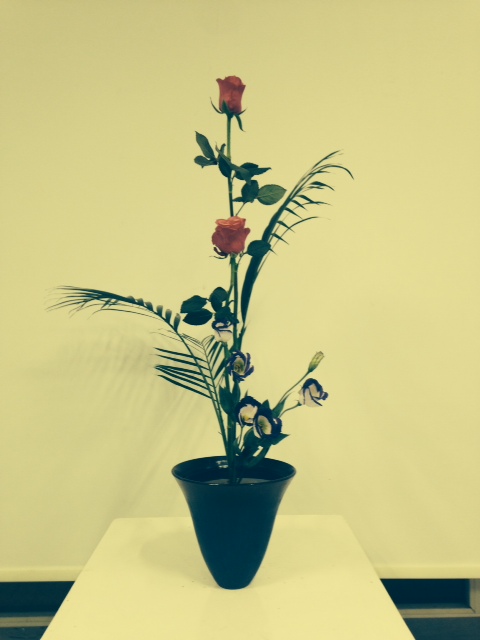
She was just over 4 feet tall but her voice boomed across the workshop as if it was arising from a big Bose speaker. She spoke, taught, lived, breathed Ikenobo, the oldest discipline in Japanese flower arranging, broadly known as Ikebana. 1400 years, to be precise. It was her life, her passion and she generously gave it to us, her students.

Initially I couldn’t figure out what I should call her. In India, I would have called her ‘Aunty’, but it didn’t seem right. Some called her by name but I couldn’t do that. I tried it but it felt wrong. She was nearly my mum’s age. I dug out the word ‘Ma’am’ from my college days, a term used to address female teachers. It felt right to me and seemed fine by her.  

She drew schematic diagrams of arrangements on a white board in front of the class, explaining the name, function, quality and significance of each component. She emphasised the relationship between different parts of an arrangement but mostly, she spoke of the importance of spaces between them.

Wood symbolized mountains while grasses and flowers suggested water. A natural landscape, in a single vase. It was a meditation of sorts, exploring the relationship between the sky, humans and earth, between the outdoors and indoors. It had philosophical representations of the past, present and future. It was about harmony and the laws of nature, a welcome break from the cacophony of London.

After Saagar passed away, she gently encouraged me to join her classes. She knew this art form would help. Mondays became exciting because they were the day of the lessons. Couldn’t believe how little they cost. It definitely was not about money. I joined this community of aspiring flower-arrangers who like me, were constantly baffled by how minor changes made by her, transformed our arrangements into spectacular creations.

Ma’am was a walking-talking Encyclopaedia on all things garden. She had looked after award winning gardens for most of her life. She knew wholesale flower markets intimately and could predict and cherish the floral offerings of every month, every season accurately. But last week, an unfortunate accident suddenly took her away from us, from this earth.  

“Not only beautiful flowers but also buds and withered flowers have life, and each has its own beauty. By arranging flowers with reverence, one refines oneself”, she would say.  

We will miss you and your finesse, Ma’am. My head bows to the space left by you. Thank you for helping me see beauty in everything.

Day 961

photo (5)

Cycling again, I feel happy. Alive.
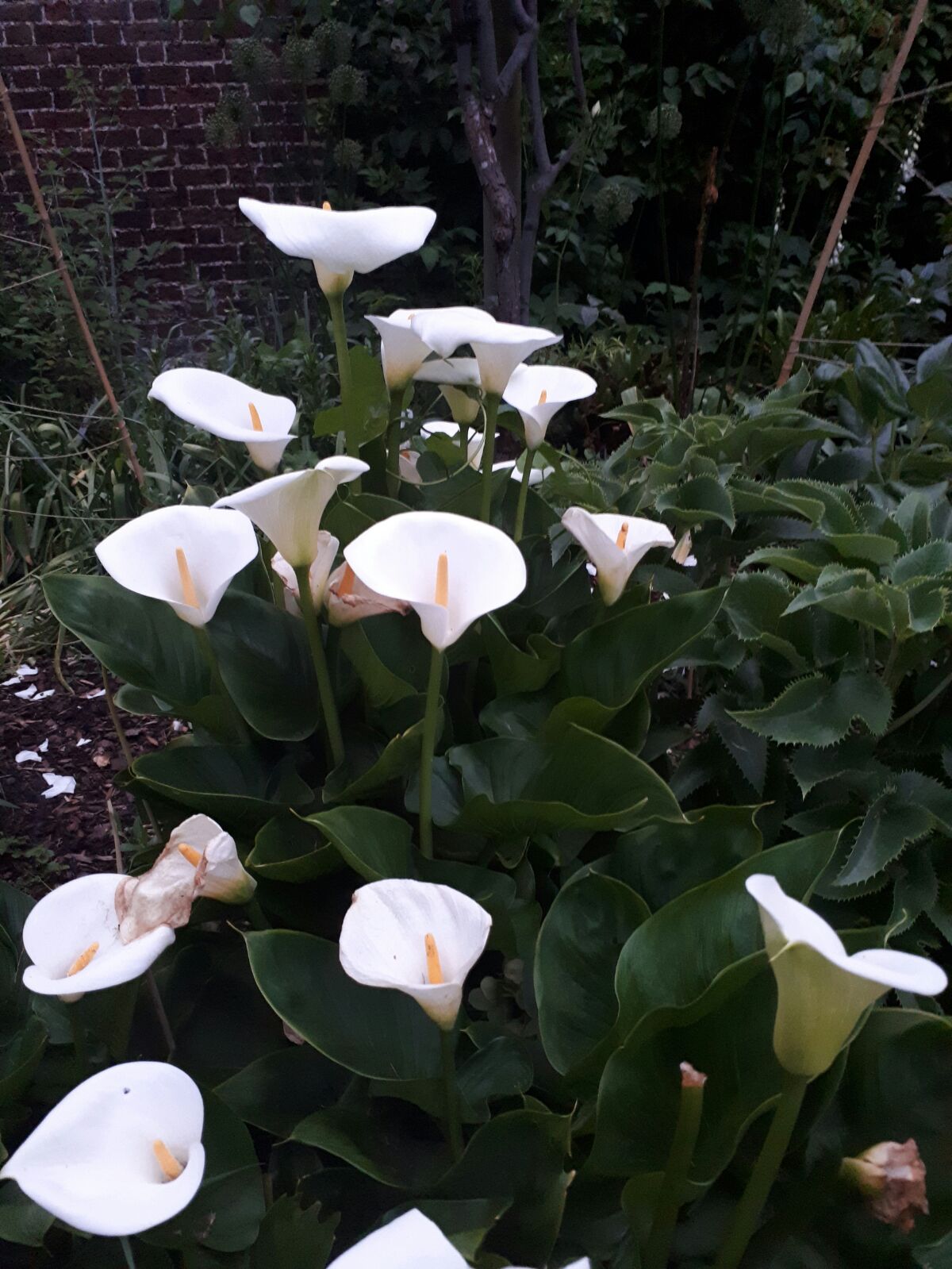
Every few hundred yards, hordes of pristine white conical lilies smile at me. The first time I saw a black and white picture of one such lily was 18 years ago. For the next 5 years it was the largest picture in our house. It filled our space and me with a sense of peace and beauty. I remember being mesmerised by it the first time I saw it. The fact that one single petal could shape itself into this exotic flower, stupefied me. The contrast with that particularly deep shade of green never fails to capture my eyes. Its elegance leaves me speechless.

It has many names – trumpet-lily, arum-lily and calla-lily. Botanically speaking, it’s not a lily at all. It derives its name from ‘calla’, the Greek word for beauty. In the 19th century, there was a flower-language boom that meant certain flowers were associated with expressing particular feelings. There was no need for words. No surprise that it was the theme of many artistic works.

The calla-lily came to play a role in the Christian Easter service as a symbol of Jesus’ resurrection. In art throughout history, the calla-lily has been depicted with the Virgin Mary or Angel of Annunciation. It is associated with purity. As it blossoms in spring, it is also a symbol of youth and rebirth. It’s appropriate for weddings and funerals. It symbolises love, devotion and grief.

While mostly white, they are also found in other colours, each one carrying a different meaning. Pink has a connotation of admiration, purple denotes passion and yellow is typically associated with gratitude. Black ones are truly enigmatic and carry a certain mystery.

“The modest Rose puts forth a thorn,
The humble sheep a threat’ning horn:
While the Lily white shall in love delight,
Nor a thorn nor a threat stain her beauty bright.” – By William Blake

edfa236245ec35dd990346931e149973

Georgia O Keeffe’s most famous painting – Keeffe Calla Lily