Day 673

stress

The stress vulnerability model was proposed by Zubin and Spring (1977). It proposes that an individual has unique biological, psychological and social elements. These elements include strengths and vulnerabilities for dealing with stress.

In the diagram above person “a” has a very low vulnerability and consequently can withstand a huge amount of stress, however solitary confinement may stress the person so much that they experience psychotic symptoms. This is seen as a “normal” reaction. Person “b” in the diagram has a higher vulnerability, due to genetic predisposition for example. Person “c” also has genetic loading but also suffered the loss of mother before the age of 11 and was traumatically abused. Therefore persons “a” and “b” take more stress to become “ill”.

This model is obviously simplistic. However it does help with the understanding of psychosis. Vulnerability is not a judgmental term but a different way to approach the variables involved. We all have a different capacity to take on stress depending on how vulnerable we are. At different times in our lives we can be anywhere on the curve, depending on these variables. 
Increasing coping skills or altering environmental factors (family, work, finance, housing etc.) and specialist help can reduce vulnerability and build resilience. Attending a peer group may help to build self-efficacy, self-esteem and self-acceptance all of which may be protective against relapse and form a buffer to demoralisation. It gives hope!
Day 668

A dozen of them arrived hidden inside a suitcase. Smuggled across borders in the name of love. True love. Covered in yellow and green skins holding the sunshine of the tropics and the sweetness of the people within. Carrying the essence of lazy summer afternoons spent back home waiting for the power supply to come back, fanning ourselves with hand-woven rectangular fans, for many hours.

They sit invitingly in a clear glass bowl. My most cherished possessions! Sadly perishable! Can hardly stop myself from digging into them and yet want them to last for as long as possible. Can hardly bear the thought that one day they will all be gone. Finished. The aroma they ooze tingles the senses and unknowingly I hang around the fruit bowl just to be within the sphere of that aroma.

Each bite, a taste of heaven. Beyond all description. The juicy firmness, disappearing into sublime lusciousness leaving me in state of ecstatic bliss. I take small mouthfuls to make it last longer. The juice drips in thick yellow drops from my knuckles as I devour the pulp around the stone. The whole world disappears when I am one with the mango. Move over Sally. (Ref: ‘When Harry met Sally’).

Summer is synonymous with mangos. Saagar used to love them ever since he first tasted them when he was 8 months old. He called them ‘ambu’, baby lingo for ‘aam’ which means mango in Hindi. I call Si ‘Tarzan’ when it’s hot and he roams around t-shirtless. He calls me ‘Mango’.


Day 664

IMG_0218

Carrying on from yesterday’s saga – the laptop with a lot of my life in it stopped working. Very hopefully, I took it to the local shop at 10.30 am. They said they would call me around 6 pm and tell me if they can fix it. That left me a full day without much to do. I had to stop and think why this was happening. What was the lesson in this for me?

Maybe the universe wants me to give myself a break, freeing myself from deadlines and compulsive writing. Maybe this is another exercise in letting go. May be this is a day given to me as a gift to do something different, something fun. May be I just surrender to what is and make the most of what I have – a sunny day off work in this case. Not a very common occurrence.

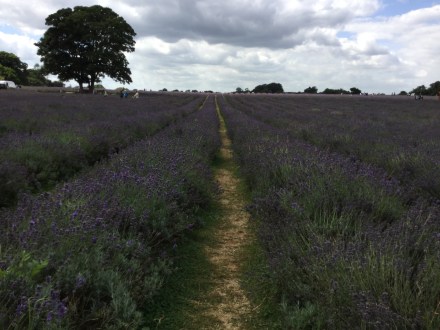
So, I did. I was tempted to start working on the I-pad, instead I got in the car with my parents and we drove to one of my favourite places a short scenic distance away from home – the Lavender fields.

The gorgeous colours, the hypnotising fragrance, the luminous sky, the playful sun, the open fresh air, the kids in colourful hats, the selfie takers and … just being there with the two  people I cherish most, I felt immensely blessed. This is what I needed to do. Reclaim my life. Live it. In love and gratitude.

Day 658

20 minutes into a phone conversation with a close friend, he asked, ‘Do you feel free?’

Wow! Do I feel free? Is it natural for me to feel more free than I did before? Am I supposed to? How are different levels of freedom experienced? Does it have to do with being in a particular job or living in a particular city or having a particular partner or dressing in a particular way? Or does it have to do with how I feel within myself? Do I feel free?

Saagar was my pride and joy and also my responsibility. Now I feel responsible for the well being of all the young people out there. I have learnt that it’s not easy to be young. Earlier I was focused on providing for us but now it’s just Si and me. I don’t worry about us. I know we’ll be fine. Earlier I lived very much within my own little world and now I have a much more expansive existence. I often wasn’t very attentive or sensitive to the people around me but now I am. Having lost what was most dear to me, I fear nothing. From a place of survival, I find myself in a place where I have something to offer to the world. I need to be aware to not attach myself to any particular identity – doctor, grieving mother, victim, indian, woman, etc. All I am is human.

Hey! Guess what. I am free.

Day 657

When someone becomes depressed, many of their activities function as avoidance and escape from aversive thoughts, feelings or situations. Depression therefore occurs when a person develops a narrow range of passive behaviours. As a result, someone with depression engages less frequently in pleasant or satisfying activities and obtains less positive reinforcement than someone without depression.

40 years ago the first behavioural treatment for depression was described by Lewinsohn et al. Many successful trials were done which somehow got forgotten with the advent on CBT in the 1980s.

Behavioural Activation (BA) focuses on activity scheduling to encourage patients to approach activities that they are avoiding. It focuses on encouraging people to take part in meaningful activities that are linked to their core values. It helps people find out which activities make them feel better. Patients are also taught how to analyse the unintended consequences of their ways of responding, including inactivity and rumination.

A recent paper published in the Lancet by Richards et al at University of Exeter studied 440 people with depression. They were randomised into 2 groups – one received BA and the other received CBT. They found that BA, a simpler psychological treatment than CBT, can be delivered by junior mental health workers with less intensive and costly training, with no lesser effect than CBT. Hence, effective psychological therapy for depression can be delivered without the need for costly and highly trained professionals.

Professor David Richards says:

“Effectively treating depression at low cost is a global priority.
Our finding is the most robust evidence yet that Behavioural Activation is just as effective as CBT, meaning an effective workforce could be trained much more easily and cheaply without any compromise on the high level of quality.
This is an exciting prospect for reducing waiting times and improving access to high-quality depression therapy worldwide, and offers hope for countries who are currently struggling with the impact of depression on the health of their peoples and economies.”

UK is one of those countries.