Day 627

photo

(A young artist’s pictorial depiction of Bipolar Disorder)

Everyday I struggle with what it must have been like for Saagar. What state of mind did his illness create? Why couldn’t he find any words for it? How much of it was due to the medicines he was on? I have tried to imagine it and learn about it from various books and blogs. The closest understanding of it comes from reading the first hand accounts of those who suffer from Bipolar disorder. Their writing is as honest and as human as can be.

“It has been a fascinating, albeit deadly enemy and companion. I have found it to be seductively complicated, a distillation both of what is finest in our natures and of what is most dangerous. At first my illness seemed to be simply an extension of myself- that is to say, of my ordinarily changeable moods, energies and enthusiasms. I perhaps gave it at times too much quarter. And because I thought I ought to be able to handle my increasingly violent mood swings by myself, for the first ten years I did not seek any kind of treatment. Even after my condition became a medical emergency I still intermittently resisted the medications that both my training and clinical research expertise told me were the only sensible way to deal with the illness I had.

Manic Depression distorts moods and thoughts, incites dreadful behaviours, destroys the basis of rational thought and too often erodes the desire and will to live. It is an illness that is biological in its origins, yet one that feels psychological in the experience of it; an illness that is unique in conferring advantage and pleasure, yet one that brings in it’s wake almost unendurable suffering and not infrequently, suicide.

Medications brought with them seemingly intolerable side-effects. It took me far too long to realize that lost years and relationships cannot be recovered, that damage done to oneself and others cannot always be put right again and that freedom from the control imposed by medication looses its meaning when the only alternatives are death and insanity.”

– an excerpt from “An Unquiet Mind”, a personal testimony of her own struggle with Bipolar Disorder since adolescence by Kay Redfield Jamison, a Professor of Medicine.
Day 608

We live in an age of sleep deprivation. In the 1950s, most people got on an average 8 hours of sleep every night but now it is reduced by at least an hour and a half. Teenagers need 9 hours but they often get only about 5 on a school night.

Sleep is restorative. It helps with conservation and regeneration of energy. It also helps with basic brain processes such as memory, creativity, problem-solving and learning. Shortage of sleep and poor quality of sleep is deeply damaging, as in shift workers. Not only does it have subtle effects on one’s personality, it also increases the risk of road and other accidents due to micro-sleeps in the day and increased impulsiveness.

“You always get sleep disruption in people with mental illness. That’s because they don’t have jobs, so they go to bed late and get up late” remarked a psychiatrist. This led Dr Russell Foster into the study of relationships between sleep and mental illness. His team at Oxford found that in patients with schizophrenia, regardless of antipsychotic treatment, sleep patterns were not just disrupted but totally smashed. Bipolar and Seasonal affective disorders and depression also involve bad sleep as do dementia, Alzheimer’s and Parkinson’s disease.

Sleep disruption is being studied as a biomarker of potential mental health problems and it offers the possibility of early intervention.

Researchers at Oxford have found that if sleep can be partially stabilized using CBT in patients with schizophrenia, levels of delusional paranoia can be reduced by 50%. It is possible that consistent improvement in sleep patterns may delay the onset of certain conditions by knocking the brain into a different developmental trajectory.

“Sleep is the golden chain that ties health and our bodies together.”


Day 607

Wonder what it’s like to be 18 or 19.
To have a decent upbringing and great friends.
To have a sharp mind and many talents.

To find out life is complicated.
To learn relationships are difficult.
To know jobs are hard to find.
To have faith you can cope. To have hope.

To be ruled by an un-understandable mind.
To have no tools to dissect the goings-on within.
To hold a fascinating companion and a deadly enemy inside.
To be able to handle them both tactfully.
To have no way of showing them to others.
To not know how much of you is you and how much is them.

To believe you can conquer these beasts.
To hope you can make them beautiful.
To see them as extensions of yourself.
To watch them distort your moods and thoughts.
To love life one minute and abhor it the next.
To watch the clouds of confusion slowly shutting out the light.

To resort to silence as time goes by.
To watch your friends move ‘ahead’.
To feel left behind, small and inadequate.
To have to contend with the inaccessibility of Life.
To loose faith in medicines and trust in medics.
To be utterly lost.

Wonder what it’s like to be that 20 year old.

Day 600

photo

Craters on the surface of the earth indicate something magnificently terrible happened here.

A hundred days have gone by six time over since the crater in my chest was created. I have surrounded myself with the ruins and cherished them ever since. I have held on to every scrap as tightly as I could, painfully parting with a few as if I was giving away fragments of myself.

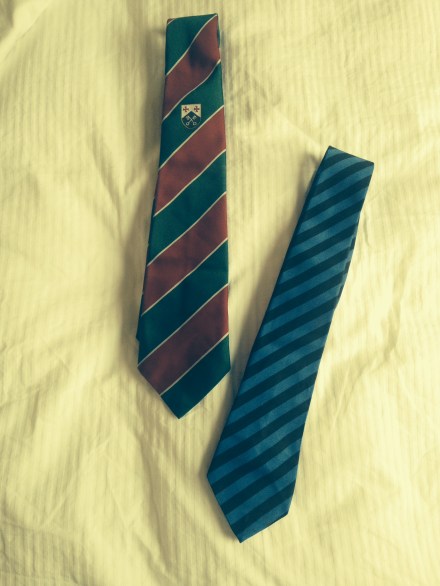
Today I felt ready. It was a day of going through Saagar’s jumpers, t-shirts, shorts, scarves, ties, belts and shoes, looking at them and remembering how he looked in them, putting them down on a white sheet and taking pictures of them and then putting everything lovingly and neatly into cardboard cartons, loading up the car with 4 such boxes and driving to the Mind charity shop nearby, telling the story to the lady at the counter in about 6 words: My son had Bipolar. His things…

Although I thought I was ready, it was still like giving away a big chunk of myself. Another crater. I still hold on to a few scraps – a school tie and a university tie. I think he would appreciate that. May be not. No idea.

Well, these are only his things that I give away.
He is right here. In my heart.

Day 589

Ruth was 47. She lived with Bipolar Disorder for 20 years. For all those years her mother looked after Ruth and volunteered for a Mental Health charity. The week after Ruth’s death, her mother rang the Charity with the bad news of her suicide. She didn’t receive as much as an e-mail of sympathy from them.

Saagar was under the care of our GP (General Physician/Family doctor). I didn’t hear anything from him after Saagar’s death. At the Coroner’s inquest the GP said that he had been advised against calling me by the Medical Defense Union (MDU). They claim to be ‘on your side’ and give ‘expert guidance and support’. It goes to show that on hearing of Saagar’s death the first phone call the GP made was to the MDU. The advise he got given was medico-legal in nature and that is what he was looking for. Interesting! Isn’t it?

I had the honour of meeting Ruth’s mum today. We could see so many similarities in Saagar and Ruth. Both adorable, affectionate, creative  and kind. I was her mirror and she mine. The bond we felt was very special. She let me try on Ruth’s sun-glasses. She thought they looked great on me and I do too. She let me have them. In that moment, I felt exactly how she must have felt – deep pain tinged with a tiny drop of relief; deep loss with a sense of peace. RIP Ruth.

Here’s a poem I found on the Order of Service for Ruth’s funeral:

Afterglow

I’d like the memory of me to be a happy one.
I’d like to leave an afterglow of smiles
When life is done.
I’d like to leave an echo whispering softly down the ways
Of happy times, bright and sunny days.
I’d like the tears of those who grieve,
To dry before the sun.
Of happy memories that I leave when my life is done.

-By Helen Lowne Marshall