Day 427

It’s done.
The facts have been established.
Not all, but a few important ones.
It would have taken a few weeks of deliberation to get all of them out in the open.
I was not looking forward to it and wanted to jump to the other side of it asap.

The inquest was once again conducted in an open and investigative manner. Everyone was given time to say what they wanted to.
The verdict was:

“Took his own life while of unstable mind.”

Contributory factors identified were:

  • Poor communication with the family about Saagar’s illness, the seriousness of it and the side effects of the medications he was on.
  • Poor discharge summary and handover from psychiatrists to the GP – diagnosis and warning signs for a referral back to the psychiatrists not clearly mentioned.
  • Poor judgement on the part of the GP to have not sought specialist help for him on seeing his highest possible PHQ-9 score, possibly causing him to prescribe inappropriate medication which might have added to Saagar’s suicidal ideation.

All the things I have been going on about! 

The one person that struck me most was the witness from SLaM (South London and Maudsley) Trust who was in-charge of patient pathways and improvement in services. He had been a nurse but now is a ‘manager’ of sorts. He uttered nothing but jargon, office-speak, absolute rubbish, completely devoid of any heart or clinical sense. He claimed to disseminate the lessons learnt through ‘business meetings’. I don’t understand how the two things are connected. That is the true face of modern NHS.

While the verdict was what I had hoped for, I don’t have much hope for change as the people responsible for improvement are nothing but pimps.

I feel completely scooped out, as if my insides have been hollowed out with a blunt knife. It’s time for some rest.

Good night.
F1.large

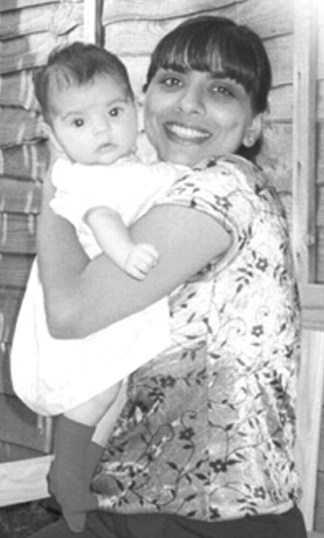
Daksha Emson was a young psychiatrist who had been diagnosed with Bipolar disorder when she was a teenager. When she got married, she wanted to have babies hence she stopped her medications.

She and her husband were lucky. They were blessed with a little girl in June 2000. They called her Freya. On the 9th of October 2000, Daksha ended two lives – her own and Freya’s.

The investigation report highlighted a few things :

– Failure of professionals to communicate effectively and to co-ordinate care appropriately contributed to the adverse outcome in this case – no liaison between psychiatry and obstetric services.

– Care Plan was not generated as she had informal consultations with her psychiatrist for fear of being stigmatised by her colleagues.

– A ‘Closed loop’ of care was not established for her. Although she had a Community Psychiatric nurse, she was not being closely monitored and links with other members of the multidisciplinary team were not established.

– The nature of Daksha’s illness could have been predicted if her ‘relapse signature’ (collection of warning signs) had been identified. It wasn’t.

Postnatal Depression continues to be a major cause of death of young mothers. Joanne Bingley Memorial Foundation does a good job of de-stigmatising it and raising awareness.

Same old tragedies. Same old themes.


Day 395

 Dr Andrew Curran,  a Paediatric neurologist, tells us about this about the adolescent brain –

Apparently the neurotransmitter Dopamine is responsible for many functions of the brain such as learning, unlearning and paying attention. Its levels are seriously low in Parkinson’s disease. So the brain cells are unable to fire impulses easily. On the other hand, stress can cause high levels of Dopamine causing too many brain cells to fire away randomly causing a chaotic state of mind. A phenomenon known as “Dopamine Surge’ takes place around the time of puberty. This is what causes young people to take high risk decisions with poor judgement. Nature has designed this so as to serve two purposes:

  1. Help them break free from the dependence on parents.
  2. Help them integrate with their peers by trial and error so that they can be successful adults.

This Dopamine Surge might also be the reason why Bipolar Disorder, Schizophrenia, Depression, Autistic spectrum disorders and addictions reveal themselves most commonly in this age bracket of adolescence/early adulthood.

A few years ago my son seemed exceptionally pleased when he came home from school one evening. It was at the height of winters and snow had been falling for a few days. “As I walked past a few boys throwing snow balls at passers by,” he said, ”one of the boys asked his friends if he should throw a snow ball at this ‘man’. They thought I was a man!” He beamed with joy.

He was my child-man. Couldn’t wait to grow up!

Day 389

This day last year, a memorial service was held for my son at the Great Hall of his former school. It was a deeply moving occasion, filled with love. More than 250 people attended. He earned more love in his 20 short years than some people do in a lifetime.

The Coroner’s inquest into the suicide of my son is still unfinished but as his mother and his prime carer here are a few facts.

  1. An Honorary Consultant Psychiatrist saw him 3 weeks into his illness and made a diagnosis of Bipolar Disorder.

Did he speak to any of the family members/carers about this diagnosis and what it might mean for us as a family?
No.
Did he send him home?
Yes.

  1. His GP was the only one who knew he was severely suicidal for at least 4 weeks before he died as he did not mention it to anyone else.

Did he tell any of the family members/carers?
No.
Did he send him home?
Yes.

  1. The handover from the psychiatric team to the GP should have highlighted the diagnosis.

Did the letter tell the GP about a new diagnosis of Bipolar Disorder?
No.
Did it tell him to watch out for depression?
No.

  1. The trainee psychiatrist who wrote the discharge letter to the GP must have seen my son at least once.

Had he?
No.

Am I surprised now that my son is dead?
No.
I am surprised that he lived for as long as he did. He followed every instruction he was given and took his medications religiously. He really wanted to get better.

He just didn’t get the care that he deserved, from the specialist services, primary care services or his parents. All of them failed to talk to each other in a way that would keep him safe.

In theory, the NICE guidelines say that carers should be given written and verbal information about the diagnosis and management of Bipolar Disorder, about positive outcomes and recovery and about the social and psychological support available for them. They encourage a ‘collaborative approach’ respecting the interdependence between the patient and their carers.

In practice, none of the above took place.

It was as if the existence of carers, in this case his parents, was not acknowledged. I felt that my concerns regarding his ill health fell on deaf ears.

I believe that unless families and carers are empowered with inclusion and information, young people will continue to die unnecessarily. Unless primary and secondary care services work in unison with each other and with the carers at home, patients will continue to fall through the gaps. This is not the first time it has happened but no lessons have been learnt.

I would not wish this nightmare on any family and I want to do everything I can to highlight the areas where we can improve care. Suicide is the biggest killer of young men all over the world and the numbers continue to rise every year. We as a community need to educate ourselves and help young people. We need to ask more questions. We need to demand better care for our children and other close relatives and friends.

Carers care. He was my only son. His well-being was on the top of my list of priorities. I had a right to know about his diagnosis and his suicidality in order to look after him properly.

He did not get to celebrate his twenty-first birthday.
I miss him every minute of everyday and I always will.

Day 382

UK has the highest rate of self-harm in Europe.
About 1 in 10 young people have self harmed.
It is nearly 3 times more common in women than men.
The highest number of calls made to Childline are from 12 year old kids self harming.
At least half the people who end their own lives have a history of self harm.
Around 200,000 episodes of self harm present to hospitals per year.
Many people who self harm do not seek help. Hence they are not reported or recorded.

What Self harm is not :

-Attention seeking behavior.
-Manipulative
-A selfish act
-Done for pleasure
-A group or sub-culture activity
-A copy-cat response

Why is it done?

A release or distraction from emotional distress.
An expression of anguish.
An act of survival – a way to postpone suicide.
A form of self-punishment for feeling ‘bad’ or ‘dirty’.
A way of feeling’in control’
To feel real or alive if they have been feeling numb.
Difficulties in problem-solving
Low self-esteem
Anxiety/Depression
Eating disorders
Difficulty coping with anger
Difficulty dealing with sexuality.

What to do if someone is found self-harming?

  • Stay with the young person and if necessary, take them to A&E.
  • Monitor closely
  • Use Strengths and Difficulties Questionnaire  to make a judgement on mental well being.
  • Ask about suicide
  • Administer first aid
  • Advise them to get help: GPs/Psychologists/Psychiatrists/CAMHS 
  • Introduce them to self-help strategies

What not to do:

  • Do not blame them or make them feel guilty
  • Take them seriously
  • Do not act shocked even if you are
  • Avoid panic or anger
  • Be patient. It can be very hard for them to talk about it.
  • Don’t dismiss them as manipulative / attention seeking.