Five times more likely.

Queer youth are five times more likely to die by suicide. I did not know that. I knew nothing about Andrea Gibson until after their death earlier this week from Ovarian Cancer. Every word they wrote throbbed with a cry against injustice. They were an activist for tenderness, a warrior for the human heart. I have spent most of today reading her poems and they sing to me. Gibson lived deeply and spoke candidly about moments when things got too much for them.

“When your heart is broken, you plant seeds in the cracks and pray for rain.”

“Just to be clear,” they wrote, “I don’t want to get out without a broken heart. I intend to leave this life so shattered there’s gonna have to be a thousand separate heavens for all of my flying parts.”

Respect!

Two overlapping worlds.

The Bhagavad Geeta addresses the ethical and moral dilemmas around the questions of who we are, how we should live our lives and act in this world. If this voluminous text was to be summarised in two sentences, they would be:

  1. Do what needs to be done, knowing that all actions come from God.
  2. Do not be attached to the results of your actions.

Six weeks ago, I re-entered the world of Suicide Prevention due to a presentation I agreed to make. It took me back to a familiar battleground where strong currents of injustice flowed through me. I went over our story yet again, in mind and body. It burnt me up. It made me restless and irritable. It kept me staring at the ceiling at night. It brought back the shit of guilt in big droppings. It was silly of me to agree to do it, but it was too late already. I wrote it down, prepared a set of PowerPoint slides to support the story.  I repeated it for the nth time to many. I wondered, to what end, but I did it anyway.

Four and a half years ago, when my road gradually swerved from the Suicide Prevention world towards peer support with other parents, it was like a cool breeze gently blowing in my face. That conversation felt like a proper invitation. Instinctively I knew it was good for me. Despite huge self-doubt, I trusted that path. I went with it. This work was also about preventing isolation and possibly suicide amongst parents, as our risk is 60-70% higher than others. It did not feel like work at all. We formed strong bonds of friendship. We shared deeply and held each other in understanding and compassion. This felt like home.  

The organisers at National Confidential Inquiry into Suicide and Safety in Mental Health provided me the best possible support to be able to present my thoughts. The comments on the chat were that of gratitude and inspiration to change. One person said that it was better than any training course they had attended. I am glad that I did what was needed. The strength to do it came from somewhere. Now, it can do its work and I can go back home.

The recording is here (‘Bridging the gaps’ starts 6 minutes and 45 seconds in).

Wrap-around?

“What can we do to offer wrap-around care to our patients?”

In the live Q&A at the end of the NCISH conference yesterday, this question was asked of the panel. The Chairperson directed it towards me. I can’t remember what I said. This morning I woke up with what I would have liked to say.

For wrapping, we need two things. One, the fabric which we are going to use to wrap and the person we want to wrap. Let’s discuss them one by one.

  1. The fabric

The fabric of Suicide prevention in Health-Care is made up of two things – people and systems. Let’s look at them a bit closely.

  1. People

What are the beliefs of the people?

I know of an ENT surgeon from another country who wanted to move to the UK and the only job he could find was in Psychiatry. So, he is now training to be a Psychiatrist. Is he interested in suicide prevention? Do Health-care professionals believe that suicides are preventable? Are they content that simply by treating mental illness they are doing their job?

What are the attitudes and abilities of the people?

When the Emergency department calls to say there is a suicidal individual waiting to be seen, how do they feel? Are they excited to have an opportunity to make a difference? Or is it a drain on the limited time and energy they have? Do they know how to build a compassionate connection with someone who has lost all hope? Have they received any training in Suicide Prevention? Do they have enough self-compassion to look after someone else well?

Do they have the resources and the knowledge to do a good job?

Do they have access to their past history? Do they have beds on the ward? Can they ask a colleague for a second opinion if they have a doubt about how to involve family or friends in their care? Do they know of other resources, like charities, activities and people that may help this person? Do they have comprehensive and informative leaflet they can share with them? Do they have the means to follow them up?

b. Systems

Does the system have capacity? Are the various parts of the system effective and joint-up enough to be able to hold the person they are trying to wrap or are there big holes in this part of the fabric? Do the various parts of the system share the same mental model, a shared knowledge, pre-suppositions, and beliefs that can be used to help achieve mutual goals? Are their practices evidence- based? Do they investigate deaths with a view to learn lessons and implement change? Do they look after the well-being and emotional health of their employees? Do they hold themselves accountable when things go wrong?

2. The person

Allowing space for them to express themselves. Help maintain their sense of agency. Inform them it is safer for them to involve other people who care for them. Equip them with resources. Give them the support they need. Ask them what would help them? Listen. Sit with their despair. Acknowledge it. Keep them connected with their life as they know it. Keep hope alive for them.

Know that the person at the centre of the wrapping is of great value.

Information is useful if it becomes knowledge. Knowledge is useful when it becomes wisdom. So, let us not stop at information.

Ref:

Reaching common ground: The role of shared mental models in patient safety : https://journals.sagepub.com/doi/full/10.1177/2516043518805326

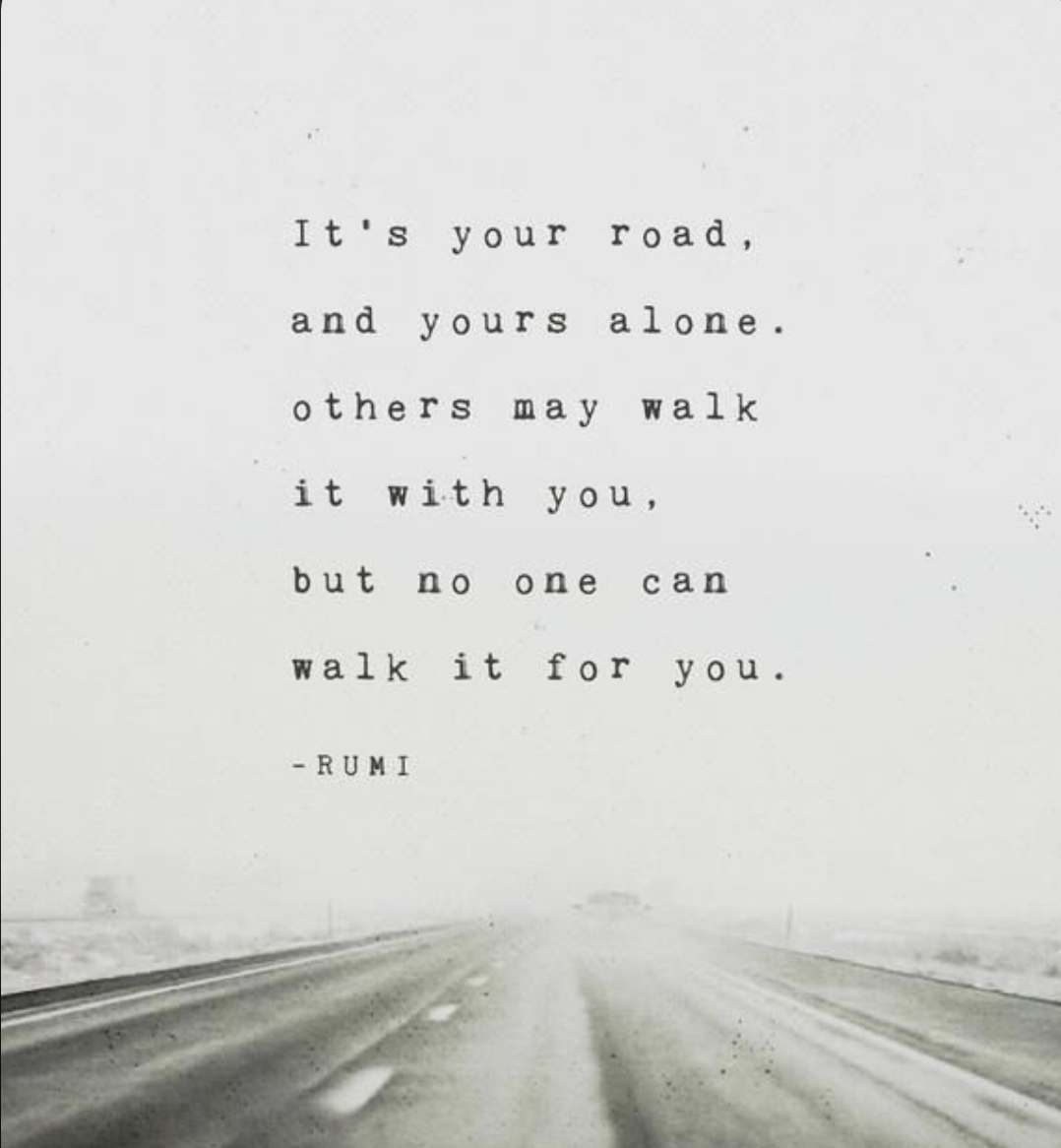
My road. And mine alone.

This is a village being a village. It has done me no wrong.

People are being people of all kinds and shapes and forms.

The mid-afternoon sun is being the sun, not an upstart.

Each one, a character in a story, playing its part.

Seeing them as villains and heros

is the naive mind assigning roles

To what is simply an Is-ness.

They are being them. They can’t be the other lot because they are not.

They have no will, no thought.

The stories that my mind makes up do. Yet, I hold them to be so so true.

I am learning they are not.

Gotta just walk.

I am the cause. I am the cause. I am the cause.

To know that the gaze of the Universe is me.

To be held within the fold of Here and Now of Divinity.

That’s all.

I wonder if that’s the journey.

To find me exactly where I started.

Completely new.

Let there be joy, peace and colour!

Mandalas draw me into their whorls. A casual glance is never enough. My gaze gets fixated on each one and I lose myself in the movement and the stillness in that form. The patterns seem to be spontaneous and well thought through, calm and dynamic, chaotic and yet, organised. The literal meaning of the word is, a sacred circle and it feels like one.

A random advert on YouTube and I was at the local stationery shop buying a geometry box. I needed a compass and a protractor for the Mandala Workshop I had signed up for. I was excited at the prospect of making one but also worried about making a mess of it. My artistic abilities are fairly limited but I am a good doodler. Many a lengthy-phone-call have produced intricate henna-esque patterns on the handiest bit of paper loitering on my table.

The first thing the facilitator said was, today you will draw your Universe. Don’t erase anything. There are no mistakes. You will see, everything has a place, even the so called ‘mistakes’. So, erase nothing. It’s not about producing a beautiful piece of art. It’s about the process. After making the grid, she had us light a candle and guided us through a grounding exercise. Then she played a mellow piano tune and asked us to start from the centre of the circle and work outwards with a black uniball pen. No rules. No meaning. No right. No wrong. No special colours or materials. Just allow whatever wants to appear on the page to appear.

She said this practice can heal us as it opens the heart, takes place in the moment and is non-judgemental. Watch your inner critic coming at you pointing its index finger. Ignore it and carry on. Smile 🙂