Poverty and the Mind

Vikram Patel is a psychiatrist and a Professor of Global Health who works tirelessly to improve the mental health of people living in low and middle income countries like India and Ethiopia.

His recent research has found that all countries are ‘developing’ countries when you look at the low proportion of the health-budget they spend on mental health. Some wealthy countries may have better systems of care for maternal and child health but overall, mental health remains universally, at the end of the queue.

At present, COVID has overtaken all other agendas. However, now more than ever before, there is a recognition of the two-way relationship between poverty and mental ill-health. This may be a historic opportunity to get this right.

The relationship between poverty and mental ill-health is a complex one. How can we distinguish a normal response to poverty from a disease process? Poverty can increase the risk of poor mental health via multiple pathways, for example, poor physical health, high levels of noise pollution, violent neighbourhoods, insecurity and humiliation.

Can an increase in income improve mental health? Yes. It can but it needs to be sustained.

The fact that having a mental illness may induce poverty is less well recognised. It may affect one’s education and hence, employment opportunities. In low and medium income countries, health care is paid for by people. Due to the length of time it takes to find an effective treatment, much effort and money is wasted in doctor-shopping. Depression is inequitably distributed in society but not recognised as such because wealthy individuals also get it. We accept that long term expensive therapies cannot be delivered to the poor, so what’s the point in studying them?

After nearly a year of job-losses, the number of people below the bread-line all over the world will increase by tens of millions. In India alone, the gains made in economic growth over the last decade are predicted to be wiped out this year. The historically disadvantaged will fare worse, suffer more.

We can expect a surge in mental health problems like we did after the 2008 global financial crisis, mainly led by suicide and drug misuse. Sir Angus S Deaton, a Nobel prize winning economist wrote extensively about these deaths of despair. Economists and global health experts warn that this one will possibly be far worse.

In India, while the state is spending all its energies on the pandemic, livelihood-based organisations are finding very poor mental health in their members. Taking a broad, multidisciplinary approach to depression and anxiety rather than viewing it through the lens of a medical specialty is the need of the hour. Policies all over the world need to de-medicalise the emphasis on specialists and empower front-line providers and communities to enable them to foresee, identify and address this problem.

The bi-directional relationship between mental health and finances means that appropriate mental health interventions can improve finances. Can we persuade policy-makers world-wide to listen to global health experts and economists, look at this fast-approaching  avalanche and steer policies to protect those who are being and will be hit by it?

Talk: Poverty and Depression (https://voxdev.org/topic/health-education/poverty-and-depression-how-improving-mental-health-can-help-economic-wellbeing) – this talk was available till last night but has since disappeared.

Research Papers:

  1. Angus Deaton on the Financial crisis and the well-being of Americans (June 2011):

https://www.nber.org/papers/w17128

2. Vikram Patel on Causal evidence and mechanisms of Poverty, Depression and Anxiety (May 2020):

https://www.nber.org/papers/w27157

Blue Rose

She was the colour of almonds. Her smile so bright, it made the sun shine. Her hair waist-length, wavy and a very dark brown, like a heavy veil down her back. Her petite frame, shy, smelt of sandalwood. She was only 19.

Her friends had rebellious red, pink and green highlights in their hair. Some had happy multi-coloured beads and braids woven in. Others had playful ribbons platted in, like flower-girls at hippie weddings. She sat on her aquamarine blue sofa with her laptop, peering through colour-charts. She wanted her hair dip-dyed. She hadn’t picked a colour yet.

It was going to cost a bit but her mum had agreed to pay for it. She often did.

When alone in her room, unable to sleep at 2 am, Rose had looked up Helium and what it does. She didn’t know why. It was an involuntary act. It was nonsensical. Her body and mind were no longer of her.

Her hair appointment was in a couple of hours. She had to decide now. It was important she got this right. It was an expensive decision. The staid Royal blue or the scintillating Moroccan Turquoise? Silky peacock blue or the majestic sapphire? She wanted a straight horizontal line to run right across the dark sheet of her hair. The bottom one-third of the length a startling shade of blue, like a designer curtain.

She played classical music on the violin. Her ears didn’t particularly savour the Blues. They jarred her. She didn’t have a taste for blueberries. She preferred the ‘rasp’ variety with big dollops of double cream. Her wardrobe was a smattering of whites, pinks and reds. No blues there either, except the denim jeans and shorts. She was a proper girlie-girl. Blue skies made her spirits soar. But they left blue stains on her heart. She hid them like children hide pretty pebbles in corners of drawers. Her smile kept feeding the sun through the blueness.

She hand-wrote letters to the people she shared the house with, in blue ink. To her mother she said how wonderful a mum she was and she should take better care of herself. To her sister she expressed her appreciation for her companionship, friendship and laughter. Her little brother never left her side. She never turned down his invitation to play any kind of silly game with him. The dogs were all hers. They didn’t know they weighed as much as her. She had to sit down when they clambered all over her saying ‘we love you’.

The blue stains on her heart were expanding like drops of ink drip-dripping on a white blotting paper. She knew it was happening but didn’t know what it was. It’s creepiness had no name. It made her want to escape. It compelled her thoughts to convince her that her deepest desire was to implode. She had no say in the matter. It made her hands look up Helium on the internet. It kept her eyes wide open at night. It made her tummy churn, her legs restless and her head hurt. She now had 2 hearts and she moved between them. One blue. The other not. One wanting out. The other wanting blue hair.

“I am finding this difficult Mum.”

‘We need to leave in about 20 minutes for the hair-dressers my darling.’

“Yes. I am thinking about it … looking up the options on the internet.”

‘Good idea. We can take your laptop with us. I am sure the hair-dressers will have some ideas for you. Don’t worry.’

“I have some ideas but haven’t decided yet.”

‘Take your time. No rush.’

Midnight blue was the final choice. She was happy.

Over the next year that wretched blue embedded deeper into her heart and from there, leached into every cell of her body. Then it burst out, released itself and merged back into the midnight, the sky, the ocean.

That was 5 years ago. Till this day, her mother’s mind twists into painful knots when she remembers that day. How could her lovely Rose have wanted to live with blue hair and at the same time, to not live at all? At nineteen! How?

No one knows. Sometimes it’s like that.

———————————–

A video for every parent: https://www.youtube.com/watch?v=3BByqa7bhto

The man who loved yellow.

He dropped out of the security of an Engineering Course to enrol into the futility of a dance school. He carved his way through sheer hard work from a humble home in the north-east of India to the flashing lights at the heart of Bollywood. He personified simplicity. He had no god-fathers in this brutal industry known for its nepotism and ruthlessness. He stood on the sheer credibility of his talent.

Stars, moons and aliens took up a lot of space in his head. He spent hours on his beloved telescope which he called his ‘time-machine’.  He made new friends, kept old ones and his humility through the fame and the wealth of stardom. He stayed true to himself and his name which meant ‘Peaceful’.

His charm and talent won hearts all around. His youthful portrayal of his love of cricket came through in his films ‘KaiPoChe’ and “M.S Dhoni, the untold story“. But the media gave him a hard time as they saw him as an outsider. Of journalists he said, “First they’ll ignore you, then they’ll laugh at you and then they’ll fight with you. Right now, they’re laughing at me.”

Not anymore. Bollywood is in a state of shock. On the 14th of June 2020 Sushant Singh Rajput ended his life at the age of 34. It seems he had been on treatment for depression for the past 6 months. Police is frantically interviewing multiple people to establish a ‘cause’ for his death.  

Film contracts falling through? Not enough new offers of interesting roles? Disparaging remarks made by influential bitchy colleagues? Being bullied and ignored? Financial difficulties? A painful break-up? The death of his mother at the age of 16? The death of his young manager, Disha Salian 3 days prior to his? Unmet parental expectations? Inadequate treatment for Depression? Migration away from home? Loneliness? Stigma of having a mental illness? Not knowing how to ask for help? Being a man?

All of the above.  

RIP Sushant.

PS: India has the highest suicide rate in South-east Asia: 16.5 suicides per 100,000 people

A life sentence.

The best part of being human is to be able to feel stuff. All kinds of stuff. The world seems to be forever in pursuit of happiness in more money, more holidays, more clothes, more children and so on. The elusive ‘happiness’ is put on hold until the ‘more’ arrives, soon to be followed by more ‘more’.

In a week, it will be 3 years since Saagar died. For days I have been feeling this day approaching like a huge oil tanker which is going to squash my dinky little boat. This inauspicious day should be removed from all calendars everywhere for all the years ahead. It should be obliterated, erased, deleted and destroyed.

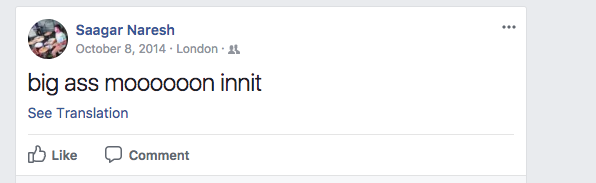
I think back on this time three years ago, trying to understand how Saagar must have felt. I try to find words for the thoughts and feeling that he could not verbalise. I lament the fact that no one could read his body language. I admire him for coping with his state of mind with patience and dignity. I look at his face-book post from this night. It was a full moon. He said ‘big ass moooooon innit”. I marvel at his ability to appreciate beauty. I remember how funny he was. I get a smile on my face. I promise myself never to take one moment of those 20 years for granted. Each of them was a blessing. Yes. It’s true that this feels like a life-sentence sometimes. Yet, I know I am blessed.

Screen Shot 2017-10-08 at 23.46.06

“The so-called ‘psychotically depressed’ person who tries to kill herself doesn’t do so out of quote ‘hopelessness’ or any abstract conviction that life’s assets and debits do not square. And surely not because death seems suddenly appealing. The person in whom Its invisible agony reaches a certain unendurable level will kill herself the same way a trapped person will eventually jump from the window of a burning high-rise. Make no mistake about people who leap from burning windows. Their terror of falling from a great height is still just as great as it would be for you or me standing speculatively at the same window just checking out the view; i.e. the fear of falling remains a constant. The variable here is the other terror, the fire’s flames: when the flames get close enough, falling to death becomes the slightly less terrible of two terrors. It’s not desiring the fall; it’s terror of the flames. And yet nobody down on the sidewalk, looking up and yelling ‘Don’t!’ and ‘Hang on!’, can understand the jump. Not really. You’d have to have personally been trapped and felt flames to really understand a terror way beyond falling.”
― David Foster Wallace


Day 993

Ruth

churchhealing

Broken glass

“You are well enough to safely go home now”, said the panel.
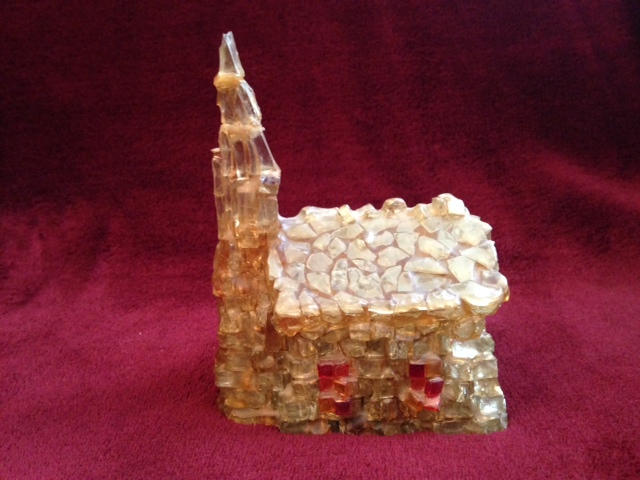
“But I can’t! I need one more day to complete my church!”, said Di, who was being treated at Bexley hospital for Postnatal Depression in 1966. She had a brilliant occupational therapist who took them to the swimming pool, organised hair-dressing days and helped patients to make things. Di made a church with bits of shattered wind-screen glass, put together with resin but the spire wasn’t on yet. This beautifully tactile piece of art was named ‘Faith’ by Ruth, her daughter.

Ruth

Ruth was a talented young lawyer. She was an actor and singer. She was kind, generous and gorgeous! She travelled extensively. She was diagnosed with Bipolar Disorder in her late 20s. She coped well with the help of health services, her friends and family but tragically lost her battle at the age of 47.

Di is in her second year of missing Ruth terribly. She has created the most beautiful garden in her memory. Some of the plants there are from Ruth’s house. Her mediterranean wall is stunning.

Mediterraneanwall

Being bereaved by suicide is a huge risk factor for suicide. Around 125 youth suicides a year occur soon after the person involved has experienced a bereavement. One in four (25%) of under-20s and 28% of 20 to 24-year-olds had lost a relative, partner, friend or acquaintance around a year or more beforehand. In 11% of suicides among under-20s, the person who those involved had lost had also taken their own life.

In a recent inquiry, bereavement was found to be an important theme in many deaths, said Prof Louis Appleby, the director.

People who have been bereaved need greater support to reduce the risk of them killing themselves. Agencies who are meant to help are not good at recognising this risk and need to improve.

This morning I caught up with Di over a cup of tea. We both believe that if Saagar and Ruth have met each other wherever they are, they must get on famously. The link below is a conversation with Di. She talks about her insights on mental health services over 5 decades. Thanks a lot Di!