Day 640


dahlarexf1_1692375c

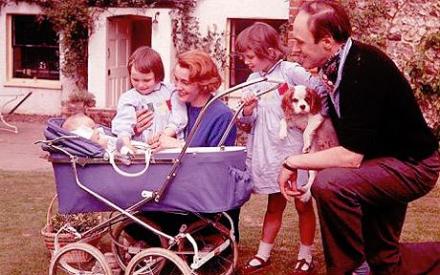
In 1960 Roald Dahl’s son Theo developed hydrocephalus (fluid collection in the brain) following a road accident. He needed repeated surgeries to drain the fluid through a thin tube (shunt) away from his brain. The problem was that the shunts repeatedly got blocked.

Dahl knew Stanley Wade, an expert in precision hydraulic engineering from their shared hobby of flying model aircrafts. In 1960 a team formed by Wade, neurosurgeon Kenneth Till and Dahl invented a new valve with a negligible risk of blockage. By the time the device was perfected, Theo had healed to the point at which it was not necessary for him. However, several thousand other children around the world benefited from the WDT valve before medical technology progressed beyond it.

His daughter Olivia died of measles at the age of seven in 1962. Her death destroyed him. Many years later he spoke of his lack of fear of death, “If Olivia can do it, so can I.”

Roald Dahl believed in taking practical steps to improve the lives of those around him. He generously gave his time and money to help seriously ill children and their families, including many he never met. Roald Dahl’s Marvellous Children’s Charity helps to make life better for seriously ill children and young people in the UK.

The charity believes that every child has the right to a more marvellous life, no matter how ill they are, or short their life may be. They focus upon helping those who have the biggest needs, and who aren’t being fully supported by anybody else. This might be because they have a serious rare condition, be living in poverty, or not have any family at all.

2016 marks 100 years since the birth of Roald Dahl, an extraordinary storyteller, a pilot, a spy, an inventor and most of all, a father.

imgres

Day 631

Kamikaze” is a word that has become synonymous with all that is crazy, fanatical and self-destructive. It literally means ‘divine wind’. Kamikaze aircraft were essentially pilot-guided explosive missiles, purpose-built or converted from conventional aircraft. In the second world war young Japanese pilots would attempt to crash their aircraft into enemy ships in what was called a ‘body attack’.

“Dear mother, my one regret is I could not do more for you before I die. But to die as a fighter for the emperor is an honour. Please do not feel sad.” A lot of letters had been written in this vein. They appear to confirm the view that a whole generation of Japanese men had been brainwashed into self-abnegation and blind obedience to the Emperor.

Young school girls bid farewell to the departing kamikaze pilots with cherry blossom branches:

Chiran_high_school_girls_wave_kamikaze_pilot

0e0df84b-fe4f-4af5-beb6-ef91be53d5bf

‘Honour’ is an abstract concept entailing a perceived quality of worthiness and respectability that affects both the social standing and the self-evaluation of an individual or an organisation such as a family, school or nation. Young minds can be moulded into believing that dying is a good idea. It has been happening for many years and continues to carry on through many generations in various parts of the world for one reason or another.


Day 619

photo

An entire family of doctors, some of them psychiatrists, with 2 young men in the family who live with a mental illness, all get together every year and talk about everything except the illness. They often speak on the phone to each other about all kinds of things but never about the illness. There just isn’t the space for that specific topic. This happens with ‘educated’ families.

A highly qualified mental health professional who specialises in children and adolescents is someone I have known for years and is very close to our family. When Saagar was ill, I wrote an e-mail asking for help but there wasn’t as much as a phone-call to find out what the problem was. In this age of Facetime, Skype, Viber, Whatsapp and what not, the means of communication couldn’t have been a barrier.

What are the barriers? Is mere talking about it too uncomfortable? Is it too much responsibility to take on? Is it too difficult to accept that the problem exists in such close proxomity? Is it too scary? Is it shameful?

I just googled ‘Stigma’ and this came up on top:

“stigma
ˈstɪɡmə/
noun

  1. a mark of disgrace associated with a particular circumstance, quality, or person.

“the stigma of mental disorder”
synonyms:        shame, disgrace, dishonour; More

  1. (in Christian tradition) marks corresponding to those left on Christ’s body by the Crucifixion, said to have been impressed by divine favour on the bodies of St Francis of Assisi and others.”

This is the society we live in. It is ours to keep or change. EP, my 81 years old friend is also a doctor. She lost her son to a mental illness in 1993 and has been working tirelessly for the last 23 years on the medical community to address this problem of stigma. She doesn’t use the internet but her beautifully hand written letter says:

“Not to give up is the first task. To support each other is the next priority.”

Day 591

The Manchester Report on Suicides in Children and young people in the UK published earlier this month states that 201 people aged between 10 and 19 killed themselves in 2014 in the UK, up from 179 in 2013 by 12%. The ONS (Office of National Statistics) figures suggest that student suicides have risen to their highest level since 2007.

The BBC reported a synopsis of the report, highlighting that this is the first time experts have studied the contributory factors on this scale. Their findings showed:

  • 36% had a physical health condition such as acne or asthma
  • 29% were facing exams or exam results; four died on an exam day or the day after
  • 28% had been bereaved
  • 22% had been bullied, mostly face to face.

The study also found that 23% had used the internet in relation to suicide – including searching for methods or posting suicidal thoughts.

“I think the numbers are the tip of the iceberg,” says Ged Flynn, chief executive of Papyrus, an anti-suicide charity. “I think the pressure on young people in increasing. Peer pressure – from family, teachers and friends – has always been there, but it does seem to be increasing. And the need to be liked, the need to be popular, the need to be happy, is fairly universal. And it’s unrealistic.” Hopeline UK, has seen a large rise in contacts from young people and parents in recent years, quadrupling since 2013. It says that most of the calls, texts and emails it receives relate to exam stresses.

This little news clip from 5 News summarises the findings. Of the 20 minutes they interviewed me for, about 20 seconds was telecast. Of the 3 warning signs I mentioned, only 1 was included. Well. I suppose something is better than nothing. At least they are talking about it.


Day 567

In an office in the City, it’s time for the annual appraisal. The young man in question is a graduate trainee, about 22 years old. He is not considered quite up to the mark. His very sweet and steady girlfriend broke up with him by text out of the blue one day and it took him as long as 2 weeks to gather himself back together again. A definite cause for concern! Is his sensitive temperament suited to a career in the City?

Angad Paul, a 45 year old businessman killed himself in November 2015 while the balance of his mind was disturbed. Months prior to that his steel business, Caparo industries went into administration as a result of economic forces well beyond his control but he somehow held himself responsible.

As per an article in the Financial times on 2nd May titled “Taboo over executives’ mental health issues needs to be challenged” by Jonathan Guthrie, senior executives at the apex of an organisation can feel tremendous strain from their isolated positions. In addition, depression and burnout can result from lack of control. However, they are ‘desperately afraid’ that people will know that they have a problem. Stigma everywhere.

However, in 2011 Mr Horta-Osorio, Chief Executive of Lloyds bank went on sick leave after 5 days of insomnia. After a couple of months of rest and medication he came back to steer the bank through an exceptionally difficult phase. 4 years on, he is still in the job.

Stigma gets in the way of sufferers asking for help. It is a huge obstacle to overcome but so worth doing.