Day 753

Standing in the queue at the airport, waiting to board the plane to Belfast, listening to people speak in the norn-irish accent brought back a flood of mixed feelings – nostalgia, heart-warming familiarity, sweet self depricating humour, anger at the bullying that Saagar would have suffered in primary school in the same accent, relief at not having to hear that accent too often, a deep sense of loss at the thought of the mimicry that Saagar often did in an exaggerated accent saying “I’ll do yur windies in.”

On the plane it was a refreshing change when the gentleman sitting next to me actually wanted to speak to me. He was warm and friendly and told me all about his job and family and asked me about mine. I decided to pretend that Saagar was alive and I did. The kind man said, ”So, he has a twinkle in his eye for his wee Mum.” I smiled. For a few moments I believed it myself. It felt good.

Nothing is all good or all bad. No one is all good or all bad. We are a miniature version of the macrocosm. Opposite values and contradictions reside in each of us, finding expression at different times in different ways. Being aware of them is all I can do. Observing myself. Learning.



Day 738

It’s Halloween or All Hallow’s Eve, a feast of all saints and all souls.
This morning ‘Thought for the day’ on Radio 4 was delivered by Professor Tina Beattie :
“ ‘Death,’ said Hamlet, ‘is an undiscovered country from whose bourn no traveller returns.’ These holy days seek to bridge the abyss between the live and the dead. Through rituals and imagination they are intended to assure us that those who have died are not beyond our companionship and our prayers.

No tradition can survive unless it is relevant to people’s everyday messy lives and gives meaning to their deepest struggles, sorrows and hopes. Death is the most sorrowful and messy reality of all. It’s a universal truth and the most impenetrable of mysteries.

As a culture we have been alienated from the power of hope to reconcile us to the helplessness and despair we feel when confronted by death. This feast brings us into communion with the dead, not to frighten us but to console. These feasts are an invitation to see what it means to be mortal and to seek reassurance that terrifying though death is, it is not the end. Love is more powerful than death and life, not death, will have the last word.”

2 meetings around Saagar today : one about the future and one about the past. Both called for reliving, retelling, revisiting the circumstances of his tragic death. It was too much! Lesson : plan only one meeting a day. Be kind to yourself.
That I survived the day is proof that love is more powerful than death and life, not death, will have the last word.

Day 737

There is scientific evidence to support that a particular intervention benefits the following conditions:

  • Lung function in asthma
  • Disease severity in rheumatoid arthritis
  • Pain and physical health in cancer
  • Immune response in HIV infection
  • Hospitalisations for cystic fibrosis
  • Pain intensity in women with chronic pelvic pain
  • Sleep-onset latency in poor sleepers
  • Post-operative course

That particular intervention is – Expressive writing.

The body of literature that demonstrates beneficial effects of expressive writing has been growing over the past 30 years. One of the earliest studies conducted by Pennebaker and Beall in 1986 compared 2 groups of students. Both groups were asked to write for 15 minutes on 4 consecutive days. One group put down their thoughts and feelings about the most traumatic or upsetting event of their life while the other wrote about something trivial, like their shoes or room. The first group self reported fewer visits to the Health Centre and fewer days off due to illness for up to 6 months after the writing exercise, as compared to the second group.

Meta-analyses show that while the improvement in physical health is clear, the results for psychological health are mixed. For a small group of trauma survivors, writing was even found to be detrimental. Although further research is required to clarify populations for whom writing is clearly effective, there is sufficient evidence for clinicians to use expressive writing in therapeutic settings with caution. Indeed, some experts noted that a drug intervention reporting medium effect sizes similar to those found for expressive writing would be regarded as a major medical advance.

(Source: http://apt.rcpsych.org/content/11/5/338 ; http://healthland.time.com/2013/07/13/how-writing-heals-wounds-of-both-the-mind-and-body/)

For me, writing is life-saving. It gives me a reason to get through the day. It gives my days a focal point inseparable from my love for Saagar. It gives me the strength to carry on. It is the thread that connects so many of us in a beautiful mesh. It helps me discover the joy of writing and the pain of expressing true emotion. It forces me to confront reality, however horrible. It gives me a sense of control over my life, however false. It is my daily meditation, my refuge, my ritual, my learning. I write to heal. I write to write.

Thank you for entertaining the ramblings of an old woman.

Day 736

img_0326

Happy Diwali!
Time to create, invite and celebrate light.

On this auspicious day we lit seven oil lamps, one for each continent, for peace for all people all over the world.

“Loka Samasta Sukhino Bhavantu”

“May all beings everywhere be happy and free, and may the thoughts, words, and actions of my own life contribute in some way to that happiness and to that freedom for all”

This beautiful mantra reminds us that we are not separate and independent beings. We are inter-connected with all living beings in the universe. We cannot achieve true happiness if we cause unhappiness to others, nor can we be free if we deprive others of their freedom.

It is possible that earth is the only unique planet with ‘intelligent’ life on it, in many galaxies. Yet we have managed to sap this gorgeous globe into material and moral poverty. We are at the brink of World War 3 with a real threat of another nuclear explosion in the near future. Despite enough resources, our greed kills many of hunger, violence and deprivation. Instead of breaking down barriers we create new dividing walls everyday.

This mantra of non-violence is also for all world leaders.

Loka Samasta Sukhino Bhavantu!

Day 735

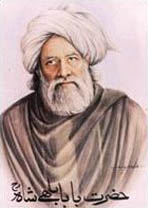
bullehshah

Why do we turn to other people’s words when we are in a difficult place?

Possibly because we can’t find the words ourselves. It is comforting to hear our experience reflected in someone else. It also helps us find the balance between our intellectual and emotional centres.

Sufi poetry has enamoured me for a long time. It takes me to a place beyond all kinds of man-made walls and makes me feel one with myself and all humanity. It makes higher knowledge more easily accessible while bringing great pleasure and peace.

Rumi and Bulla Shah are two of my favourites.

Bulla, I know not who I am?

Nor am I a believer of the mosque,
Nor am I in rituals of the infidel
Nor am I the pure inside the impure.

Nor am I inherent in the Vedas,
Nor am I present in intoxicants.
Nor am I lost nor the corrupt.

Nor am I union, nor grief,
Nor am I intrinsic in the pure/impure
Nor am I of water, nor of land.

Nor am I fire nor air.
Bulla! I know not who I am

Nor am I Arabic, nor from Lahore,
Nor am I the Indian city of Nagour.
Nor hindu or a turk from Peshawar.

Nor did I create differences of faith,
Nor did I create Adam and Eve
Nor did I name my self.

Beginning or end, I just know the self,
Do not acknowledge duality.
There’s none wise than I.

Who is this Bulla Shah?
Bulla! I know not who I am.

Nor am I Moses, nor Pharoah
Nor am I fire nor wind.
I do not stay in Nadaun city. (City of innocents)
Bullashah, who is this man standing?

Bulla! I know not who I am
Bulla! I know not who I am.

Bulleh Shah, 1680-1757, a Punjabi humanist, philosopher and poet.