Day 781

search

She is a Professor of Psychiatry at the Johns Hopkins University. She is an international authority on Manic-depressive illness. She writes about her own struggles with the illness since her adolescence. She recounts the slow and painful mastering of her illness through knowledge, courage, medication, self-discipline and the power of love. Her work has helped save countless lives. An excerpt:

“At this point in my existence, I cannot imagine leading a normal life without both taking lithium and having had benefit of psychotherapy. Lithium prevents my seductive but disastrous highs, diminishes my depressions, clears out the wool and webbing from my disordered thinking, slows me down, gentles me out, keeps me from running my career and relationships, keeps me out of a hospital, alive, and makes psychotherapy possible.

But ineffably, psychotherapy heals. It makes some sense of the confusion, reigns in the terrifying thoughts and feelings, returns some control and hope and possibility of learning from it all. Pills cannot, do not, ease one back into reality; they only bring one back headlong, careening and faster than can be endured at times. Psychotherapy is a sanctuary; it is a battleground; it is a place I have been psychotic, neurotic, elated, confused and despairing beyond belief. But always, it is where I have believed-or have learned to believe-that I might someday be able to contend with all of this.

No pill can help me deal with the problem of not wanting to take pills; likewise, no amount of psychotherapy alone can prevent my manias and depressions. I need both. It is an odd thing, owing life to pills, one’s own quirks and tenacities, and this unique, strange and ultimately profound relationship called psychotherapy.”

  • from ‘An Unquiet Mind’ by Kay Redfield Jamison.

9862b50668aa8a24d5f2fa87d7832d82-1

Day 779

Psilocybin is the active hallucinogenic compound in ‘magic mushrooms’. It was banned in the 1960s but recent preliminary research has shown that it may have potentially beneficial effects in patients with anxiety and depression. The subjects for this research were cancer patients, 40-50% of whom will have a diagnosis of anxiety and/or depression.

A team at Johns Hopkins in Baltimore conducted studies where patients were randomly administered the drug or a placebo. They were then encouraged to focus on their internal experience. Those who received Psilocybin had a significant improvement in depression, anxiety and mood disturbances. They also showed a higher level of optimism, a better quality of life and acceptance of death.

The main feature of the experience was a feeling that everything is connected. People felt they’ve learnt something that is of deep meaning. It caused a change in their value systems, in how they approach life and interact with other people. Some patients described the experience as a spiritual awakening.

The single feeling of connectedness with everything is the key to well-being. Many spiritual practices aim to manifest this feeling of oneness with all creation. My beloved spiritual leader Sri Sri Ravi Shankar says, ‘From somebody become nobody and from nobody become everybody.’

Ref:https://www.drugs.com/news/magic-mushroom-compound-triggered-positive-personality-change-study-33958.html (ps: This study is far from conclusive and does not wish to encourage the use of hallucinogens. )

Day 739

What do the following TV serials have in common?

I love Lucy.
Sesame Street.
Seinfeld
Different Strokes
Mad about you
Friends
Will and Grace
Sex and the City

All very popular. All featuring happy, funny, quirky characters. All based in New York City.
It seems NYC is not such a happy place after all.

– At least one in five adult New Yorkers is likely to experience a mental health disorder in any given year.
– 8% of NYC public high school students report attempting suicide.
– Consequences of substance misuse are among the leading causes of premature death in every neighbourhood in New York City
– Each year, 1,800 deaths and upwards of 70,000 emergency room visits among adults aged 18 to 64 can be attributed to alcohol use.
– 73,000 New York City public high school students report feeling sad or hopeless each month
– Approximately 8% of adult New Yorkers experience symptoms of depression each year
– Major depressive disorder is the single greatest source of disability in NYC
– At any given time over half a million adult New Yorkers are estimated to have depression, yet less than 40% report receiving care for it.
– There are $14 billion in estimated annual productivity losses in New York City tied to depression and substance misuse.
– Unintentional drug overdose deaths outnumber both homicide and motor vehicle fatalities.
– The stigma of mental illness has been found to have serious negative effects on hope and an individual’s sense of self-esteem. Stigma also increases the severity of psychiatric symptoms and decreases treatment adherence.

The First lady of NYC, Ms Chirlane McCray recognised this as matter of public health in crisis and launched a bold initiative last year in order to tackle it. It cost nearly a billion dollars. It is called Thrive NYC (http://www1.nyc.gov/assets/home/downloads/pdf/press-releases/2015/thriveNYC_white_paper.pdf). It relies heavily on peer counsellors, who are not mental health professionals but are already entrenched in underserved communities. One of its main objectives is to address the stigma associated with mental illness. The plan is aggressively ambitious, attempting to make life easier for New Yorkers in every community and of every age.

I hear the Mayoral office in London is making plans of a similar nature. Can’t wait to hear more. It’s about time!

Source:


Day 727

aberfan_cemetery_geograph-3377917-by-stephen-mckay

We got the TV installed just before my parents came to stay for a few weeks. We hardly ever watch it. This evening I happened to switch it on as I was alone at home. I watched a film on the Aberfan disaster, a catastrophic collapse of a coal mine spoil tip in a small Welsh village. This occured in October 50 years ago and claimed the lives of 116 primary school kids. One of the snippets showed the utter chaos of it and mothers standing in a long row, passing rubble and bricks away from the disaster site. The mums, now in their 70s and 80s choked up while relating the experience and shared the pictures and sweet little belongings of their kids. They also remembered the great difficulty they had in surviving this immense loss. They wondered what their wee ones would be like as grown ups. They would be in their 50s now!

Wow! What must that be like!

It’s strange that while I actively seek out programmes on mental health related issues and thus manage my deep sense of loss, when I am not seeking anything out, the radio, TV or life bring me face to face with it.

12th of October 2014 was a Sunday. Diwali, the festival of lights was less than 2 weeks away. Diwali signifies joy, love, reflection, resolution and knowledge and represents victory of good over evil and light over darkness. The annual Diwali Mela was being celebrated at Trafalgar Square. Saagar and I went along to that and ran into a photographer friend who took a few pictures.

I had no idea that those would be our last pictures together. Was I in darkness then and now I am in light? Or was I in light then and now I am in darkness? I don’t know.

img_74161

This is one of those pictures. This is what a terminally ill person looks like.

With all due respect to parents whose kids have suffered cancer, I sometimes wish Saagar had cancer. It would have been taken seriously and looked after by specialists. I would have been given some facts, figures and things to watch out for. I would have had a chance to tell him how much I love him. I would have had a chance to say good-bye.

Day 712

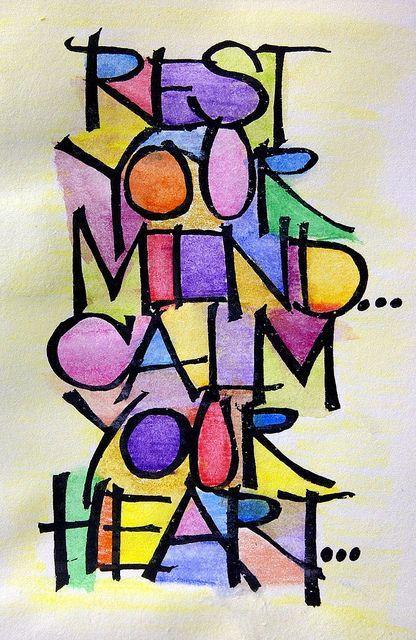
rest-your-mind-calm-our-heart-quote-1

I long suspected that doing nothing was under-rated. I could do ‘doing nothing’ for hours, given a chance. Psychologists now believe that ‘doing nothing’ is in fact a positively restful activity. Day-dreaming is good for us and letting one’s mind wander is healthy.

Rest and doing nothing –same thing?
Rest and relaxation – same thing?
Rest and laziness – same thing?
Rest and ‘not at work’ – same thing?
Rest and lying in bed –same thing?

The Rest Test is a survey taken by the ‘old people’s ‘ radio – BBC Radio 4 to look into various aspects of rest. In the fast paced lives of today where each one of our free moments can potentially be invaded and claimed by phone calls, e-mails, face-book, texts and tweets, this survey is well timed.

It is the largest of its kind with 18,000 people from 134 countries participating in it.

What did it find?

More than 70% believe they need more rest than they get.
(http://www.bbc.co.uk/programmes/articles/5GF8npkXxpp4z0KBqGx2pl7/the-ten-most-restful-activities)

The most restful activities are: reading, being with nature, being on your own, listening to music, doing nothing, having a bath or shower, walking or exercising, day-dreaming, watching TV and meditating or practicing mindfulness.

All of the above are true for me but breathing consciously tops the list. Being with my breath keeps me connected to ‘right here right now’, to my ‘self’ and my sanity. The breath is a free resource. About 10 years ago I learnt to use it as a source of energy and calm at the same time. (http://www.artofliving.org/us-en/research-sudarshan-kriya) I experience deep rest through breathing exercises and meditation. 

Rest is often the unwritten part of a doctor’s prescription for various stress-related disorders. It is vital for our well-being.

Here’s a poem from the programme:

I expect you might at some point tonight
Beneath the sheets before sleep
Still reeling from the flaming lights
Want or more likely seek

Rest.

There’s no manifesto in this
No snake like lists of things to do
There’s no tomorrow either
There’s poetry as ever and YOU.