Day 673

stress

The stress vulnerability model was proposed by Zubin and Spring (1977). It proposes that an individual has unique biological, psychological and social elements. These elements include strengths and vulnerabilities for dealing with stress.

In the diagram above person “a” has a very low vulnerability and consequently can withstand a huge amount of stress, however solitary confinement may stress the person so much that they experience psychotic symptoms. This is seen as a “normal” reaction. Person “b” in the diagram has a higher vulnerability, due to genetic predisposition for example. Person “c” also has genetic loading but also suffered the loss of mother before the age of 11 and was traumatically abused. Therefore persons “a” and “b” take more stress to become “ill”.

This model is obviously simplistic. However it does help with the understanding of psychosis. Vulnerability is not a judgmental term but a different way to approach the variables involved. We all have a different capacity to take on stress depending on how vulnerable we are. At different times in our lives we can be anywhere on the curve, depending on these variables. 
Increasing coping skills or altering environmental factors (family, work, finance, housing etc.) and specialist help can reduce vulnerability and build resilience. Attending a peer group may help to build self-efficacy, self-esteem and self-acceptance all of which may be protective against relapse and form a buffer to demoralisation. It gives hope!
Day 670

One blue ankle sock, two rolls of string- one open and the other sealed, one fine-tipped black sharpie pen, one portable cycle pump, one drum stick, three beer bottle caps – one Carlsberg and two Desperados, one black bow-tie, one black wallet with an ID and a few receipts from a college bar, a paperback in French by Jacques Godbout called ‘Salut Galarneau!’, an English translation of an Egyptian book called ‘Maze of Justice : Diary of a Country Prosecutor’ by Tawfik Al-Hakim and a hardback black journal partly covered in his hand-writing and a purple hair colour spray.

And the smell of old things.

These things were unearthed from the bottom of his cymbal bags today just before I was about to give them away to his friend and drum teacher who he had great admiration for. Each one of these things was a thread from different stories from various parts of his life. I couldn’t remember them all but these were familiar things – real but distant. Seeing all these random things on the table, I felt he was here, reaching out to me. They encapsulated him so utterly completely and beautifully. He felt heart-breakingly close.

I want to ask him to remind me the things I am forgetting. Please. Remind me. Please.

Day 669

“It’s the small steps that walk us through this.

It’s the knockdown with the ability to stand.

We may be very shaken after our fall, but we stand in pride for those we loved, that ended it all.

It’s the counting of days, weeks and years we focus on; but we must count the days, weeks and years that they lived.

We can’t forget the time they did live, for that is why we loved them enough to have this pain of ours.

Their leaving moment does not outweigh their living moments. We grieve for many reasons: we grieve for their pain and our loss. Celebrating their life was longer than that moment of passing. Which shall I dwell upon? Their life, their living, their happiness, their achievements… that is where I should dwell. Imagine all the time they carried their pain and their force to live through it. That will never be trumped by their moment of death, for we are still here to stand for their namesake. Their name was never suicide and it should never be that way. Carry them with you no matter how heavily it weighs you down. You are their storyteller now.”

– SNY

Day 667

4221396001_4144985290001_CC

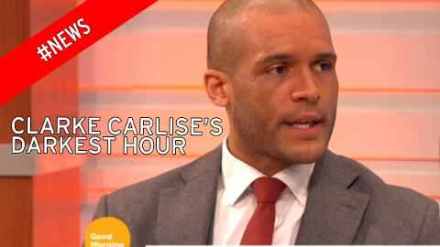
Clarke Carlisle, a former footballer speaks openly about his experience of depression and two failed suicide attempts. His honesty comes through very clearly in this film titled:

‘The Silence of Suicide’
(https://www.youtube.com/watch?v=f86rz60Jcso&feature=youtu.be)

As he speaks, it breaks my heart to watch the tears roll down this handsome young man’s cheeks. I admire him for normalising vulnerability. He shares how depression makes one believe that everyone would be better off without them. He thinks that the stigma associated with suicide comes from the ‘mystery’ associated with the condition. Those left behind search within themselves and ask many questions but there are no answers. It is impossible to not personalise it. That makes it very hard for us to talk about it as individuals. Because it is so hard to speak about suicide for us as individuals, it is the same for us as a society. But it is essential and urgent for us all to talk about suicide. It is of paramount importance.

How can we encourage people to do this?

By ‘normalising’ it.
Statistics say that 1 in 4 people suffer from mental ill-health. However this may be a gross underestimation as many people are not very aware of how they feel. They may not really know and recognise their feelings.

His advice for anyone who might be thinking of ending their life is – Tell someone. Tell anyone. Once you do that, the power of that thought over you diminishes.

Day 661

Recently, there has been heaps and heaps of bad news from all around the world. The planet seems to be engulfed in hatred and tragedy of one sort or another. The terror attacks in Istanbul, Baghdad, Nice, Saint-Etienne-du-Rouvray, Germany and Japan, the horrific and unending war in Syria spilling over into other middle eastern countries, the military coup in Turkey, the people vs authorities violence in America and of course, the devastation for many due to the uncertainty caused by Brexit!

What happens when these events are played over and over, round the clock on radio and TV? How does that affect our psyche?

As humans we focus on the bad stuff. Threat information activates the fear system that works to shut down the rational part of our brain. In that fearful state we look out more bad news. Elaine Fox at the University of Oxford says, ”The sense of immediacy of 24-hours rolling news means the brain is saying ‘this is a real threat to me’.”

The vividness of the images can skew our sense of risk. Even if the possibility of us being involved in an incident of that nature is miniscule, it seems disproportionately large. This induces a state of stress which is constant.

The good news is that we adapt. Whatever the news, we get habituated to it.

A landmark study done in 1978 by Brickman et al showed that after 2 years, lottery winners and people paralysed in accidents showed little change in overall happiness, getting used to their new state. Other studies have shown similar results confirming that severe outcomes do not have as great an impact as might be expected.