I was so wrong.

I thought that if his doctors would have recognised how sick Saagar was, they would have known that the best thing to do was to refer him to the Psychiatric services. They would admit him to the hospital, look after him and keep him safe.  He would recover fully, return home and resume his life as normal – play the drums, read and speak French, play cricket, go out with his friends, go to the gym, make me laugh till I had tears in my eyes and soon, return to University.

Now I know, that I was so wrong at so many levels.

  1. Recognise?

The GP didn’t think his condition was life-threatening, even after he told him it was. How much more obvious did it have to be? They didn’t believe him. If at all they did, they didn’t take him seriously. Or maybe they simply didn’t know what to do.

GPs are not trained or supported in looking after suicidal patients.

  • Refer?

If they would have made a referral to the Mental hospital, he would have waited for a long time to be seen. Maybe he would have died while on the waiting list, like many others.

GPs are dis-incentivised to make referrals to specialist services in various ways.

  • Admit him to the hospital?

No chance! That would not have happened as there would have been no beds. If there were beds, there would have been others much sicker than him, ahead of him in the queue.

Hospitals have very poor capacity and very high thresholds for admission to inpatient beds.

  • Keep him safe?

490 patients died while detained under the Mental Health Act in the year up to March 21. At least 324, for non-COVID reasons.

Ref: https://www.bbc.co.uk/news/uk-politics-59336579

Being an inpatient does not mean –  safety.

  • Recover fully?

Many patients report traumatic experiences while admitted to mental hospitals. The treatment is often not conducive to recovery. Concerns include coercion by staff, fear of assault from other patients, lack of therapeutic opportunities and limited support.

There is little understanding of what the patient needs, to recover.

(Ref: https://www.cambridge.org/core/journals/the-british-journal-of-psychiatry/article/experiences-of-inpatient-mental-health-services-systematic-review/C5459A372B8423BA328B4B6F05D10914)

I am presently reading a book – ‘Building a life worth living’ by Marsha, M Linehan. She is the psychologist who developed Dialectical Behavioural Therapy, to help suicidal individuals to build their lives. Much before she did that, she was a seriously suicidal and self-harming young adult.

I am learning so much.
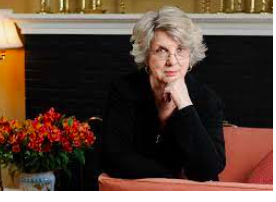
Marsha M Linehan – Author of ‘Building a Life Worth Living’

Community is the answer.

“…the lonelier a person gets, the less adept they become at navigating social currents. Loneliness grows around them, like mould or fur, a prophylactic that inhibits contact, no matter how badly contact is desired. Loneliness is accretive, extending and perpetuating itself. Once it becomes impacted, it is by no means easy to dislodge.” – By Olivia Laing, The Lonely City.

In the summer of 1999 I moved from New Delhi to a little place called Antrim in Northern Ireland. I lived in a tiny room in the accommodation for junior doctors on hospital grounds. I didn’t know a soul there. Slowly I made a few friends at work. Unlike now, there were no mobile phones, whatsapp, skype, facetime or facebook then. Telephone calls costed a bomb.  People were friendly but everyone was a stranger. Initially I didn’t get their sense of humour at all. I felt foolish. I longed to speak my own language with someone. Anyone. But there was no one who would understand.

One evening I went to buy some chocolates to a nearby petrol station. There were 2 cashiers but only one of them had a long queue of people waiting their turn. I didn’t understand why. I went up to the cashier without a queue and made my payment. I didn’t get the meaning of the looks on people’s faces. It didn’t help that I was the only coloured person for miles. From some face expressions it was obvious that they had never ever seen a coloured person outside of the television. I felt alone. Very alone.

Urban loneliness is a common phenomenon.  Isolation causes inflammation. Inflammation can cause further isolation and depression. The cytokines released as a result suppress the immune system giving rise to more illness.

Frome is a historical town in Somerset. It is known as one of the best places to live in the UK. Dr Helen Kingston, a GP, kept encountering patients who seemed defeated by the medicalisation of their lives. They were treated like a cluster of symptoms rather than a human being with health problems. Staff at her practice were stressed and dejected by what she calls “silo working”.

With the help of the local council and Health connections Mendip, she launched a community initiative in 2013. It main intervention was to create a stronger community. They identified and filled gaps in communications and support in the community. They employed ‘health connectors’ and trained up volunteers to be ‘community connectors’.  They helped people with handling debt or housing problems, sometimes joining choirs or lunch clubs or exercise groups or writing workshops or men’s sheds (where men make and mend things together). The aim was to break a familiar cycle of misery.

In the three years that followed, emergency hospital admissions rose by 29% across the whole of Somerset. In Frome they fell by 17%.

No other intervention, drug or procedure on record has reduced emergency admissions across a population.


A vacuum in the NHS.

When Saagar was ill, he filled out an online form and referred himself to IAPTs – Improving Access to Psychological Therapies. This programme  began in 2008 and has transformed treatment of adult anxiety disorders and depression in England. Over 900,000 people now access IAPT services each year. I have used this service in the past and found it useful. I suggested to him to fill out the form a second time and he did. They usually call back within a day or two. He didn’t hear back from them.

I recently found out that IAPTs does not look after suicidal people. I would like to know what they do when they read a self-referral form of this nature.

There is a vacuum in the NHS. There is little face to face support for those who feel life is no longer worth living. Why do most people with physical illnesses ask for help? Possibly because they trust they will receive appropriate help from the system. Why is it that many people with mental anguish don’t approach the medical services for help? Probably due to lack of trust.

The Listening Place works towards filling that vacuum. A few days ago I visited their premises, a short walk from Pimlico station, in the heart of London. This airy, green, warm and welcoming place felt ideal for anyone in need of care, support and understanding. Here, individuals can speak openly about their feelings without being judged. They receive on-going support from trained volunteers over a number of weeks as deemed appropriate. The volunteers help relieve emotional pain and stress and offer opportunities to consider alternatives to suicide. Anyone over 18 can be referred to them by themselves, other charities, NHS as well as health and social care organisations. They try to give continuity by facilitating you to speak with someone who knows you from before. They charge nothing and keep your information confidential. It is remarkable that they are open 9 am to 9 pm, 7 days a week.

Phone: +44 2039067676; Email: referrals@listeningplace.org.uk

5915b0ff1e00003a00622ae4

Sarah Anderson, who was once director at the largest call centre for the Samaritans, set up The Listening Place in 2016 and the service has since helped hundreds of individuals with its unique approach to care. During our chat, Sarah’s passion and dedication to the cause comes through, loud and clear.

The world needs more people who give a damn about other people.

(PS: Through the grapevine I hear the future funding of IAPTs is in jeopardy. The vacuum grows.)


Day 814

A bereaved mum’s lament: Went out for dinner with friends. What could go wrong? All went well until there was talk of an acquaintance of one of the guests who is suffering from a debilitating mental illness. They had tried to take their life but survived. The guest herself is a breast cancer survivor. She said that she had visited the person and said “did they not realise how hard she had fought to live and there they were throwing away their life”. Its a shame she didn’t appreciate just how hard the other person was fighting to stay alive … my son lost that fight. When will they realise Depression is as dangerous and potentially fatal as cancer. You know when you are stuck in a situation when its just not appropriate to make a fuss but you want to scream “How ignorant are you ???”

From the individual level, right through the media, the regulatory bodies and up to the government, we are all ignorant. Mrs May speaks of parity between physical and mental illnesses, ie. both being given the same importance. Many others have talked about it before her but we are miles away from it.

The Ebola Outbreak in West Africa was a public health emergency of international concern and we heard about it everyday, non-stop on the radio and TV from 2014-2016. 1 person was infected with the virus in the UK and fortunately there were no deaths from it. 1 person dies every 2 hours by suicide but it is not mentioned in the media. Public health England are not particularly concerned. Suicide claims 4 young lives every day but it’s no big deal.

Imagine a middle aged man presenting to his doctor with severe chest pain and being sent home with pills that take 3 weeks to work. I am sure the GMC would have something to say about that. A young man presents to his doctor with debilitating depression together with a strong desire to end his life and he is sent home with pills that can potentially make suicidal ideation worse and the benefit, if any might be seen in 3 weeks. The GMC finds that acceptable practice.

1 in 4 patients present with a mental illness to the NHS and only 10-12 % of the NHS budget is spent on mental health.

Survivors of physical illnesses proudly claim bravery and wear their survival as a badge of honour whereas those surviving mental illness hide in corners feeling ashamed.

The acceptable faces of mental illness are Dementia and Alzheimer’s disease. This is apparent from the t-shirts worn at charity events, walks and runs. I hardly see anyone running in support of Bipolar Disorder research or British Schizophrenia Foundation or Borderline Personality Disorder Charity. 

Things most resistant to change are cultures and mindsets.
Parity of esteem?
We have aeons to go!!!

Day 787

The Francis report concluded that patients were routinely neglected by a trust that was preoccupied with cost cutting, targets and processes and lost sight of its fundamental responsibility to provide safe care. An estimated 400 to 1,200 people could have died unnecessarily there between 2005 and 2008. In addition, the inquiry heard that receptionists in the accident and emergency department had regularly triaged patients

The public inquiry heard common themes of call bells going unanswered, patients left lying in their own urine or excrement, or with food and drink out of reach. Patient falls were also concealed from relatives.  An inward looking organisation, with a low staff turnover, the trust suffered from a lack of new ideas and a negative culture that became entrenched. Extremely poor nursing care was at the heart of this enquiry bringing into question ‘empathy’ in health care professionals.

Studies have shown that physician empathy is significantly associated with desirable clinical outcomes for patients with diabetes mellitus and should be considered an important component of clinical competence. ( Source: http://www.forcedo.org/wp-content/uploads/2013/03/The_Relationship_Between_Physician_Empathy_and.26.pdf)

A qualitative study of empathy in 3rd year medical students showed that inhibitors of empathy may originate in the hidden curriculum creating a greater distance between patients and physicians. Cynicism as a coping strategy, primary importance of technical knowledge, emotional control, becoming and being a professional hence keeping a professional distance from patients reinforced lack of empathy. One student explained that exploring a patient’s true feelings is not permitted. She noted that she explored and discussed patients’ emotions less than before because she felt that it is not accepted within the medical educational environment.(Source: http://bmcmededuc.biomedcentral.com/articles/10.1186/1472-6920-14-165)

Good bedside manner is nothing but a practical demonstration of empathy. Can it be taught and learnt?

While at one level it is possible to ‘understand’ how another person might be feeling (cognitive empathy), not everyone is capable of feeling how the other person might be feeling (emotional empathy). Both are essential for people in caring roles.

In all my years as a practicing doctor, I have learnt that patients are not just a source of inspiration for me but a primary source of learning. Books can only teach you so much. Most valuable lessons come from patients and from observing the attitudes and behaviour of senior colleagues.

Considering the fact that GP training in the UK is the shortest amongst all European countries, patients must be treated with greater respect as sources of learning. In my specialist training of 7 years duration, I learnt a lot about Anaesthesia. GPs are expected to learn a fair amount about everything in 3 years. (http://www.rcgp.org.uk/news/2016/october/mental-health-is-key-in-the-gp-training-curriculum-says-rcgp.aspx)

Am I optimistic? Yes. The government is waking up. There is hope.