Day 953

Discrimination at all levels
download

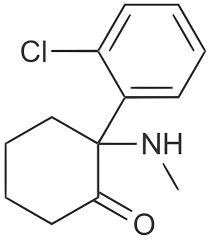
All anaesthetic drugs work in mysterious ways. They mainly work on the brain. One of them is Ketamine. I have used it many times as an anaesthetic and to treat resistant pain. It’s relatively safe even in hands with limited experience. It’s used in all age groups. It’s known to cause ‘Dissociative’ anaesthesia and pain relief. It works through blocking NMDA (Glutamate N-methyl D-aspartate) receptors. Unfortunately, it is known to cause tolerance and dependence. It is also used recreationally.

Recent studies have shown that Ketamine has a significant beneficial effect on patients with treatment-resistant Major Depressive Disorder(MDD). The improvement is often seen within 4 hours of administration. This is the subject of many recent research papers but much more needs to be done.

It is estimated that about 3% of the UK population, nearly 2 million people suffer from depression. A small proportion of them, about 158,000 have depression that resists treatment. Currently, only 101 people are able to access ketamine in Oxford. About 40% showed sustained improvement after taking it.

It is potentially life-changing treatment for those suicidally depressed. Michael Bloomfield from UCL says “Unfortunately, medical research spending for mental illnesses is extremely low compared to other medical conditions. Clearly this needs to change if we are to improve treatments in the future.”


Day 949

Iatrogenic

download

Antipsychiatry – I knew the sentiment but I didn’t know the word.
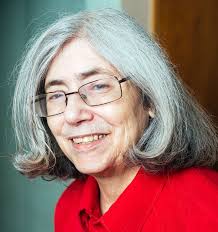
Dr Bonnie Burstow has helped hundreds of “highly suicidal patients,” as a psychotherapist. She’s come to believe that conventional psychiatric treatment isn’t in their best interests.

For half a century, scholars have been looking closely at Psychiatry as a coercive instrument of oppression. Dr Burstow is a prominent figure in the field of antipsychiatry, which she describes as “a movement of both psychiatric survivors and professionals saying that we need to abolish psychiatry”. She’s the author of “Psychiatry and the Business of Madness” and “The Myth of Mental Illness”.

“Longitudinal studies have shown that people who go off their drugs after a few years do better in the long run than people who stay on them. But guess who does the best of all? The people who were never on them in the first place. So, then the answer is, no one should be on them in the first place. These are not medical substances. They do not address a single chemical imbalance. They, in fact, cause imbalances and not surprisingly they cause all sorts of problems for people who can then never get off them because they now have a disordered brain that is caused by the medical profession. You know I spend a lot of time building up that and showing how it happened. But once you take in that position, it is a very convincing argument for abolition.

Since the 19th century, psychiatry has been defrauding vulnerable people. There was dunking people in cold water. There was rotating people in chairs. There was also opium. There was bleeding. Remember we had bleeding for a long time. There was also genital mutilation, just don’t forget they thought madness was being caused by masturbation.”

The University of Toronto has recently started a scholarship in Antipsychiatry. It is a historical breakthrough and hopefully a precursor to a better society. It signals to the world that this field of inquiry has come of age.


Day 940

The dark thing that sleeps in me

11_splat_150

Thomas Joiner, author of “Lonely at the Top: The high cost of Men’s success” is an avid suicide researcher. He lost his father to suicide.

His career choice is dismissed by some as : “You’re just trying to fix your own psychological problems, just like all mental health professionals.” Having psychological problems is not insulting. They are common, often treatable and nothing to be ashamed of.

Surely, heart and cancer researchers are not perceived in the same light. This is another reflection of the stigma that surrounds suicide.

Stigma is fear combined with disgust, contempt and lack of compassion – all of which flow from ignorance. We need to understand that suicide is not easy, painless, cowardly, selfish, vengeful or rash. It is not caused just by medicines, anorexia, smoking or plastic surgery. It is partly genetic and influenced by mental disorders which in themselves are agonising. That it is preventable (eg. through means restriction like bridge barriers) and treatable (talk about suicide is not cheap and should warrant specialist referral).

Once we get all that in our heads, we need to let it lead our hearts.

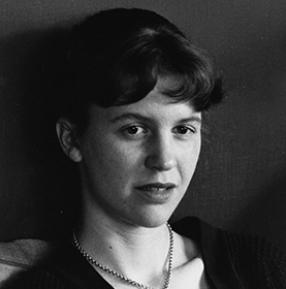
“I am terrified of this dark thing that sleeps in me,
All day I feel its feathery turnings,
Its malignity.”
– by Sylvia Plath

Source: ‘Myths about Suicide’ by Thomas Joiner.

Day 937

essentials-f731032e-5ccb-4ae7-a755-923166cc967e

Just a rant

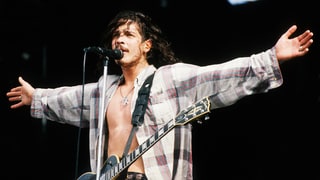
Another Thursday. Another musician. Another suicide.

This Facebook post brought up the same old questions. I am not the only one asking them. They are a big problem for many families, individuals and communities. But sadly, the easiest thing to do for a medic at a consultation is to write a prescription rather than invest time and resources in the individual.

“Just reading about Chris Cornell and how according to his wife he took too much of his prescribed medication, out of it, because he was on his medication. Whether it was a suicide or “accidental death” I am outraged at the system. I didn’t really know Chris Cornell’s music until recently, but I lost my dear friend, another talented musician, to a similar situation recently. And before that I lost my mom, who became psychotic when given anti-depressants and took the whole bottle a few days after she had started taking them. I am so frustrated by a medical establishment that refuses to treat the whole disease and the whole person, and so tired of people I love dying from the very medication that is supposed to prevent it. If you work in (mental) health, please consider the risk when prescribing medications. Years ago, I myself was prescribed ativan and other medications and became addicted and had to take myself off everything completely without the support of a doctor because they thought I needed medication, while in reality the medication was making me suicidal.

Medication without therapy from my perspective is no different than drinking or smoking or taking drugs. I see the system changing as the trauma-informed approach enters the mainstream but in Nova Scotia, so many mental health problems that need deep spiritual healing are treated with drugs. Drugs that sometimes exacerbate the problem, or create a whole new problem, without leaving the person spiritually and emotionally sober enough to make sound decisions that could save lives.

I look forward to the day when the mental hospitals and outpatient aftercare support radical healing on a whole-person level-the kind of work that the International Association for Human Values and Body Talkers are doing-treating the whole person and providing them with actual physical stress and trauma relief tools.

Just a rant. I’m done. Love to all. Please no more state/big pharma-sponsored suicides…”

Eleven years ago, purely by chance, I learnt a breathing-based meditation technique called ‘Sudarshan Kriya’. It has kept me strong through deeply traumatic life-events. Our breath is a subtle but powerful bridge to knowing the ‘self’. It has precious secrets hidden in it. It energises and detoxifies. It keeps us alive. If we are willing to learn, it teaches us the art of living.


Day 926

AYA-5

Finally something wholistic. Is it?

Ayahuasca is a foul tasting, nauseating brown Amazonian psychoactive brew.

The name comes from the Quechua language where aya means soul, ancestors or dead persons and wasca (huasca) means vine or rope. One interpretation of the name is “vine of the soul” and another is “rope of death”. Of late more arguments are being made in favour of the former than the latter.

This Shamanic concoction has been the core of many religious, magical, curative, initiation, and other tribal rituals for millennia in the indigenous and mestizo populations of South America. They respect the brew as a sacrament and value it as a powerful medicine for physical and mental problems, social issues and spiritual crises. It is traditional medicine and cultural psychiatry.

During the last two decades Ayahuasca has become increasingly known to both scientists and laymen. Its popularity is spreading all over the Western world. People seeking improved insight, personal growth; emotional healing and contact with a sacred nature, deities, spirits and natural energies have given rise to the phenomenon of ‘drug tourism’.

In the correct therapeutic/ritualistic setting, with proper preparation of the user and subsequent integration of the experience, Ayahuasca has proven effective in the treatment of substance dependence and depression. The therapeutic effects of Ayahuasca are best understood from a bio-psycho-socio-spiritual model.

The first Randomised Clinical trial, led by Draulio Barros de Araujo at the Federal University of Rio Grande do Norte in Natal, Brazil has been published.  2 similar groups of 14 and 15 patients with resistant depression were randomised to receiving either placebo or the active drug. They filled out standard questionnaires the day before receiving their dose and 2 and 7 days later.
64% of patients who took Ayahuasca felt the severity of their depression fall to half. This was true for only a quarter of those who took placebo. The inference drawn is that Ayahuasca is better than placebo at least for the short term. More studies are required to see if the effects are sustained over longer periods.

Roughly 350 million people experience depression globally. Between one-third and half of  them do not respond well to medications. In addition to psychedelics such as Ketamine and Psilocybin, Ayahuasca is being investigated further as potential treatment for resistant major depression.

Ref:
Articles:
1. Therapeutic Potentials of Ayahuasca https://www.ncbi.nlm.nih.gov/pmc/articles/PMC4773875/
2. Rapid Antidepressant effects of Ayahuasca: http://biorxiv.org/content/early/2017/01/27/103531

Presentation by Draulio Barros de Araujo: https://vimeo.com/143399447