What do people need?

Thanks for this N.

It finally got me. This wretched forced and voluntary isolation. No wonder solitary confinement is a well known punishment. Mon, Tues, Wed were very deep blue. A friend’s dad’s funeral, a very unwell teenager … but underneath it all, missing my people. The screen did not suffice any longer. It only frustrated me. The phone was a sordid excuse for ‘contact’. I wanted to be with real people in a real way. Feel the fabric of a friend’s scarf between my palms, share a pot of tea and a big slice of carrot cake at a local cafe and laugh till I cry and such simple pleasures.

For now, gotta hold my horses and know you are there and soon we’ll meet again. Thank you for being there for me, my people. I am here for you too.

“People need people,
To walk to
To talk to
To cry and rely on,
People will always need people.
To love and to miss
To hug and to kiss,
It’s useful to have other people.
To whom to moan
If you’re all alone,
It’s so hard to share
When no one is there.
There’s not much to do
When there’s no one but you.
People will always need people.

To please
To tease
To put you at ease,
People will always need people.
To make life appealing
And give life some meaning,
It’s useful to have other people.
It you need a change
To whom will you turn.
If you need a lesson
From whom will you learn.
If you need to play
You’ll know why I say
People will always need people.

As girlfriends
As boyfriends
From Bombay
To Ostend,
People will always need people-
To have friendly fights with
And share tasty bites with,
It’s useful to have other people.
People live in families
Gangs, posses and packs,
Its seems we need company
Before we relax,
So stop making enemies
And let’s face the facts,
People will always need people,
Yes
People will always need people.”
Benjamin Zephaniah

Day 728

A landscape of musical notes emanated from four musical instruments inspired by movement of people across the globe in search of a land of gold. When I closed my eyes, I could feel the magical textures at my fingertips and sense the turbulent river flowing and a lone vessel struggling to carry a tonne of isolation and desperation across to a place of hope. Vibrant colours could be heard and pathos felt in the core of my heart and every pore on my skin. The conversations and unison between those colours filled the space with absolute empathy for those forced to leave their homes, a cry against injustice of the refugee crisis. Crossing the Rubicon….dissolving boundaries…reunion…last chance…a boat to nowhere…

Land of Gold – an ode to those displaced.

Find the kind heart,
Rest your feet and soul.
May your kind heart
Find the land of gold.
Pay attention, say your name
Listen closely and keep warm.
Gentle hands, you are brave,
Look at me and carry on.
All is good, I love you.
You can hear me, you can call.
Sing your song with ease and pride.
I’ll be there, not far behind.
Tell them I walked
Tell them I walked your way
Tell them I walked
Tell them I walked your way

– By Anoushka Shankar

(https://www.youtube.com/watch?v=8MO1Ziql48w)

Day 713

“Thank you Gas-lady” said the surgeon at the end of our working day as he picked up his bag to leave the operating theatre. I acknowledged it with a smile and a nod. That’s sweet. At that moment it didn’t register but later I realised that he does not know my name. We have worked in the same theatre complex one day per week for the past 4 years and he does not know my name. That’s interesting. I wondered how many people I see on a regular basis and don’t know the names of.

How did that make me feel? Not exactly insulted but definitely unimportant. I found myself making excuses for him – may be he finds my name difficult to remember. It is a foreign name after all. But this is London and many people here have foreign names. May be it is a reflection of a basic power imbalance – every one knows his name but he doesn’t have to know everyone’s name.

Knowing a name is a small thing, but it makes the difference between making someone feel that they matter or they don’t. When our name is known, we are more likely to have a sense of belonging to a person or a group. It also means that who we are is central to the interactions we have.

“Could someone get the defibrillator please?”
“James, could you please bring in the defibrillator?”

Which one of these two statements is likely to produce a quick and effective result? Knowing names can make it easier to get a job done.

Patients are not diabetics, schizophrenics, bed 10, ‘last on the list’, so on and so forth. They have their names and unique identities. Of course, it is not always easy to remember names. It does take some effort. It is easier to put in that effort if we know how much of a difference it can make not only to others but also to us. I find myself paying more attention to names now. Even if I get it wrong, I like to think I tried.
It is definitely worth the effort.

( Saagar was really good at remembering names. In fact, the more unusual the name, the more fun he had with it. Well, there’s a name I’ll never forget – Saagar.)

Day 708

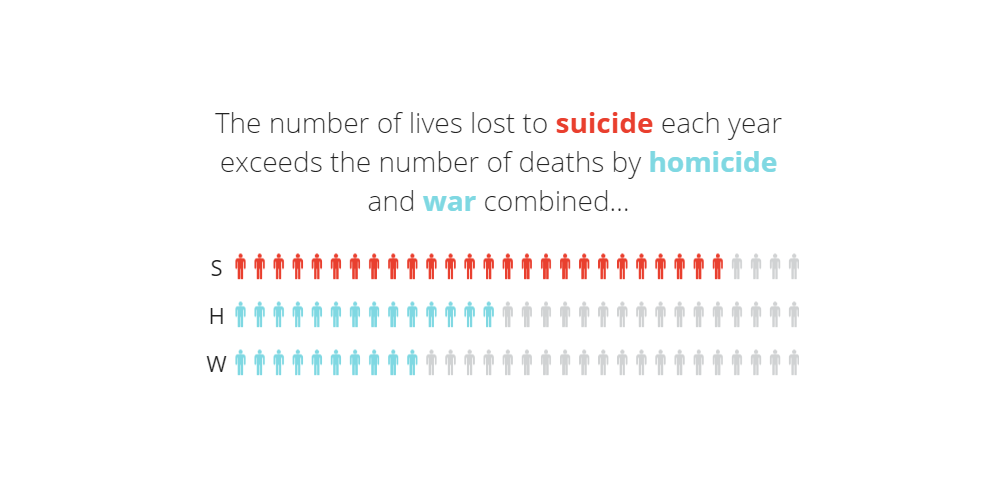
suicide_homicide_warA survey of 500 people revealed that a third of people didn’t feel comfortable at all talking to someone at work about mental health related issues and only 15% have had a colleague speak to them about their mental health.
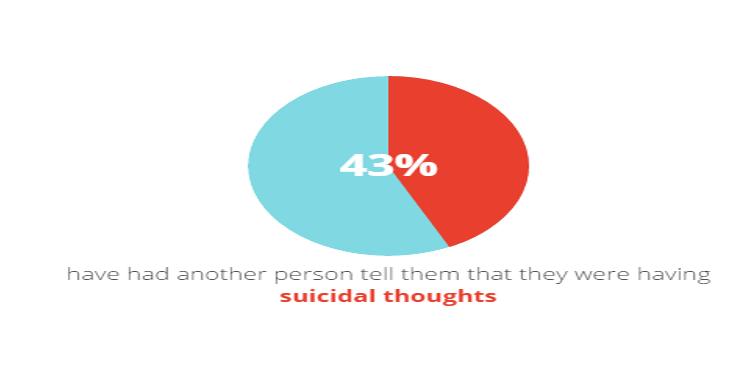
The survey also uncovered an interesting trend: nearly a third of all male respondents have never had a friend, family member or colleague speak to them about their mental health. Worryingly, this statistic rises to 42% for males aged 45 and over and increases yet again to 60% for males aged 54 and over.
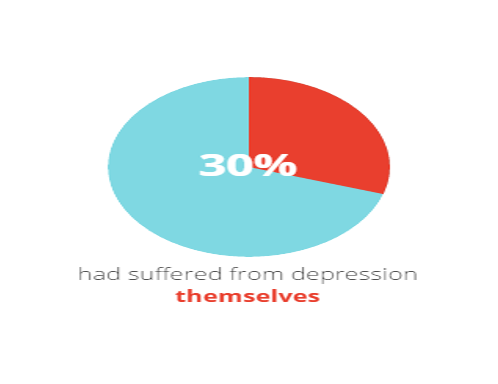
( Source:  www.team24.co.uk/suicide-prevention-day )

43_per_cent_suicidal_thoughts

33_per_cent_dont_feel_comfortable_talking

31_per_cent_males_never_speak_mental_health

30_per_cent_suffered_depression28_per_cent_14_17_dont_feel_comfortable


15_per_cent_colleague_mental_health

“I would say that the vast majority of people who die by suicide, don’t necessarily want to be dead—they want to end their suffering and don’t know what else to do. We know from our clinical treatment research that suicidal suffering can be effectively treated. There is hope; suicidal states can be effectively treated and people can and do recover from suicidal suffering.”

David A. Jobes, Ph.D., ABPP. Professor of Psychology. Author of Managing Suicidal Risk

Prevention starts with a conversation.

Let’s start the conversation.

Day 700

When our GP heard of Saagar’s death, the first phone call he made was to the Medical Defence Union and they advised him not to call us. Despite having known us for more than 7 years and seeing Saagar every 2 weeks with us for the last few months of his life, he did not call us on his death.

A qualitative study of GPs’ experiences of dealing with parents bereaved by suicide by Emily Foggin et al was published last month in the British Journal of General Practise.

It acknowledged that bereavement by suicide is a risk factor for suicide but the needs of those bereaved by suicide have not been addressed and little is known about how GPs support these patients, and how they deal with this aspect of their work. 13 GPs in the UK were interviewed in a semi-structured format. It explored experiences of dealing with suicide and bereavement.

GPs disclosed low confidence in dealing with suicide and an unpreparedness to face parents bereaved by suicide. Some GPs described guilt surrounding the suicide, and a reluctance to initiate contact with the bereaved parents. GPs talked of their duty to care for the bereaved patients, but admitted difficulties in knowing what to do, particularly in the perceived absence of other services. GPs reflected on the impact of the suicide on themselves and described a lack of support or supervision.

It concluded that GPs need to feel confident and competent to support parents bereaved by suicide. Although this may be facilitated through training initiatives, and accessible services to refer parents to, GPs also require formal support and supervision, particularly around significant events such as suicide. Results from this qualitative study have informed the development of evidence-based suicide bereavement training for health professionals.

Ref : http://bjgp.org/content/early/2016/08/15/bjgp16X686605

This evening a vigil was held by SOBS (Survivors Of Bereavement by Suicide) at Hyde Park to remember those lost through suicide. Some of the people there had lost a brother 25 years ago or a sister 5 years ago or a friend 1 year ago and so on. Some of the families had not been able to speak about it for many years. Others had kept quiet as they were not sure if anyone would understand. But in that space, we sat together on the brownish-green grass with the pictures of our loved ones and lit candles in their memory and we opened our hearts. For about 2 hours we claimed that space and made it our own knowing full well that we are being listened to and perfectly well understood. What a rare gift that is!

When it comes to suicide, post-vention is pre-vention.