The night temperatures are below freezing. The weather forecasts are sending out warnings of frost and black ice. I thought a hot water bottle for the night would be a good idea for uninterrupted sleep. I placed it against my lower back as I drifted off in fetal position. It was comforting and sleep-inducing, resting perfectly still against my lumbar spine. I was wrapped up in my duvet and the bottle, in a thick white cotton towel under the duvet.
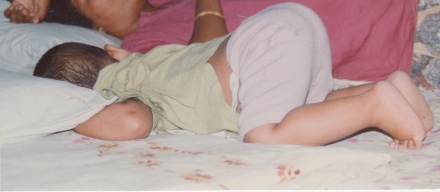
Sometime during the night, I surfaced to a semi-awake state and felt a small bundle next to me. It was warm and cuddly. Still half submerged in slumber, my mind floated away into the past. My hands brought the bundle up to my chest and held it close. It didn’t move. I hugged it and kissed it. The pain of the love and the longing came back. The absolute joy of cuddling my baby came back. The memory of how he slept with his bum in the air came back. The sense of the way he moved round in his sleep came back. The tears came back. The pillow got soaked but the eyes stayed closed and the attention went to the sobs, the sadness and the breath and then slowly…the sleep came back.
Short stories have always intrigued me. Of late my attention span has become so short that those are the only kind of stories I can relate with and appreciate.
Here’s an abridged version of ‘Grief’ by one of the greatest writers of short fiction, Anton Chekov.
‘Grief’
It is twilight. Large flakes of snow are falling. A cab-driver, Iona, waits for a customer. He sits in his cab with his body bent as double as a living body can, immobilized by misery. ‘To whom shall I tell my grief?’
At last an officer arrives. Iona sets off in his cab with the officer at the back. He turns around to speak to him.
“My son…er…my son died this week, Sir.”
‘Hm. What did he die of?’
“It was a fever.”
Silence. Iona turns around again to find the officer nodding off.
As the evening progresses, Iona attempts to talk to someone three times. He tries to tell the story of his son’s death again and again. The second passenger, a high browed businessman interrupts Iona and says, ”We all must die one day.” Another man simply gets out of the sleigh. Later Iona tries to speak with a house porter but he brusquely tells him to drive on. Still later Iona offers one of his fellow drivers a drink but the young man promptly falls asleep. Just as the young man has been thirsty for water, Iona thirsts for speech. There is so much he needs to share.
“One must tell it slowly and carefully; how his son fell ill, how he suffered, what he said before he died, how he died. One must describe every detail of the funeral and the journey to the hospital to fetch the defunct’s clothes. His daughter Anisya remained in the village – one must talk about her too. Was it nothing he had to tell? Surely the listener would gasp and sigh and sympathise with him?”
Finally at the end of the working day, Iona returns to the stables. He starts to speak to his horse, “Now let’s say you had a foal, you were that foal’s mother and suddenly, let’s say that foal went away and left you to live after him. It would be sad. Wouldn’t it?”
The mare munches hay and breathes on her master’s hands. She doesn’t close her eyes, nor walks away, nor interrupts with her own wisdom on the matter. And it’s enough. Iona tells her everything.
At the risk of repeating myself, I tell the story I need to tell:
(Special thanks to Diane Morrow and her book: One Year of Writing and Healing)
‘I hear her. Her voice is in my head’ says Joe.
“How long has the voice been there?” asks the trainee psychiatrist.
‘Since I was 12.’
“And you are now 18.”
‘Yes.’
“Is it really upsetting for you?”
‘Yes. Distressing. I feel terrible.’
“What does the voice say?”
‘Different things. Often cries desperately.’
“How often does this happen?”
‘At least 3-4 times every day. It’s painful.’
“Hmmm. Let me speak to my senior and come back to you in a few minutes.”
A few minutes later.
“We think you might have Schizophrenia. Let’s start you on Quetiapine and see how it goes.”
‘Okay.’
Joe waits at the pharmacy to collect his medication. A trainee nurse is also waiting there to collect some meds for a patient on the ward. They talk. He tells her why he’s there. She asks him who is ‘she’? Whose voice does he hear?
‘She is my little sister. When we were kids we shared a bedroom. At night, my mum’s boy friend would come into our room and trouble my little sister behind a curtain. She cried. I could hear her but I was powerless. I could hear her then. I can hear her now.’
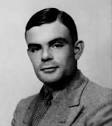
Alan Turing was a lonely, awkward boy. His only friend in school died of tuberculosis in 1928. This awful event had a formative impact on the life of this young man who went on to become a brilliant mathematician and code breaker at Bletchley Park from 1939-45. Cracking the Enigma code significantly shortened World War 2 and potentially altered its outcome. He was the first man to indicate how thinking machines might be built. He later came to be known as the father of modern computing. He was one of the most influential men of his time and we owe our freedom to him. Steve Jobs wanted his company logo of the bitten apple to be associated with Turing’s love of apples.
An accomplished runner, he also had a great interest in the paranormal. And there is Turing the composer, responsible for some of the earliest computer music recorded by the BBC in Manchester. He is described as “shy, gay, witty, grumpy, courageous, unassuming and wildly successful genius”.
In 1952, he was arrested under a homophobic law for ‘gross indecency’. The chemical castration that Turing underwent thereafter was highly unjust and disgusting. Tens of thousands of less famous men were similarly prosecuted between 1885 and 1967.
He was found by his cleaner when she came in on 8 June 1954. He had died the day before of cyanide poisoning, a half-eaten apple beside his bed. His mother believed he had accidentally ingested cyanide from his fingers after an amateur chemistry experiment, but it is more credible that he had successfully contrived his death to allow her alone to believe this. The coroner’s verdict was suicide.
These countries still punish homosexual acts by death: Saudi Arabia, Afghanistan, Nigeria, Qatar, Iran, Somalia, Yemen, Sudan, Mauritania and UAE.
She lives in sheltered accommodation. As an octogenarian, it is safer. Her sons think so. When she moved in, she had hoped for some company. She likes a bit of chit-chat. She enjoys people. But she is fairly content. Every other day she neatly pins her hair up, wears one of her long skirts with a woolly jumper, wraps herself up in her sea-green duffle coat, puts on a smile and walks to the high street.
Betsy goes to the post-office to buy and post a card for her grand daughter’s birthday. She picks one with flowers and butterflies and queues. The only other person in the queue is a young woman. She has big black cordless head-phones with a ‘b’ in red covering her ears. She also has a vacant look in her eyes. It seems she is elsewhere. No chance of a chat here. When Betsy arrives at the window, the teller appears to be preoccupied. He is worried that the Post office might have to close down soon. He’s not sure how soon. That worries her. Last year her bank had shut down the branch on this high street.
She used to be able to go to the GP Surgery on days she felt a bit off. In the waiting area she often ran into someone she knew. It was good. But now the rules have changed. There are screens with smiley pictures and buttons. Appointments have to be made weeks in advance. One can’t just show up. Now, she feels like an outsider at her own surgery. She doesn’t like to go there anymore.
The grocery store is always a good place for a chat. The staff are friendly. Sometimes she even runs into familiar faces. She strolls around at her own pace and picks up a pint of milk and a pack of 80 PG tips teabags. As she approaches her favourite part, the check out desk, she is ushered in a perfunctory manner towards three ugly self check-out machines. That confuses her. She is not sure what to do.
It’s been one week since she spoke to anyone. On TV they said that the population of the world is the highest ever and rising – 7.4 billion! That must have lots of zeros.

 kidsaregifts