Who’s the boss?

Did you know there’s an organisation that brings science and spirituality together? Its mission is to create a kinder, heart-centered world where we care for one another and live harmoniously. It’s called the HeartMath Institute and offers many free resources.

They have found that the heart is not just a mechanical pump. It contains thousands of nerve cells. That is probably the reason our memories and trauma are stored in various parts of our body, mainly the brain and heart.

We were taught in school that the brain is a master-organ but it’s the heart that tells it what to do. The intelligence of creativity, innovation and intuition resides in the cells of the heart. Brain neurons are the antennae that follow the heart’s desires. For example, I want to speak and understand Spanish says the heart. The brain follows.

We humans have a stunning ability to self-regulate. Our biology is engineered as a soft technology. Our fundamental physiology is made up of ion-potentials across membranes. We’re the only form of life that can harmonise its two major neural organs through Heart-Brain Coherence. We can alter the chemistry in our bodies. Once this coherence occurs, we can heal and be healthy. The immune system is strengthened, longevity enzymes rise and stress is reduced at a molecular level. Three minutes of this shift can produce beneficial effects for 6 hours.

3 steps:

  1. Shift in focus – into the heart
  2. Shift in breath – slow it so the exhalation is longer than the inhalation
  3. Shift in feeling – a positive feeling – initiate Gratitude on demand.

We are powerful self-regulators. It is a God-like ability that we have, to heal ourselves. We’re conditioned to feel helpless and think we need external help. Sometimes we do need interventions, but we can honour the gift of this body to heal ourselves.

Nowhere to go.

On the 9th of March, I reached Melbourne for the second leg of the Churchill Fellowship. I had been looking forward to it for ages and just couldn’t wait to get started. I had the taken the whole month off. Despite the long journey I didn’t feel any fatigue. My AirBnB was homely and comfortable. After a good night’s sleep, I was ready for work.

The Beyond Blue Office was easy to find. After a brief introduction to the team, we all went out to get coffee together. I was already one of them and the coffee was great. The following days flew past with meetings, interviews, presentations and briefings. A trip to Headspace. Despite some background murmurings of a virus, I was having the best time, learning and exchanging thoughts and ideas. Then Australia closed its borders. Meetings and conferences started getting cancelled.

On the 16th, I took a return flight to London.  My trip shrank from 3 weeks down to one. I had to miss Sydney altogether. Now, I am back here with a blank diary for 2 weeks and I am loving it. I have volunteered myself to work and I am on standby.

I can now research and look up things I’ve been meaning to for a long time. I can clear out one cupboard every day and get rid of stuff I don’t need or use or get joy from. Unclutter and create space in my house and my head. I can go to bed without setting an alarm. That pile of unread books that’s been sitting atop my table, feeling ignored and giving me dirty looks, can now be tackled.

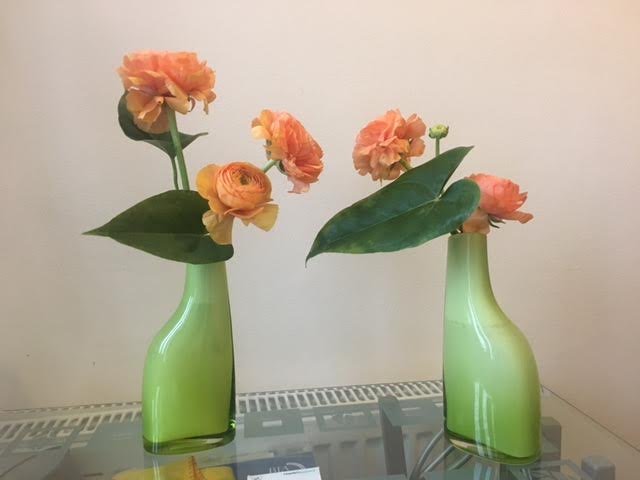
Part of me is rushing in to fill the time with a list of a hundred things to do but I am consciously slowing down. Having an easy routine. Fitting in things I love doing, like arranging flowers. Making time for friends. Cooking. Walking. Not getting hooked to the media but keeping an eye. Writing hand-written letters to loved ones. Sitting still. Enjoying our home. Truly appreciating the weirdness of our cat, Milkshake. Cherishing having breakfast, lunch and dinner with Si as he works from home.

Simplify. Make easy. Make plain.

The Way Back – supporting attempt survivors – an idea worth adopting.

Day 806

search

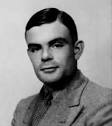
Alan Turing was a lonely, awkward boy. His only friend in school died of tuberculosis in 1928. This awful event had a formative impact on the life of this young man who went on to become a brilliant mathematician and code breaker at Bletchley Park from 1939-45. Cracking the Enigma code significantly shortened World War 2 and potentially altered its outcome. He was the first man to indicate how thinking machines might be built. He later came to be known as the father of modern computing. He was one of the most influential men of his time and we owe our freedom to him. Steve Jobs wanted his company logo of the bitten apple to be associated with Turing’s love of apples.

An accomplished runner, he also had a great interest in the paranormal. And there is Turing the composer, responsible for some of the earliest computer music recorded by the BBC in Manchester. He is described as “shy, gay, witty, grumpy, courageous, unassuming and wildly successful genius”.

In 1952, he was arrested under a homophobic law for ‘gross indecency’. The chemical castration that Turing underwent thereafter was highly unjust and disgusting. Tens of thousands of less famous men were similarly prosecuted between 1885 and 1967.

He was found by his cleaner when she came in on 8 June 1954. He had died the day before of cyanide poisoning, a half-eaten apple beside his bed. His mother believed he had accidentally ingested cyanide from his fingers after an amateur chemistry experiment, but it is more credible that he had successfully contrived his death to allow her alone to believe this. The coroner’s verdict was suicide.

These countries still punish homosexual acts by death: Saudi Arabia, Afghanistan, Nigeria, Qatar, Iran, Somalia, Yemen, Sudan, Mauritania and UAE.

World gay rights map:
https://www.washingtonpost.com/graphics/world/gay-rights/

Day 760

cover-jpg-rendition-460-707

4500 men end their  lives every year in the UK, 3 times more than women. Many times more self harm and attempt suicide. The highest suicide rate in 2014 was for men aged 45-49.

‘Building Modern Men’ is a series of articles published by Huffington post to mark the International Men’s Day (19th Nov). It covers a wide range of topics from male role models to inability to swim. (http://projects.huffingtonpost.co.uk/building-modern-men/) A Masculinity Audit carried out by Huff Post and CALM,looking into the causes of male suicide  found that :

  • Four out of ten males feel they lack the qualities and abilities that partners look for in a man

  • 61% of all respondents agree that men are stereotyped in the media

  • Four in ten male respondents strongly agreed that ‘women have unrealistic expectations of men’

(Ref: http://www.huffingtonpost.co.uk/entry/mens-mental-health-building-modern-men_uk_58206805e4b0c2e24ab022fb?utm_hp_ref=uk)

‘For many, masculinity is a fatal burden’ says Grayson Perry on why old-school masculinity is man’s greatest enemy. The 56 years old transvestite artist has always seen masculinity as a choice. He has questioned his gender identity since the age of 12. He believes that his transvestism permits him a greater distance and sharper insight into the layers of manhood that he talks about in his new book ‘The Descent of Man’.
He believes that the traditional approach of ‘stiff upper lip’ is completely out dated. It renders men emotionally illiterate and unable to form healthy relationships. It leaves them very fragile yet unwilling to express their vulnerability, a lethal combination when it comes to mental health. The inflexibility of traditional masculinity doesn’t fit in the present times of change and diversity. That masculinity comes from an age of heavy industry and farming and it doesn’t work anymore.

‘We need to think of masculinity like a piece of equipment. Some men, like soldiers, need to use it all the time, others might need it at the weekend and others not at all.’

Day 737

There is scientific evidence to support that a particular intervention benefits the following conditions:

  • Lung function in asthma
  • Disease severity in rheumatoid arthritis
  • Pain and physical health in cancer
  • Immune response in HIV infection
  • Hospitalisations for cystic fibrosis
  • Pain intensity in women with chronic pelvic pain
  • Sleep-onset latency in poor sleepers
  • Post-operative course

That particular intervention is – Expressive writing.

The body of literature that demonstrates beneficial effects of expressive writing has been growing over the past 30 years. One of the earliest studies conducted by Pennebaker and Beall in 1986 compared 2 groups of students. Both groups were asked to write for 15 minutes on 4 consecutive days. One group put down their thoughts and feelings about the most traumatic or upsetting event of their life while the other wrote about something trivial, like their shoes or room. The first group self reported fewer visits to the Health Centre and fewer days off due to illness for up to 6 months after the writing exercise, as compared to the second group.

Meta-analyses show that while the improvement in physical health is clear, the results for psychological health are mixed. For a small group of trauma survivors, writing was even found to be detrimental. Although further research is required to clarify populations for whom writing is clearly effective, there is sufficient evidence for clinicians to use expressive writing in therapeutic settings with caution. Indeed, some experts noted that a drug intervention reporting medium effect sizes similar to those found for expressive writing would be regarded as a major medical advance.

(Source: http://apt.rcpsych.org/content/11/5/338 ; http://healthland.time.com/2013/07/13/how-writing-heals-wounds-of-both-the-mind-and-body/)

For me, writing is life-saving. It gives me a reason to get through the day. It gives my days a focal point inseparable from my love for Saagar. It gives me the strength to carry on. It is the thread that connects so many of us in a beautiful mesh. It helps me discover the joy of writing and the pain of expressing true emotion. It forces me to confront reality, however horrible. It gives me a sense of control over my life, however false. It is my daily meditation, my refuge, my ritual, my learning. I write to heal. I write to write.

Thank you for entertaining the ramblings of an old woman.