It’s an ordinary day that starts as the sun peeps from somewhere behind the horizon and ends as it vanishes somewhere behind another at different times for different people on the globe scattered all over these continents everywhere. It is not a singular day as it claims to be.
It’s not my enemy and yet it circles around each year as a reminder of what happened as if I need reminding. It’s not my enemy even though it feels like one. It’s just another day, innocent and ignorant, asking me to sit down. Have another cup of tea.
It was nameless and inconspicuous until it arrived hiding a deep darkness within its light wearing the face of a sacred place and a robe of expansion and growth and holding a promise of transformation before I knew what that meant, unlocking the path to an invisible destination.
This endless path covered in thorns and nettles with no alternative or detour must be trodden with bare feet. It is essential they bleed.
To my desperate open eyes the destination remains invisible. When I let them close I glean a faint ray of hope.
A year or so after Saagar, one Saturday morning we were driving on the M4 to see Simon’s mum. As we tuned into BBC Radio 4, my ears were assaulted by the prefix, ’committed’. Neither the BBC, nor the psychiatrists knew better. They hadn’t learnt that crimes are ‘committed’. Not suicides. Suicides came from a desire to end insufferable emotional pain. Either these people didn’t know or they didn’t care enough to modify the words that habitually barfed out of their mouths. That prefix is so firmly embedded in the English language that it thoughtlessly rolls off our tongues. Suicide was a crime in the UK before 1961. It is still a ‘sin’ according to some good men and women of God. Hence, the default prefix, “committed”. That has to change. Like people who sadly die of cancer, people die of Depression and Schizophrenia and the like. They do not “commit” a crime. Part of me was grateful they were talking about it, even if their language was wrong. I tried not to get too put off by that. I had not heard so many conversations about it before. Had something changed or had I not been listening all this time? My mind could no longer handle long complicated, rambling books. It forgot names, lost plot lines and wandered off, out the window within minutes. Short and gentle texts, it could deal with but nothing that puts too much cognitive load. I asked a helpful librarian to recommend a couple of small books. She pulled out ‘The sense of an Ending’ by Julian Barnes and ‘The French Exit’ by Patrick deWitt. Both the stories had suicide at the center of it. I have read many books but couldn’t remember this theme arising so often. I joined a short-story writing course at the Himalayan Writing Retreat. The award-winning author, Kritika Pandey, our teacher asked us to read ‘Why I decide to kill myself and other jokes’ by Douglas Glover beforehand. My heart pounded right through those sixteen pages. I was asked to pay attention to the technical details – the elliptical way in which the word ‘blue’ appears at periodic intervals, the sub-plot involving the dogs, the side-story of Hugo’s mum, the symbolism of the car – all of these were lost on me. I was inside the protagonist’s head, feeling her dread, her quandary and her hopelessness. It was in my face again. The e-mail from the V&A was advertising an Alexander McQueen exhibition. The film on TV tonight was ‘The Hours’. The book that fell off the shelf and broke its spine today was ‘The First Forty-Nine stories’ by Earnest Hemingway. This blasted thing that came out of nowhere, is now, everywhere. Had my eyes and ears been shut for all these years?
Or, I wonder if, like many others I was not aware of my belief – this kind of thing only happens to others?
PS: The author, Earnest Hemingway and the fashion designer Alexander McQueen, both ended their own lives. ‘The Hours’ is a film based on a book by Michael Cunnigham with Virginia Woolf’s suicide at the center of it.
“What can we do to offer wrap-around care to our patients?”
In the live Q&A at the end of the NCISH conference yesterday, this question was asked of the panel. The Chairperson directed it towards me. I can’t remember what I said. This morning I woke up with what I would have liked to say.
For wrapping, we need two things. One, the fabric which we are going to use to wrap and the person we want to wrap. Let’s discuss them one by one.
The fabric
The fabric of Suicide prevention in Health-Care is made up of two things – people and systems. Let’s look at them a bit closely.
People
What are the beliefs of the people?
I know of an ENT surgeon from another country who wanted to move to the UK and the only job he could find was in Psychiatry. So, he is now training to be a Psychiatrist. Is he interested in suicide prevention? Do Health-care professionals believe that suicides are preventable? Are they content that simply by treating mental illness they are doing their job?
What are the attitudes and abilities of the people?
When the Emergency department calls to say there is a suicidal individual waiting to be seen, how do they feel? Are they excited to have an opportunity to make a difference? Or is it a drain on the limited time and energy they have? Do they know how to build a compassionate connection with someone who has lost all hope? Have they received any training in Suicide Prevention? Do they have enough self-compassion to look after someone else well?
Do they have the resources and the knowledge to do a good job?
Do they have access to their past history? Do they have beds on the ward? Can they ask a colleague for a second opinion if they have a doubt about how to involve family or friends in their care? Do they know of other resources, like charities, activities and people that may help this person? Do they have comprehensive and informative leaflet they can share with them? Do they have the means to follow them up?
b. Systems
Does the system have capacity? Are the various parts of the system effective and joint-up enough to be able to hold the person they are trying to wrap or are there big holes in this part of the fabric? Do the various parts of the system share the same mental model, a shared knowledge, pre-suppositions, and beliefs that can be used to help achieve mutual goals? Are their practices evidence- based? Do they investigate deaths with a view to learn lessons and implement change? Do they look after the well-being and emotional health of their employees? Do they hold themselves accountable when things go wrong?
2. The person
Allowing space for them to express themselves. Help maintain their sense of agency. Inform them it is safer for them to involve other people who care for them. Equip them with resources. Give them the support they need. Ask them what would help them? Listen. Sit with their despair. Acknowledge it. Keep them connected with their life as they know it. Keep hope alive for them.
Know that the person at the centre of the wrapping is of great value.
Information is useful if it becomes knowledge. Knowledge is useful when it becomes wisdom. So, let us not stop at information.
It was Tuesday, not my usual day to be working at St Thomas’ Hospital. It was lunch-time and there was time enough for a proper break, which was extremely rare. I was able to physically leave the Theatre complex for fifteen minutes, which was usually impossible. I wanted to clear my head, so I went to the cafe, looking for a seat by a window. I was in my raspberry scrubs, wearing my most expensive necklace which is a green lanyard with my ID batch. The round table by the french doors had three chairs, of which one was occupied. I asked the older gentleman if I could share his table and he didn’t mind. As I sat down I noticed that his left arm was heavily bandaged. My curiosity got the better of me and I asked, ‘What brings you here?’ He looked straight at me and replied, “I tried to die.” ‘I am sorry you found yourself in that impossible place. Must have been terrible. Are you getting the support you need?’ “Yes. They’ve been very good here.” ‘I am glad.’ I paused to wonder if I should tell him but the words left without my permission. ‘You know, I lost my son to suicide a few years ago.’ His gaze connected with mine like a laser beam and his eyes moistened. Softly, almost apologetically, he stated “When you are in that place, you can’t think about other people.”
Pause.
“Here comes my wife.” Holding two paper-glasses and a brown paper bag, she joined us and placed one of the glasses in front of him. She took out a Jubilee cupcake from the bag to share. “Have you traveled a long way today? I asked, shifting gear. ‘Sussex. Straight train. Not too bad.’ “Beautiful part of the world!” ‘Yes. But we lived in Australia for eighteen years which was really pretty. We came back to be with the children.’ “Nice. I wish you all the very best. I must get going now.”
‘Us too. Our appointment is in fifteen minutes.’ she said. ‘You take care’. He said, making that eye-connection with me again. “You too.” I looked straight at him, nodded, smiled a polite smile and walked away.
(Resources for attempt survivors, their families and friends:
I thought that if his doctors would have recognised how sick Saagar was, they would have known that the best thing to do was to refer him to the Psychiatric services. They would admit him to the hospital, look after him and keep him safe. He would recover fully, return home and resume his life as normal – play the drums, read and speak French, play cricket, go out with his friends, go to the gym, make me laugh till I had tears in my eyes and soon, return to University.
Now I know, that I was so wrong at so many levels.
Recognise?
The GP didn’t think his condition was life-threatening, even after he told him it was. How much more obvious did it have to be? They didn’t believe him. If at all they did, they didn’t take him seriously. Or maybe they simply didn’t know what to do.
GPs are not trained or supported in looking after suicidal patients.
Refer?
If they would have made a referral to the Mental hospital, he would have waited for a long time to be seen. Maybe he would have died while on the waiting list, like many others.
GPs are dis-incentivised to make referrals to specialist services in various ways.
Admit him to the hospital?
No chance! That would not have happened as there would have been no beds. If there were beds, there would have been others much sicker than him, ahead of him in the queue.
Hospitals have very poor capacity and very high thresholds for admission to inpatient beds.
Keep him safe?
490 patients died while detained under the Mental Health Act in the year up to March 21. At least 324, for non-COVID reasons.
Many patients report traumatic experiences while admitted to mental hospitals. The treatment is often not conducive to recovery. Concerns include coercion by staff, fear of assault from other patients, lack of therapeutic opportunities and limited support.
There is little understanding of what the patient needs, to recover.
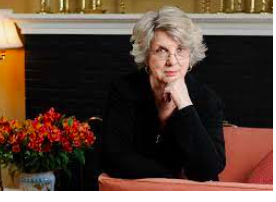
I am presently reading a book – ‘Building a life worth living’ by Marsha, M Linehan. She is the psychologist who developed Dialectical Behavioural Therapy, to help suicidal individuals to build their lives. Much before she did that, she was a seriously suicidal and self-harming young adult.
I am learning so much.
Marsha M Linehan – Author of ‘Building a Life Worth Living’

 kidsaregifts