Two lessons

“He loved me in the purest sense and I loved him. That’s how he kept me alive.” says Marsha about Ted, a catholic priest.

This relationship taught her two important things that she applied to her work as a therapist for seriously suicidal people. She wrote about these things and taught them to her students, the future generation of therapists.

  1. ‘I was unable to say thank-you then. Now I can.’

If you’re giving unconditional love to help someone cope with the hell they are in, if you’re holding them emotionally and physically, don’t interpret their absence of ‘thanks’ as a sign that you are not giving them what they need. You probably are.

2. ‘Keep loving them.’

When someone sees no point in living, they are like someone walking in a mist. They don’t see the mist. They don’t see that they are getting wet. If you’re walking with them, you may not see it either. But if they have a pail of water, you can collect the water that was mist, in it. Each moment of love adds to the mist, which adds to the water in the pail. By itself, each moment of love may not be enough. But ultimately, the pail fills up and the person in hell can drink that water of love and be transformed.

Like Marsha, I know this to be true. I’ve been there and drunk from that pail.

(Inspired by Marsha M Linehans’s book: ‘Building a life worth living’.)
I was so wrong.

I thought that if his doctors would have recognised how sick Saagar was, they would have known that the best thing to do was to refer him to the Psychiatric services. They would admit him to the hospital, look after him and keep him safe.  He would recover fully, return home and resume his life as normal – play the drums, read and speak French, play cricket, go out with his friends, go to the gym, make me laugh till I had tears in my eyes and soon, return to University.

Now I know, that I was so wrong at so many levels.

  1. Recognise?

The GP didn’t think his condition was life-threatening, even after he told him it was. How much more obvious did it have to be? They didn’t believe him. If at all they did, they didn’t take him seriously. Or maybe they simply didn’t know what to do.

GPs are not trained or supported in looking after suicidal patients.

  • Refer?

If they would have made a referral to the Mental hospital, he would have waited for a long time to be seen. Maybe he would have died while on the waiting list, like many others.

GPs are dis-incentivised to make referrals to specialist services in various ways.

  • Admit him to the hospital?

No chance! That would not have happened as there would have been no beds. If there were beds, there would have been others much sicker than him, ahead of him in the queue.

Hospitals have very poor capacity and very high thresholds for admission to inpatient beds.

  • Keep him safe?

490 patients died while detained under the Mental Health Act in the year up to March 21. At least 324, for non-COVID reasons.

Ref: https://www.bbc.co.uk/news/uk-politics-59336579

Being an inpatient does not mean –  safety.

  • Recover fully?

Many patients report traumatic experiences while admitted to mental hospitals. The treatment is often not conducive to recovery. Concerns include coercion by staff, fear of assault from other patients, lack of therapeutic opportunities and limited support.

There is little understanding of what the patient needs, to recover.

(Ref: https://www.cambridge.org/core/journals/the-british-journal-of-psychiatry/article/experiences-of-inpatient-mental-health-services-systematic-review/C5459A372B8423BA328B4B6F05D10914)

I am presently reading a book – ‘Building a life worth living’ by Marsha, M Linehan. She is the psychologist who developed Dialectical Behavioural Therapy, to help suicidal individuals to build their lives. Much before she did that, she was a seriously suicidal and self-harming young adult.

I am learning so much.

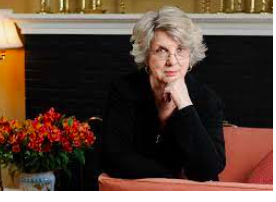
Marsha M Linehan – Author of ‘Building a Life Worth Living’

Grey day

I didn’t light his candle today. Not because I forgot. But I just couldn’t be bothered. He left without saying bye. I know it’s silly to bring this up now, after so many years. He needed to do whatever it was he needed to do. He needed to go. I understand. But the missing makes my heart crumble again and yet again. How is it possible to keep going after its smashed so many times? It feels like the old yellow rubber duck in his bath, being stamped heavily upon, by a topless angry Arnold Swarzenegger wearing big black military trousers and boots. What is this thing that pretends to drum in my chest, tattered and torn?

He broke the rule. Saying good-night was our ritual for many years. After settling him in his bed, I religiously kissed him on his chin, both his cheeks, first left and then the right, his closed eyes, first the left and then the right and then, once on his forehead. He put his little arms around my neck and we both held each other for a short while before I switched off the light and went to my room. We loved it and slept peacefully.

He didn’t respect our little rule. Maybe he couldn’t. But, I deserved at least, a proper good bye. But then, can anyone truly know who deserves what?

all my love,

endlessly

black and white portrait.

The time is always Now.

Once upon a time there was a beggar. He sat at a street corner, pleading for scraps. Anything – pennies, food, clothing. For thirty years, he had lived in dire poverty. One day a young man came along and asked him, “What is it that you sit on?”

“It’s an old wooden box.” mumbled the beggar.

‘Shall we have a look inside it?’

“It’s not worth looking at. I found it in a rubbish heap years ago.”

‘Ever looked inside?’

“No. What’s the point? There’s nothing in there.”

‘I can help you dust it down if you like.’

“Can you spare some change for me please?”

‘Yes. After we’ve looked at the box you sit on.’

“If you insist…”

They took the rotten old blanket off the wooden box and managed to pry it open. With utter disbelief, astonishment and elation they saw a heap of glittering gold-coins within.

While we look for scraps of pleasure, fulfillment, validation and security outside of us, the true wealth of deep unshakable peace and the radiant joy of Being lies within us. Inspired by “The Power of Now”, a book by Eckhart Tolle, I’ve been practicing making this moment the focus of my attention, surrendering to what is and saying ‘yes’ to life, noticing the direct relationship between inner resistance and pain, observing the subtle life-force that flows through my body, witnessing my emotions arise and cease as sensations in my chest and tummy. I have learnt to trust myself. I have found glimpses of freedom from my mind and felt my presence as one with the Universe. Who would’ve thought this possible?

Earlier this week I had the honour of sharing some of the theory, practice and research on this subject through an on-line presentation entitled “Making Friends with Now”. Many thanks to The Compassionate Friends for making this teaching accessible to many.

Making Friends with Now: https://youtu.be/TUC6PQ3l-Ls .

Thank you Prime Minister.

Recently, our highly respected Prime Minister declared there was a need to treat ‘problem drug users’ with ‘compassion’ by investing in rehabilitation. In the same breath, he said that his government would  ‘wage a war’ on drugs by removing passports and driving licenses from drug-users to tackle drug-related crime. He rightly emphasized that drugs were really ‘bad for society’.

Little surprise that he said absolutely nothing about the invisible drug that is freely available in shops and restaurants and can easily be found in homes, clubs and pubs. Many of us use it everyday even though it causes severe social, financial and health damage. As good friends, family and colleagues we often encourage each other to use it, while thinking nothing of using it ourselves. Some of us go as far as taking offense, when someone declines our offer to use it. Yes, alcohol is a drug. It is a depressant, even though it can fool us into thinking and feeling otherwise. It causes more than 60 types of diseases and injuries.

[Courtesy: Science Direct : https://www.sciencedirect.com/topics/pharmacology-toxicology-and-pharmaceutical-science/ethanol-effect%5D

Alcohol use, particularly heavy use and dependence is directly associated with suicide in three ways:

(1) through its dis-inhibiting effects, it emboldens people to attempt suicide

(2) individuals with Alcohol Use Disorders are at an increased risk of suicide as compared to the population at large

(3) alcohol consumption co-relates with suicide rates, all over the world.

Thank you dear PM for giving us a chance to think about our relationship with ‘drugs’, especially at this time of year which can be difficult for some and over-festive for others.

I wish you good company, much fun and laughter now and always. May you be blessed with lots of cake.

(by Charlie Mackesy from “The Boy, the Mole, the Fox and the Horse”)

Ref: Suicidal Behaviour and Alcohol Abuse:  

https://www.ncbi.nlm.nih.gov/pmc/articles/PMC2872355/#b26-ijerph-07-01392