Poverty and the Mind

Vikram Patel is a psychiatrist and a Professor of Global Health who works tirelessly to improve the mental health of people living in low and middle income countries like India and Ethiopia.

His recent research has found that all countries are ‘developing’ countries when you look at the low proportion of the health-budget they spend on mental health. Some wealthy countries may have better systems of care for maternal and child health but overall, mental health remains universally, at the end of the queue.

At present, COVID has overtaken all other agendas. However, now more than ever before, there is a recognition of the two-way relationship between poverty and mental ill-health. This may be a historic opportunity to get this right.

The relationship between poverty and mental ill-health is a complex one. How can we distinguish a normal response to poverty from a disease process? Poverty can increase the risk of poor mental health via multiple pathways, for example, poor physical health, high levels of noise pollution, violent neighbourhoods, insecurity and humiliation.

Can an increase in income improve mental health? Yes. It can but it needs to be sustained.

The fact that having a mental illness may induce poverty is less well recognised. It may affect one’s education and hence, employment opportunities. In low and medium income countries, health care is paid for by people. Due to the length of time it takes to find an effective treatment, much effort and money is wasted in doctor-shopping. Depression is inequitably distributed in society but not recognised as such because wealthy individuals also get it. We accept that long term expensive therapies cannot be delivered to the poor, so what’s the point in studying them?

After nearly a year of job-losses, the number of people below the bread-line all over the world will increase by tens of millions. In India alone, the gains made in economic growth over the last decade are predicted to be wiped out this year. The historically disadvantaged will fare worse, suffer more.

We can expect a surge in mental health problems like we did after the 2008 global financial crisis, mainly led by suicide and drug misuse. Sir Angus S Deaton, a Nobel prize winning economist wrote extensively about these deaths of despair. Economists and global health experts warn that this one will possibly be far worse.

In India, while the state is spending all its energies on the pandemic, livelihood-based organisations are finding very poor mental health in their members. Taking a broad, multidisciplinary approach to depression and anxiety rather than viewing it through the lens of a medical specialty is the need of the hour. Policies all over the world need to de-medicalise the emphasis on specialists and empower front-line providers and communities to enable them to foresee, identify and address this problem.

The bi-directional relationship between mental health and finances means that appropriate mental health interventions can improve finances. Can we persuade policy-makers world-wide to listen to global health experts and economists, look at this fast-approaching  avalanche and steer policies to protect those who are being and will be hit by it?

Talk: Poverty and Depression (https://voxdev.org/topic/health-education/poverty-and-depression-how-improving-mental-health-can-help-economic-wellbeing) – this talk was available till last night but has since disappeared.

Research Papers:

  1. Angus Deaton on the Financial crisis and the well-being of Americans (June 2011):

https://www.nber.org/papers/w17128

2. Vikram Patel on Causal evidence and mechanisms of Poverty, Depression and Anxiety (May 2020):

https://www.nber.org/papers/w27157

Civilized. Are we?

An anthropologist, Margaret Mead was asked by a student “What do you consider the first sign of civilization to be?” He expected her to mention things like clay pots, fish-hooks and grinding stones but she replied, “A femur that had been broken and then healed. In the animal kingdom, if you break your leg, you die. You can’t run from danger, get a drink from the river or hunt for food. You are meat for prowling beasts. No animal survives a broken leg for long enough for the bone to heal. A bone that has healed indicates that someone took the time to stay with the one who fell, bound up the wound, carried the person to safety and tended the person through to recovery. Helping someone else through difficulty is where civilization starts.”

She also said that we should never doubt that a small group of thoughtful, committed, citizens can change the world. Indeed, it is the only thing that ever has.

Over the last weeks and months, there have been thousands of job-losses, much sadness caused by separation and bereavement and much suffering due to limited social contacts and falling away of normal support systems. Perhaps explaining this tweet by London Ambulance Service.

May be this is the time for us all to step up and be there for those who are affected. Sharpen our radars and pick up the subtlest signs of despair around us. However small, there is something we can all do – start a conversation, smile, share a hot coffee, offer a few coins or share information on useful resources. There will always be a reason to not do it but you are a member of a small group of thoughtful, committed, citizens who are going to change the world. Slowly. Slowly.

Resource: PAPYRUS: A charity dedicated to the prevention of young suicide: https://www.papyrus-uk.org/

Shushshsh…

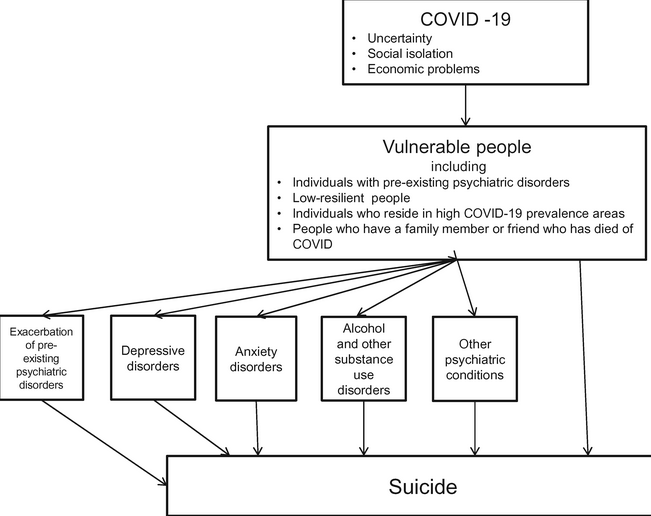
In June 2020 Sher et al said “Social isolation, anxiety, fear of contagion, uncertainty, chronic stress and economic difficulties may lead to the development or exacerbation of depressive, anxiety, substance use and other psychiatric disorders in vulnerable populations including individuals with pre-existing psychiatric disorders and people who reside in high COVID-19 prevalence areas … COVID-19 crisis may increase suicide rates during and after the pandemic.”

This possibility is slowly starting to unfold. The number of calls being made to crisis help-lines of all kinds is up by about 40%. Economic uncertainty, insomnia, stress and suicidality feed into each other. The previous financial crisis of 2008 had a tragic outfall in terms of the toll taken on human life, essentially due to job losses. Now we are heading into another one. Unless governments all over the world wake up now, lives lost by suicide over the coming months and years could be more than those lost to COVID-19. As per the ONS data from last year, the England and Wales suicide rate remains statistically significantly higher than the rates seen in recent years.

Active outreach is necessary. If you know friends or family who might be struggling or worried, please do reach out to them with your time and open up supportive conversations. Sending a text or WhatsApp message is not enough. Having a proper check-in by telephonic or video link, possibly meeting up for a cup of tea or a drink fosters proper connection. If you find yourself in a tight spot, please know – this too shall pass. It is a temporary problem. Life still holds promise and beauty. Do reach out to your friends and family for support. More than ever before, in the present times suicide prevention is everybody’s business. Take care of you and yours.

Let’s play Politics!

National Confidential Inquiry into suicide and homicide in people with mental illnesses 2016:

In-patient suicides:

Suicide by mental health in-patients continues to fall, most clearly in England where the decrease has been around 60% during 2004-14. This fall began with the removal of ligature points to prevent deaths by hanging but has been seen in suicides on and off the ward and by all methods. Despite this success, there were 76 suicides by in-patients in the UK in 2014, including 62 in England.

Suicides after discharge:

The first three months after hospital discharge continue to be a period of high suicide risk. In England the number of deaths rose to 200 in 2014 after a fall in the previous year. Risk is highest in the first two weeks post-discharge: in a previous study we have shown that these deaths are associated with preceding admissions lasting less than 7 days and lack of care planning. There has been a fall in post-discharge deaths occurring before first service contact, suggesting recognition of the need for early follow-up. In all there were around 460 patient suicides in acute care settings – in-patient and post-discharge care and crisis teams – in the UK in 2014.

First of all I want to say that every suicide is a huge tragedy and must be prevented at all costs. Behind each of these numbers are precious lives and beautiful people. I don’t allow myself to forget that even when I am angry. This blog is a mere observation on how I have seen politics being played in front of my eyes in the last week. In light of the above findings, in consultation with his expert advisors and in all his wisdom, Mr Jeremy Hunt has decided to focus his attention on in-patient deaths – a group that is manned by the most highly trained professionals in a very controlled environment, a group that is on the list of ‘never-events’, a group that has already shown a decrease by 60%, a group where even a small reduction in numbers will amount to a big percentage and will make him look good.

With all good intentions, he has converted a healthy aspiration of Zero-suicide in the community to an unhealthy target for in-patients creating huge anxieties. Last week at the NSPA conference I heard Mr Hunt speak in the most self-congratulatory of tones about how wonderful it is that UK is the first country to legislate for ‘Parity of Esteem’. I am sorry Sir, that means nothing on the ground. The workforce coming in contact with the majority of suicidal people in the UK is largely untrained. They don’t even know how to talk with them, let alone ‘look-after’ them. The massive funding cuts focus on mental health which in turn results in poor training of junior doctors. When questioned directly about ‘parity of training’, he masterfully slips and slides away.

In my eyes you don’t look good Mr Hunt.


Day 857

dsc_4097copy

Homeless people are amongst the most vulnerable in our society. The average age of death of a homeless person is 47 years for men and just 43 for women, as compared to 77 for the general female population.

Drugs and alcohol abuse account for just over a third of all deaths. Homeless people are over 9 times more likely to die by suicide than the general population. Other common causes of death are traffic accidents, infections,falls and violence against them. 

Homelessness kills.

Walking around London it is clear that despite significant investment in the NHS and improvements in homelessness services they are not getting the help they need to address their health issues.

Walking around Trafalgar Square, one can’t miss the majestic Georgian church, St Martin-in-the-fields . It is a hospitable, vibrant, open and inclusive, forward thinking community with worship at its heart. The Revd. Dr Sam Wells is full of grace and wisdom. He always speaks to my heart. I look forward to hearing him at the special service being held there on Saturday, the 4th of March for families bereaved by suicide.

This poem by Sir Andrew Motion is a part of an Arts project run by the Church and is inscribed on the balustrade encircling the lightwell in the open space near the church:

Your stepping inwards from the air to earth
Winds round itself to meet the open sky
So vanishing becomes a second birth.
Fare well. Return. Fare well. Return again.
Here home and elsewhere share one mystery.
Here love and conscience sing the same refrain.
Here time leaps up. And strikes eternity.

Sources:

Crisis research from 2011:
http://www.crisis.org.uk/data/files/publications/Homelessness%20-%20a%20silent%20killer.pdf

St Martin-in-the-fields:
http://www.stmartin-in-the-fields.org/

Sir Andrew Motion:

Andrew Motion – Poems