Day 954

photo (4)

Recovery Room is also known as POCU – Post Operative Care Unit. While most patients have a smooth emergence from anaesthesia, others may feel disorientated or confused. They might feel mild pain, nausea or experience other side effects of surgery and anaesthesia.  The calm and caring presence of Recovery nurses helps them smooth over all these turbulences and come back to themselves before being sent to the ward.

K is one such nurse. Her sweet voice and soft Australian accent is unmissable. She smiles all the time. She listens and asks intelligent and relevant questions. She is full of kindness and clever ideas to get around problems. She respects other people’s priorities and time. She is an old soul.

Last Saturday, after work she went out to a pub with friends. She heard some troublesome noises on the street and went out to help. I can picture her excusing herself, ”I’ll just nip out and be back in a sec.” Little did she or her friends know that that would be her last act of kindness. She was killed in the incident near London Bridge that night.

How is it that some people can go out of their way to be vicious and others can show extraordinary kindness at a huge cost to themselves? We all belong to the same race. We all cry the same salty tears and bleed the same red blood. We all feel the same insane love for our kids and the same burning pangs of hunger. Ultimately we all want to be free, to be loved and understood for who we are. Why this deep divide?

Can I imagine K not offering to help? No. That is just the kind of person she was – true to herself till the very end. Bless you K. We love you and miss you. Recovery Room is not the same without you and this world is a better place because of you.

Love and blessings from London to all broken lives and hearts, everywhere.


Day 951

download

Who? The young. 

1 in 6 people is an adolescent. More than 3000 adolescents die every day from largely preventable causes, according to a new report from WHO and partners. That amounts to 1.2 million deaths per year.  Many key risk factors for future adult disease start or are consolidated in adolescence. Adolescent mental health and well-being are often overlooked.

In 2015, more than two-thirds of these deaths occurred in low- and middle-income countries in Africa and South-East Asia. Road traffic injuries, lower respiratory infections, and suicide are the biggest causes of death among adolescents.

Most of these deaths can be prevented with good health services, education and social support. But in many cases, adolescents who suffer from mental health disorders, substance use, or poor nutrition cannot obtain critical prevention and care services – either because the services do not exist, or because they do not know about them.

“Adolescents have been entirely absent from national health plans for decades,” says Dr Flavia Bustreo, Assistant Director-General, WHO. “Relatively small investments focused on adolescents now will not only result in healthy and empowered adults who thrive and contribute positively to their communities, but it will also result in healthier future generations, yielding enormous returns.”

Suicide and accidental death from self-harm were the third cause of adolescent mortality in 2015, resulting in an estimated 67 000 deaths. Self-harm largely occurs among older adolescents, and globally it is the second leading cause of death for older adolescent girls. It is the leading or second cause of adolescent death in Europe and South-East Asia.

“Improving the way health systems serve adolescents is just one part of improving their health,” says Dr Anthony Costello, Director, Child and Adolescent Health, WHO. “Parents, families, and communities are extremely important, as they have the greatest potential to positively influence adolescent behaviour and health.”

At long last, the world is waking up and so is the World Health Organisation.

Podcast:
In conversation with Meera S and Dr George at Business FM, Malaysia:

Doctor in the house: Adolescent Health

Day 949

Iatrogenic

download

Antipsychiatry – I knew the sentiment but I didn’t know the word.
Dr Bonnie Burstow has helped hundreds of “highly suicidal patients,” as a psychotherapist. She’s come to believe that conventional psychiatric treatment isn’t in their best interests.

For half a century, scholars have been looking closely at Psychiatry as a coercive instrument of oppression. Dr Burstow is a prominent figure in the field of antipsychiatry, which she describes as “a movement of both psychiatric survivors and professionals saying that we need to abolish psychiatry”. She’s the author of “Psychiatry and the Business of Madness” and “The Myth of Mental Illness”.

“Longitudinal studies have shown that people who go off their drugs after a few years do better in the long run than people who stay on them. But guess who does the best of all? The people who were never on them in the first place. So, then the answer is, no one should be on them in the first place. These are not medical substances. They do not address a single chemical imbalance. They, in fact, cause imbalances and not surprisingly they cause all sorts of problems for people who can then never get off them because they now have a disordered brain that is caused by the medical profession. You know I spend a lot of time building up that and showing how it happened. But once you take in that position, it is a very convincing argument for abolition.

Since the 19th century, psychiatry has been defrauding vulnerable people. There was dunking people in cold water. There was rotating people in chairs. There was also opium. There was bleeding. Remember we had bleeding for a long time. There was also genital mutilation, just don’t forget they thought madness was being caused by masturbation.”

The University of Toronto has recently started a scholarship in Antipsychiatry. It is a historical breakthrough and hopefully a precursor to a better society. It signals to the world that this field of inquiry has come of age.


Day 947

Schools have counsellors. Kids can go to them to speak about their problems. The kids of counsellors don’t go to their own parents. They find someone else. What is the difference between a parent and a counsellor? Parents are judgemental. Counsellors are not judgemental.

Our neighbour’s kid comes to us when they are in trouble and we tell them, ”Nevermind. It’s ok. Let’s see what we can do now.” Do we say that to our own kids when they make a mistake? Parental default mode when in shock is – How could you do this? You can’t be my kid. You must have been swapped at the hospital and so on… We bail out all the rejection in the world to the most important person in our lives.

When one makes a mistake, what do they need at that moment? For instance, if someone slips and falls, they need support. Second thing they need is healing. Later on, softly one can say, “Careful next time. Tricky spot.”

If at the very time of the fall someone says to us,”Can’t you see? There are only two steps here and even those you can’t manage.” How are they going to feel? Is that what they need at that time? They are in severe physical or emotional pain,  they are unable to take any advice on board. All they need is love and support. When we don’t pay attention to our state of mind, the smallest of mistakes upset us. In that case, how can we handle bigger problems? In fact the bigger the mistake, the more love and support needs to be given but we do the opposite – bigger the mistake, more the shame and humiliation.

A child is tempted to try a cigarette when his friends were doing the same. Is it normal for their curiosity to get the better of them? Can we understand that? Can we remember the time when we were that age and felt that way in a similar situation? Can we say to them that we understand? That it’s the habit of smoking that’s wrong. They are not wrong. Can we make them feel ok about themselves and empower them to choose what’s best for them? If yes, they might trust us with the truth.

It is not our job to discipline people or control their behaviour. It is our job to empower them to think for themselves. That power comes if they feel understood and accepted. When we can say to our friend, spouse or child that they are right, then they might think that we are right. If they constantly feel rejected by us, they will reject us too.

(Yesterday’s and today’s posts are transcripts from a counsellor speaking to a group of parents in Hindi in India. Name unknown.)


Day 942

download-1

My optimism is foolish

For more than 25 years, I have practised anaesthesia. One would think that by now I would know for sure that procedures take much longer than they are scheduled for and that every list these days is overbooked. Still, foolishly I hope to finish in time every day. Even though I have had to cancel after-work plans on many occasions, at every new opportunity I want to give a chance to the possibility of a desirable outcome.

When Saagar was ill, I was optimistic. I believed that he would get better. That it was only a matter of time. The messages I got from professionals reaffirmed that belief. My faith in life and confidence in Saagar and myself kept that belief strong.

Now when I am with worried parents and friends, I hold their uncertainty and mine. Things can go one of many ways. We don’t know. We just need to be with that uncomfortable uncertainty with positivity. That is compassion. Understanding.

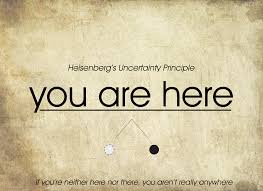
In quantum physics, Heisenberg’s principle of Uncertainty says that there is an inherent uncertainty in the amount of energy involved in quantum processes and in the time it takes for those processes to happen. Vacuums are often defined as the absence of everything. But not so in quantum theory. It is possible that for very, very short periods of time, a quantum system’s energy can be highly uncertain, so much that particles can appear out of a vacuum. This is well within the laws of quantum physics, as long as the particles only exist fleetingly and disappear when their time is up. Uncertainty, then, is nothing to worry about in quantum physics and, in fact, we wouldn’t be here if this principle didn’t exist.

“One misconception is that entrepreneurs love risk. Actually, we all want things to go as we expect. What you need is a blind optimism and a tolerance for uncertainty.”

-Drew Houston