Day 821

Suicides are grossly under-reported. Here are a few reasons for that:

  1. Criminal standard of proof, “beyond reasonable doubt”, is required when determining the cause of death as suicide. Many suicides are recorded as ‘undetermined deaths’ because of that. The Chief Coroner is supportive of the change which would reduce the standard of proof for suicide to the civil standard and has expressed his view to the Ministry of Justice but the MoJ has steadfastly refused to change the way that coroners reach a suicide verdict despite persistent requests from Suicide Prevention charities such as PAPYRUS. This leads those of us campaigning on this issue to conclude that they deliberately want to suppress the figures around the number of people who take their own lives each year.
  1. MoJ argues that a change to the law would offend certain faith groups. We, at PAPYRUS believe that determining a cause of death should be about establishing facts, not about appeasing any particular sector of the community.
  1. Many families who have lost loved ones to suicide, particularly when the deceased are their children, do not want to hear that they ended their own life. Coroners are understandably sensitive and hence, reluctant to reach a verdict of suicide and conclude that the death occurred because of an accident or misadventure. An open or narrative verdict is often returned even when the evidence clearly shows that the person took his or her own life.
  1. Death is taboo and suicide is a deeper layer of taboo underneath. Mental illness is taboo and suicide is a darker layer of taboo underneath. The stigma attached to it stops everyone from being open about it.

Research by Professor Colin Pritchard at Bournemouth University suggests that if coroners used the civil standard of proof – “on the balance of probabilities” – we would see a 30-50% increase in recorded suicides. His research validates the view held by Papyrus that the current arrangements mask the true number of suicides in the UK.

Unless we can face the enemy, how can we ever hope to vanquish it?

Sources:

https://www.theguardian.com/commentisfree/2017/jan/09/suicide-crisis-law-uk-cause-of-death-young-people

http://www.inquest.org.uk/help/handbook/section-4-3-verdicts
http://www.thetimes.co.uk/article/thousands-of-suicides-hidden-to-comfort-grief-stricken-families-5fhkspfbx


Day 814

A bereaved mum’s lament: Went out for dinner with friends. What could go wrong? All went well until there was talk of an acquaintance of one of the guests who is suffering from a debilitating mental illness. They had tried to take their life but survived. The guest herself is a breast cancer survivor. She said that she had visited the person and said “did they not realise how hard she had fought to live and there they were throwing away their life”. Its a shame she didn’t appreciate just how hard the other person was fighting to stay alive … my son lost that fight. When will they realise Depression is as dangerous and potentially fatal as cancer. You know when you are stuck in a situation when its just not appropriate to make a fuss but you want to scream “How ignorant are you ???”

From the individual level, right through the media, the regulatory bodies and up to the government, we are all ignorant. Mrs May speaks of parity between physical and mental illnesses, ie. both being given the same importance. Many others have talked about it before her but we are miles away from it.

The Ebola Outbreak in West Africa was a public health emergency of international concern and we heard about it everyday, non-stop on the radio and TV from 2014-2016. 1 person was infected with the virus in the UK and fortunately there were no deaths from it. 1 person dies every 2 hours by suicide but it is not mentioned in the media. Public health England are not particularly concerned. Suicide claims 4 young lives every day but it’s no big deal.

Imagine a middle aged man presenting to his doctor with severe chest pain and being sent home with pills that take 3 weeks to work. I am sure the GMC would have something to say about that. A young man presents to his doctor with debilitating depression together with a strong desire to end his life and he is sent home with pills that can potentially make suicidal ideation worse and the benefit, if any might be seen in 3 weeks. The GMC finds that acceptable practice.

1 in 4 patients present with a mental illness to the NHS and only 10-12 % of the NHS budget is spent on mental health.

Survivors of physical illnesses proudly claim bravery and wear their survival as a badge of honour whereas those surviving mental illness hide in corners feeling ashamed.

The acceptable faces of mental illness are Dementia and Alzheimer’s disease. This is apparent from the t-shirts worn at charity events, walks and runs. I hardly see anyone running in support of Bipolar Disorder research or British Schizophrenia Foundation or Borderline Personality Disorder Charity. 

Things most resistant to change are cultures and mindsets.
Parity of esteem?
We have aeons to go!!!

Day 813

Short stories have always intrigued me. Of late my attention span has become so short that those are the only kind of stories I can relate with and appreciate.

Here’s an abridged version of ‘Grief’ by one of the greatest writers of short fiction, Anton Chekov.

‘Grief’

It is twilight. Large flakes of snow are falling. A cab-driver, Iona, waits for a customer. He sits in his cab with his body bent as double as a living body can, immobilized by misery. ‘To whom shall I tell my grief?’

At last an officer arrives. Iona sets off in his cab with the officer at the back. He turns around to speak to him.
“My son…er…my son died this week, Sir.”
‘Hm. What did he die of?’
“It was a fever.”
Silence. Iona turns around again to find the officer nodding off.

As the evening progresses, Iona attempts to talk to someone three times. He tries to tell the story of his son’s death again and again. The second passenger, a high browed businessman interrupts Iona and says, ”We all must die one day.” Another man simply gets out of the sleigh. Later Iona tries to speak with a house porter but he brusquely tells him to drive on. Still later Iona offers one of his fellow drivers a drink but the young man promptly falls asleep. Just as the young man has been thirsty for water, Iona thirsts for speech. There is so much he needs to share.

“One must tell it slowly and carefully; how his son fell ill, how he suffered, what he said before he died, how he died. One must describe every detail of the funeral and the journey to the hospital to fetch the defunct’s clothes. His daughter Anisya remained in the village – one must talk about her too. Was it nothing he had to tell? Surely the listener would gasp and sigh and sympathise with him?”

Finally at the end of the working day, Iona returns to the stables. He starts to speak to his horse, “Now let’s say you had a foal, you were that foal’s mother and suddenly, let’s say that foal went away and left you to live after him. It would be sad. Wouldn’t it?”

The mare munches hay and breathes on her master’s hands. She doesn’t close her eyes, nor walks away, nor interrupts with her own wisdom on the matter. And it’s enough. Iona tells her everything.

At the risk of repeating myself, I tell the story I need to tell:

(Special thanks to Diane Morrow and her book: One Year of Writing and Healing)

Day 812

The boundaries between ‘sanity’ and ‘insanity’ are elastic. Each one of us has a place on the spectrum and it constantly shifts and shuffles depending upon the changes in our outer and inner landscapes. Each of us with our own fears, anxieties, sadnesses, communication problems and struggles to fit in move up and down that range.

“The world is but a great Bedlam, where those that are more mad, lock up those who are less.” -Thomas Tryon (1689)

“Surely we’re all mad people, and they, whom we think are, are not.” -Thomas Middleton, The Revenger’s Tragedy (1606)

Some days are impossible. I have to roll as a stone on the road, slither on sharp stairs, climb up through a lift shaft, squeeze under the door to the room and then at the end, to finally assemble myself on a chair to make a complete feeling. Today, the feeling is of nothingness. All I feel are my empty arms. The air between them is painful. The arms ache. They stretch out, crying, wanting to hold him. They hate it but they are… empty.

My heart and soul are empty. This house is empty. This whole world is empty. Reality is not what it seems to be. Nor is it otherwise. Am I now bordering on the insane? Am I always like this, but covering it up? Who is to decide what is what? No one knows. No one has ever known.  A rock is just a rock. A river is just a river. Misfortune is just bad luck! It is just what it is – the experience of being human. It is absolute. It does not need validation. It does not need a name.

(Inspired by an exhibition at the Wellcome Collection: Bedlam- the asylum and beyond)

Day 806

search

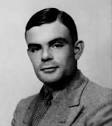
Alan Turing was a lonely, awkward boy. His only friend in school died of tuberculosis in 1928. This awful event had a formative impact on the life of this young man who went on to become a brilliant mathematician and code breaker at Bletchley Park from 1939-45. Cracking the Enigma code significantly shortened World War 2 and potentially altered its outcome. He was the first man to indicate how thinking machines might be built. He later came to be known as the father of modern computing. He was one of the most influential men of his time and we owe our freedom to him. Steve Jobs wanted his company logo of the bitten apple to be associated with Turing’s love of apples.

An accomplished runner, he also had a great interest in the paranormal. And there is Turing the composer, responsible for some of the earliest computer music recorded by the BBC in Manchester. He is described as “shy, gay, witty, grumpy, courageous, unassuming and wildly successful genius”.

In 1952, he was arrested under a homophobic law for ‘gross indecency’. The chemical castration that Turing underwent thereafter was highly unjust and disgusting. Tens of thousands of less famous men were similarly prosecuted between 1885 and 1967.

He was found by his cleaner when she came in on 8 June 1954. He had died the day before of cyanide poisoning, a half-eaten apple beside his bed. His mother believed he had accidentally ingested cyanide from his fingers after an amateur chemistry experiment, but it is more credible that he had successfully contrived his death to allow her alone to believe this. The coroner’s verdict was suicide.

These countries still punish homosexual acts by death: Saudi Arabia, Afghanistan, Nigeria, Qatar, Iran, Somalia, Yemen, Sudan, Mauritania and UAE.

World gay rights map:
https://www.washingtonpost.com/graphics/world/gay-rights/