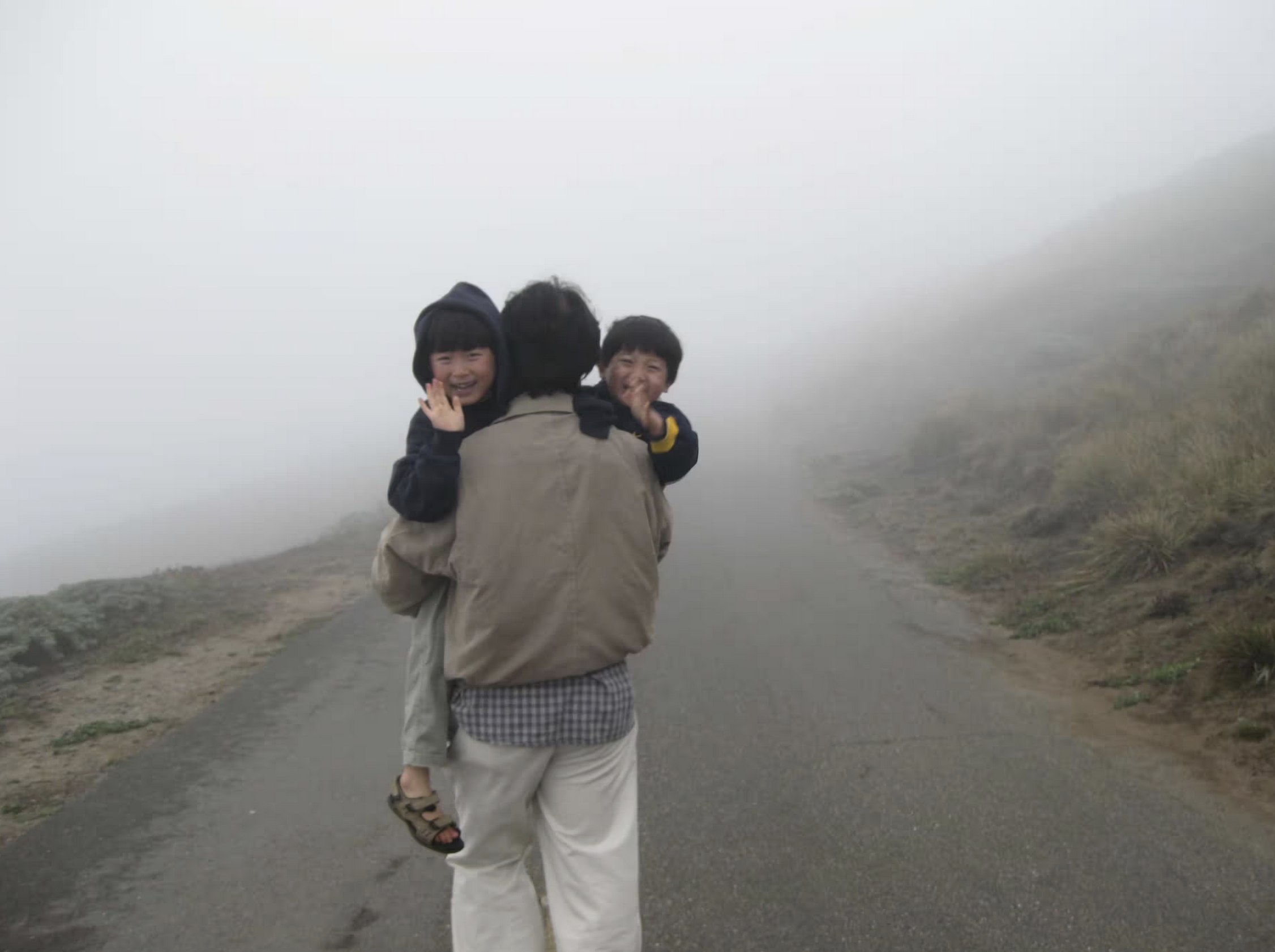
Vincent and James.

2017 – 16. Male. RIP.

2024 – 19. Male. RIP.

Brothers. Second generation Chinese immigrants in USA. Their mother, a writer who lost both of them to suicide.

Where Reasons End (2019) by Yiyun Li, after Vincent’s death.

I read this book when it was first published. An imagined conversation between her and her older son, Vincent who lived ‘feelingly’. Sixteen chapters, one for each year of his life. It has a witty and mischievous tone. Nicholai, a name he gave himself, chides his mother’s new embrace of cliches and adjectives. “If you’re protesting by becoming a bad writer, I would say it’s highly unnecessary,” he says. (“Dying is highly unnecessary too,” she shoots back.)

Things In Nature Merely Grow – Pulitzer Prize Finalist 2025, by Yiyun Li, a memoir. She wrote it within two months of her younger son, James’ death. I feel deeply for her and with her but I am not sure I want to read that book right now. A few lines from it sing true:

“I am in an abyss. If an abyss is where I shall be for the rest of my life, the abyss is my habitat.”

“My children were not my burden. My sadness is not my burden.”

“I am very realistic in that I would always acknowledge that I am limited as their mother. I was limited, and I am still limited as a mother, so I can only do my best.”

When people hold an expectation that her grief must have an end date, she retorts, “How lonely the dead would feel, if the living were to stand up from death’s shadow, clap their hands, dust their pants, and say to themselves and to the world, I am done with my grieving; from this point on its life as usual, business as usual.”

“This is a very sad fact of our lives, they took their own lives knowing we would accept and respect their decision.”

Could I accept and respect Saagar’s decision one hundred percent? I believe it was not his decision. It was his utter helplessness and desperation in the face of his illness, his unsuitable antidepressants, lack of medical care, his isolation, his inability to recommence his education, our inability to talk about it and so much more. He was driven to it. It was not by choice. Anyone who knew him, knows that. I do understand though.

I understand, my darling.

References:

https://www.theguardian.com/books/2019/feb/05/where-reasons-end-yiyun-li-review#

https://www.theguardian.com/books/2025/may/17/author-yiyun-li-on-the-suicide-of-both-her-sons

A hundred shining circles

“The longer I live, the more deeply I learn that love — whether we call it friendship or family or romance — is the work of mirroring and magnifying each other’s light. Gentle work. Steadfast work. Life-saving work in those moments when life and shame and sorrow occlude our own light from our view, but there is still a clear-eyed loving person to beam it back. In our best moments, we are that person for another.” – Maria Popova.

We have been those mirrors for each other for the last hundred fortnights. A few days ago, the Saturday group of the Circle of Remembrance met for the 100th time. It was a celebration of the love, the love we have for our children and for each other. Love that shows up as mutual support, respect and friendship. While many people have come and gone, some have stayed right from the start. We’ve walked together for four years. What a privilege that’s been. Such unique and intimate conversations, exploring the human condition through words like ‘home’, ‘freedom’ and ‘Grace’.

I wish I had reliable and wise friends like these in the Before. I wish I could listen with understanding that could penetrate any mask. I wish I had the ability for this kind of sterling emotional engagement. It does save lives. It has saved mine.

Earlier I believed that lives were saved mainly by highly trained professionals in well-equipped resuscitation rooms in big Emergency Departments and in Operating Theatres. Now I know that each day ordinary people save lives simply by being a 100% present, with everything they have.

The longer I live, the more deeply I know that love is gentle work.

Resource: Circle of Remembrance (online peer-support for bereaved parents): http://www.core-community.com

Are you listening?

‘I was sent away to live with my granny when my youngest sister was to be born. I was three and a half then. I stayed with my grandma till I was 6. When I moved back to my family, I wasn’t quite sure who they were. That time of my life shows up as murky grey when I think about it.’

Well, everyone has gone through something or another.”

Those days life was hard. There were no washing machines and dish-washers. So, I can understand how hard it must have been to look after three under-fives.”

At least you were re-united with your family within a few years and you were safe.”

“I am sure your grand-ma cuddled you and loved you very much.”

At least you were in the care of your grand-mother and not some random stranger. I was brought up by nannies.”

“It clearly did you no harm. Look at you.”

Wow! Not one person sitting around that table listened.

Did they have any curiosity? Any fascination?

Do we allow our listening to connect us with something fragile, deep within us?

Does it forge understanding and connection with another?

Do we allow ourselves to sit with someone else’s shadow?

Does our listening ease a burden?

Am I listening?

Are you really listening?

(Resource: In CORe community, we listen.)

Unspeakable.

Age: 82 years.

Sex: Male

Residence: Bed number 19. Intensive Care Unit.

Duration of stay: 70 days and on-going.

Last heard speaking 68 days ago.

Up and down with repeated pneumonias, rising and falling need for support with breathing and blood pressure, weeks of starting and stopping a plethora of antibiotics, kidneys pushed to their limits, sepsis coming and going, metabolic state constantly fighting off infections. This goes on and on and we, his family go up and down with him. In between spells of invasions by nasty bugs, he mouths words, some of which we can decipher and some we can’t. It’s excruciating on both sides when he gives up after a few times of trying to be understood.

“I want to speak.”

Last evening, he insisted silently, sitting up in his hospital bed. His lips firmly formed the shapes of those words. After a quick consultation with the doctor in-charge, we arranged a brief attempt to enable him to speak. We did the appropriate suctions, explained everything to him and blocked his tracheostomy manually with a thumb covered in a sterile glove, to enable the small amount of air in his lungs to leave through his vocal cords, which have not been used for nearly ten weeks.

This man who used to have a big voice, spoke four languages and sang sweet songs had been rendered wordless. In a somewhat broken, hoarse, unrecognisable semi-voice he whispered, “I am trying.”

There were tears. Lots of them. Of love and all the unspeakable stuff.

His eyes were two bright lamps in a poor man’s hut. Oh! To be understood!

Meeting old friends for the first time.

Meeting old friends for the first time. In at least three dimensions. Sharing a physical space together, not just a bland rectangular screen. Actually holding hands.

“Gosh! You’re for real!”

The sparkling smiles of recognition mixed with disbelief. The hugs offering heart to heart resuscitation and healing. Sitting down side by side on the sofa, sharing stories, tea and cake.

A year ago, this could have been fiction but last weekend it was fact. While volunteering at a retreat for Bereaved parents hosted by The Compassionate Friends, we finally met people we’ve only ever seen on Zoom. It was held at the simple and serene Woodbrooke Centre, a Georgian manor house in Selly Oak, Birmingham with tall trees, beautiful flower beds and a family of geese perambulating the grounds, intermittently honking. It is a Quaker centre and has a poster in the main foyer which reads “Nameless helping the Nameless”.

The garden in front of the main house has a labyrinth mowed into it. Early on Saturday morning, birds were singing and the light was inviting me into the open. I decided to walk bare feet into the center of the labyrinth. I took my shoes and socks off at the edge of the circle. As soon as I started walking, it turned into an extremely mindful experience as the ground was littered with geese droppings.

The silence in that place was sweet and the views a treat. We talked about the importance of finding meaning. We shared the joys and challenges of taking the inward road. We watched a film and sang together. We wrote from our hearts and created pretty little candle holders for our kids from jam jars at the crafts table. We cried and laughed, reassured that in this company, it was completely acceptable to do both, sometimes simultaneously.

A pleasant exchange. Giving and receiving with compassion. Understanding. Belonging. Learning. Holding the utter magnificence of life in one hand and the absolute devastation in another. That’s what this game is all about, I guess.