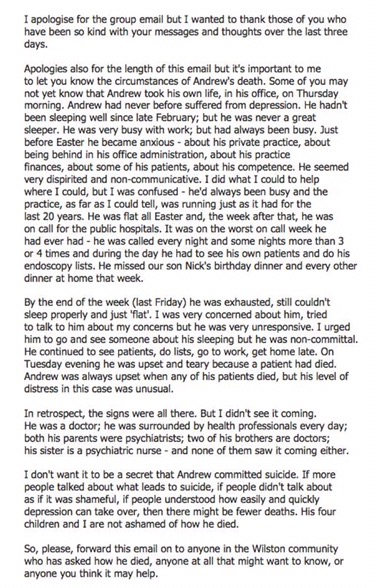
Day 981

For Rene’

Somewhere in the sea
Are you waiting for me?
In that expansive blanket
Of blue
I am waiting for you
I’ve cried these tears
They’ve made this sea
And now I cannot find you
In this sorry mess of blue.

I’ve swam to the edge to reach This tip
Of nothingness where you left your shoes for a dip
From which you haven’t returned
And now I’m left tracing
Across this sparkling blue
Where has it taken you?

My love was pure
It held no bounds
And yet nowhere, anywhere
Can you be found
I try to search with frantic eyes
Where I can turn back the fate
Of your demise?

I hold your shoes pacing
these shores
Wont you be out soon, cold,
and need your soles?
I am here, a lifeguard
Supposed to protect you
Against these waves of blue.

I pray to the Gods and the earth and the creators I don’t know
That they can bring you back here to this spot where I bow
I’ll protect you better
Try harder
Swim faster
Against this tide that pulled you out.

If I can’t find you then what is my life about?

I’m so sorry, my angel
But I’ll never give up
I’ll wait here forever till this blue dries up
I’ll sit here searching until you come back.

-by Rene’s sister, Stephanie.

Day 956

images

Death seems to be all around me. It has seeped into my bones. My thoughts are filled by it. And my feelings. Yet, I don’t understand it. It is so many things in one – intrigue, loss, finality. While it is an essential part of life, why has it flooded my being? Standing under an old oak tree, my back against its barrel trunk covered in rough bark, eyes closed, I beg for a shred of the silent ancient wisdom it holds. Its roots connect me to grieving mothers everywhere. I see their shattered hearts, vanished futures and hollowed rib cages mirror mine. The globe is covered in a blue fishnet of grief.

Helen Dunmore, a poetess, writes about death, staring it in the face with calm and courage as cancer takes home in her body. She wrote this poem 12 days ago, 12 days before Death took her in her arms.

Hold out your arms

Death, hold out your arms for me
Embrace me
Give me your motherly caress,
Through all this suffering
You have not forgotten me.

You are the bearded iris that bakes its rhizomes
Beside the wall,
Your scent flushes with loveliness,
Sherbet, pure iris
Lovely and intricate.

I am the child who stands by the wall
Not much taller than the iris.
The sun covers me
The day waits for me
In my funny dress.

Death, you heap into my arms
A basket of unripe damsons
Red crisscross straps that button behind me.
I don’t know about school,
My knowledge is for papery bud covers
Tall stems and brown
Bees touching here and there, delicately
Before a swerve to the sun.

Death stoops over me
Her long skirts slide,
She knows I am shy.
Even the puffed sleeves on my white blouse
Embarrass me,
She will pick me up and hold me
So no one can see me,
I will scrub my hair into hers.

There, the iris increases
Note by note
As the wall gives back heat.
Death, there’s no need to ask:
A mother will always lift a child
As a rhizome
Must lift up a flower
So you settle me
My arms twining,
Thighs gripping your hips
Where the swell of you is.

As you push back my hair
– Which could do with a comb
But never mind –
You murmur
‘We’re nearly there.’


Day 952

A surgeon’s wife writes

img_1418

The Dark side of Doctoring is an insightful blog written by a surgeon.
The common themes that push doctors into dark despair are:

1.Loss of control.
2. Loss of support. 6am. Repeat.
3. Loss of meaning.

One would think that those who look after other people would know how to look after themselves and their colleagues. Not so at all.

Thank you Dr Eric Levi.


Day 944

ernest-hemingway-9334498-2-raw

The Great Master

All I manage to read these days are short stories. Partly due to my abbreviated attention span and partly because the time has come when I ‘should’ start wearing reading glasses but I don’t. I get by, by increasing the font size and by reading for short periods of time. Also by squinting a lot.

‘The First Forty nine stories’ is a collection by the Nobel prize winner, Earnest Hemingway. In the preface he says, “In going where you have to go and doing what you have to do and seeing what you have to see, you dull and blunt the instrument you write with. But I would rather have it bent and dull and know I had put it on the grindstone again and hammer it into shape and out a whetstone to it, and know that I had something to write about, than to have it bright and shining and nothing to say, or smooth and well-oiled in the closet, but unused.”

After devouring the collection, I read up about him and was saddened to find that he suffered with depression and died of suicide. Here’s an example of the sensitivity and vulnerability of his characters and the simplicity of his story telling style. It’s called ‘Cat in the rain’.


Day 940

The dark thing that sleeps in me

11_splat_150

Thomas Joiner, author of “Lonely at the Top: The high cost of Men’s success” is an avid suicide researcher. He lost his father to suicide.

His career choice is dismissed by some as : “You’re just trying to fix your own psychological problems, just like all mental health professionals.” Having psychological problems is not insulting. They are common, often treatable and nothing to be ashamed of.

Surely, heart and cancer researchers are not perceived in the same light. This is another reflection of the stigma that surrounds suicide.

Stigma is fear combined with disgust, contempt and lack of compassion – all of which flow from ignorance. We need to understand that suicide is not easy, painless, cowardly, selfish, vengeful or rash. It is not caused just by medicines, anorexia, smoking or plastic surgery. It is partly genetic and influenced by mental disorders which in themselves are agonising. That it is preventable (eg. through means restriction like bridge barriers) and treatable (talk about suicide is not cheap and should warrant specialist referral).

Once we get all that in our heads, we need to let it lead our hearts.

“I am terrified of this dark thing that sleeps in me,
All day I feel its feathery turnings,
Its malignity.”
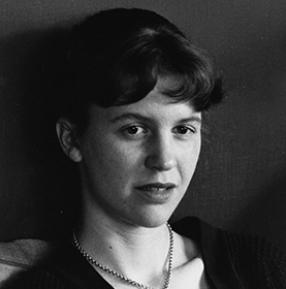
– by Sylvia Plath

Source: ‘Myths about Suicide’ by Thomas Joiner.